
The Timeless Allure of RHS Chelsea Flower Show: Revisiting the Homebase Urban Retreat Garden
Each year, the RHS Chelsea Flower Show transforms into a vibrant spectacle, a global epicenter for horticultural excellence and groundbreaking garden design. It’s a place where visionary designers push the boundaries of creativity, inspiring millions with their innovative landscapes. In 2015, amidst a breathtaking display of floral artistry and structural ingenuity, one garden particularly captured the imagination: the Homebase Urban Retreat. This captivating creation stood as a testament to harmonious design, offering a serene escape within a modern context and continues to provide a wealth of inspiration for contemporary urban landscaping.
The Chelsea Flower Show consistently sets trends and showcases the pinnacle of what’s achievable in garden design, making it an essential event for enthusiasts and professionals alike. The sheer scale of talent and meticulous planning that goes into each show garden is always astounding. This week, we delve back into the archives to highlight some enduring favourites, starting with a closer look at the Homebase Urban Retreat garden, a true masterpiece that combined innovative urban aesthetics with lush, natural beauty.
A Vision by Adam Frost: The Homebase Urban Retreat
The Homebase Urban Retreat garden was a standout feature of the 2015 show, meticulously conceived by the celebrated landscape designer Adam Frost. Known for his ability to craft gardens that are both stunning and highly functional, Frost collaborated with Homebase as the sponsor and Bespoke Outdoor Spaces for the build, bringing his unique vision to life. This particular garden was designed to offer a tranquil haven from the hustle and bustle of city life, demonstrating how even compact urban spaces can be transformed into areas of profound beauty and utility. Frost’s design philosophy often centers on creating spaces that resonate with their environment while providing a sense of calm and connection to nature, a principle brilliantly showcased in this award-winning exhibit.
The initial concept for the Homebase Urban Retreat was clearly articulated through a detailed plan, which beautifully illustrated how the space would be thoughtfully divided and exquisitely planted. This blueprint was crucial in translating Frost’s architectural inspiration into a tangible, living design. It emphasized clear lines, distinct zones, and a carefully considered blend of hardscaping and softscaping, ensuring every element served a purpose in creating an immersive and harmonious environment. The planning stage itself was a work of art, laying the foundation for a garden that felt both contemporary and timeless.
Embracing Modernist Philosophy: Nature Meets the Man-Made
At the heart of the Homebase Urban Retreat’s design philosophy was a profound inspiration drawn from the work of modernist architect Marcel Breuer. Breuer, famous for his brutalist and Bauhaus-influenced designs, emphasized clean lines, functionalism, and the innovative use of materials. Adam Frost skillfully translated these architectural principles into a garden setting, creating a space that meticulously balances the raw beauty of nature with the refined precision of the man-made environment. This juxtaposition was not merely aesthetic; it was a deliberate statement on how urban living can integrate natural elements without sacrificing modern design sensibilities.
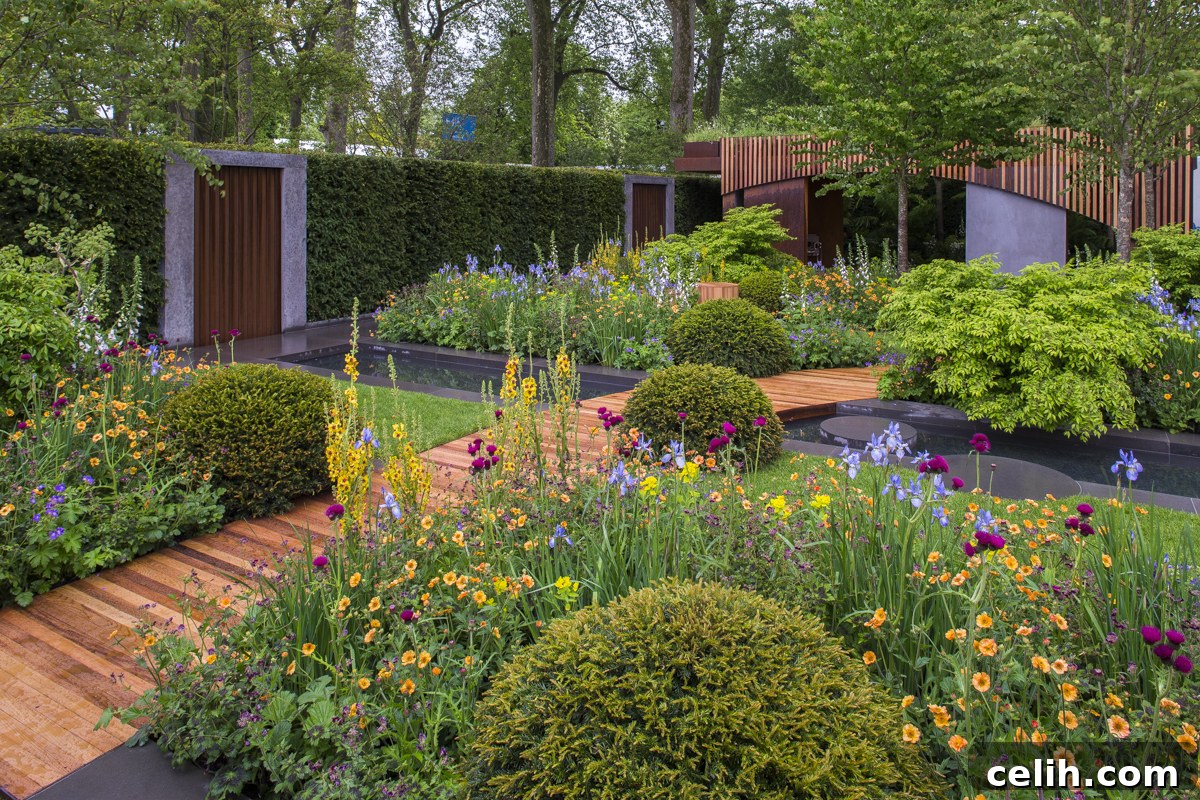
The garden served as a compelling example of how brutalist aesthetics, often perceived as harsh, could be softened and enriched by strategic planting and thoughtful material choices. This equilibrium was achieved by incorporating a selection of urban materials such as concrete, steel, and cedar. Concrete provided a sturdy, grounding base and defined structural elements, while steel was used for crisp, modern accents and frameworks. Cedar, with its warm tones and natural texture, introduced a vital organic element, preventing the hard materials from dominating and adding a layer of sophisticated warmth. The resulting design was a masterclass in blending robust, industrial textures with the delicate intricacies of flora, proving that an urban retreat doesn’t have to compromise on either style or comfort.
Architectural Elegance and Materiality
The deliberate choice of materials in the Homebase Urban Retreat garden was fundamental to its identity. Concrete was not just a utilitarian material; it was a design statement, used for sleek paving and defining sculptural forms that anchored the garden. Its cool, contemporary presence created a strong sense of structure and permanence. Steel, often seen in urban architecture, was integrated with precision, perhaps as slender supports, elegant frames, or subtle decorative features, adding a layer of industrial chic and durability. The interplay between these two rigid materials was beautifully contrasted by the introduction of cedar.
Cedar planks, used for cladding or decking, brought an essential warmth, texture, and natural aroma to the space. It provided a soft counterpoint to the more austere concrete and steel, creating an inviting atmosphere that beckoned visitors to linger. The combination of these materials not only created visual interest but also contributed to the tactile experience of the garden, making it feel robust yet welcoming.
A striking feature was the modern structure, which offered more than just aesthetic appeal. This architectural element provided essential shade, creating a comfortable microclimate within the garden, and integrated ample seating. Its clean lines and minimalist form echoed the modernist inspiration, while its practical functions enhanced the usability and comfort of the retreat. Running through the heart of this urban oasis was a calm and contemplative water feature. The gentle sound of moving water and its reflective surface added a layer of tranquility, engaging multiple senses and transforming the garden into a truly immersive and peaceful sanctuary. The design of the water feature itself was elegant and understated, perfectly complementing the overall serene aesthetic.
A Symphony of Green: Lush Planting and Design Innovation
The planting scheme in the Homebase Urban Retreat garden was nothing short of spectacular, described as producing a “riot of colour” and being “luscious and fresh.” Adam Frost demonstrated a masterful understanding of how soft landscaping can complement and soften hard architectural elements. The careful selection of plants introduced a vibrant tapestry of greens, textures, and seasonal blooms, ensuring the garden felt alive and dynamic throughout the year, even in concept.
A particularly ingenious aspect of the planting was the use of rounded shapes in the bushes and larger plant forms. These organic, curvilinear shapes provided a crucial visual contrast to the straight, angular lines of the modernist structure and hardscaping. This deliberate interplay between geometric and natural forms created a dynamic tension that made the design incredibly sophisticated and visually appealing. The rounded foliage softened the architectural edges, inviting the eye to move smoothly through the space rather than being abruptly halted by sharp corners. This technique not only enhanced the aesthetic beauty but also contributed to the overall feeling of calm and organic flow within the urban setting.
The choice of plants was also strategic for an urban environment, likely incorporating species that are resilient, provide good coverage, and offer seasonal interest. The density and variety of planting created a sense of enclosure and privacy, further enhancing the “retreat” aspect of the garden. It truly worked incredibly well, proving that thoughtful planting can elevate a modern design from being merely functional to being a truly inspiring and sensory experience. There are countless planting and design ideas within this garden that can be adapted and applied to your own garden, regardless of its size or location.
Bringing Chelsea Inspiration Home: Practical Ideas for Your Garden
The Homebase Urban Retreat garden, much like all the exhibits at the RHS Chelsea Flower Show, served as a powerful source of inspiration for home gardeners. Its success lay not only in its beauty but also in its transferability of ideas. For those looking to replicate its essence, several key principles stand out:
- Harmonious Contrast: Embrace the interplay between hard and soft landscaping. Use materials like concrete or steel for structure, but soften them with lush, varied planting. Don’t shy away from contrasting shapes – rounded shrubs against linear paths can create compelling visual interest.
- Defined Zones: Even in smaller spaces, create distinct areas for relaxation, dining, or contemplation. The modern structure with integrated seating is a prime example of defining a specific function within the garden.
- Water Features for Tranquility: Incorporate a water feature, however small. The sound and sight of water instantly add a meditative quality, transforming any garden into a more peaceful retreat.
- Strategic Material Selection: Consider the tactile and visual impact of your chosen materials. The warmth of cedar combined with the robustness of concrete offers a rich sensory experience that can be replicated with similar material pairings.
- Resilient Planting: Choose plants that thrive in your local climate and conditions, especially if creating an urban garden. Focus on species that offer continuous interest through different seasons.
By studying gardens like Adam Frost’s Homebase Urban Retreat, we gain valuable insights into how professional designers approach space, light, texture, and plant selection. This garden remains a shining example of how contemporary design can coexist beautifully with nature, creating spaces that are both sophisticated and deeply calming.
**All images copyright RHS / Neil Hepworth