
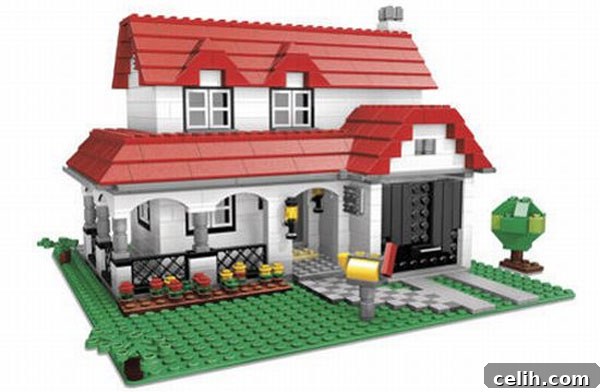
Unlocking Imagination: James May’s Ambitious Life-Size Lego House Project
In a world often constrained by conventional construction, television presenter James May, widely known for his adventurous spirit and penchant for quirky, large-scale projects, embarked on an extraordinary endeavor that captured the public’s imagination: building a full-size, two-storey house entirely out of Lego bricks. This ambitious undertaking was far more than a mere stunt; it was a profound exploration of creativity, engineering, and the enduring appeal of one of the world’s most beloved toys.
The news of May’s latest challenge, part of his acclaimed BBC series, James May’s Toy Stories, generated considerable excitement. The sheer scale of the project alone was enough to pique curiosity, promising a fascinating blend of childhood fantasy and serious architectural aspiration. This wasn’t just about stacking bricks; it was about creating a habitable structure with all the comforts of home, albeit built from millions of tiny plastic pieces.
The Grand Vision: A Habitable Lego Masterpiece
The concept of a life-size Lego house immediately conjures images of playful wonder, yet the reality of constructing such a dwelling presented formidable engineering and logistical challenges. James May, affectionately known as “Captain Slow” for his methodical approach, embraced this complexity wholeheartedly. His vision was not merely to assemble a facade, but to construct a fully functional home, complete with essential amenities that would allow him to live within its brick-built walls, at least for a few days.
The chosen location for this remarkable build was the picturesque Denbies Wine Estate in Dorking, Surrey. This idyllic setting provided a unique contrast to the vibrant, blocky construction rising within its grounds, making the Lego house an even more striking spectacle. The estate offered ample space for the colossal undertaking and attracted visitors keen to witness this architectural marvel taking shape.
Beyond the Bricks: Functionality and Comfort
What truly set May’s Lego House apart was its commitment to functionality. This was no hollow shell. The design incorporated elements crucial to any modern home, pushing the boundaries of what could be achieved with interlocking plastic bricks. Among the most impressive features planned were a full-size staircase, ensuring accessibility between its two levels, and crucially, fully integrated plumbing and power systems. The inclusion of a shower and toilet underscored the project’s ambition to create a genuinely habitable space.
The plumbing aspect, in particular, presented a unique conundrum. While electricity could be routed through the structure, and water pipes concealed, the idea of a fully flushing Lego toilet was a significant hurdle. May and his team diligently worked on the logistics, determined to make this whimsical yet essential component a reality. The challenge lay in ensuring water tightness and functionality using a material not typically designed for such purposes. His determination to include this feature highlighted his commitment to the immersive experience of living in a toy-built home.
The Scale of the Endeavor: Millions of Bricks
To bring this monumental vision to life, an astounding three million Lego bricks were delivered to the Denbies Wine Estate site. This colossal quantity alone speaks volumes about the sheer scale of the project. Each brick, though small individually, contributed to the structural integrity and aesthetic of the house. The logistics of sorting, transporting, and assembling such a vast number of pieces required meticulous planning and an enormous team effort, involving both skilled builders and enthusiastic volunteers.
The construction process itself was a spectacle. Witnessing countless individuals meticulously clicking bricks into place, layer by layer, transformed the abstract concept into a tangible reality. It was a testament to human ingenuity and collaborative spirit, demonstrating how simple components, when combined with a grand vision, can create something truly extraordinary.
James May’s Toy Stories: A Legacy of Playful Ingenuity
The Lego House project is a quintessential example of the creative spirit behind James May’s Toy Stories. The series is celebrated for taking everyday childhood toys and reimagining them on an epic, adult scale, often with surprising results. It’s a whimsical yet thought-provoking exploration of play, engineering, and the boundaries of what’s possible when imagination is given free rein.
Before the Lego House, May famously captivated audiences with another incredible project for the series: building an entire garden out of plasticine. This vibrant and intricate creation was showcased at the prestigious RHS Chelsea Flower Show, a highly competitive event usually dominated by professional horticulturists. Against all odds, May’s plasticine garden not only charmed visitors but also earned the coveted People’s Choice Award, a testament to its widespread appeal and the delightful absurdity of the concept.
The success of the plasticine garden set a precedent for the Lego House, demonstrating May’s unique ability to blend humor with genuine engineering challenges. These projects are more than just entertainment; they inspire viewers to look at familiar objects with fresh eyes, to appreciate the simple joy of creation, and to question conventional limitations.
Living in a Lego World: The Ultimate Immersion
Perhaps the most intriguing aspect of the Lego House project was James May’s intention to live in it for a few days. This wasn’t merely about building a structure; it was about experiencing it, testing its liveability, and fully immersing himself in the dream of a toy-built home. What would it be like to sleep in a room where every surface is made of interlocking plastic? How would the soundscape differ? What unique challenges would arise from day-to-day life within such an unconventional abode?
This personal commitment elevated the project beyond a simple construction exercise. It transformed it into an experiential art piece, inviting reflection on the nature of home, the boundaries of materials, and the enduring power of childhood dreams. It was a bold statement about embracing the playful side of life, even in the most practical aspects.
The Impact and Legacy of the Lego House
The James May Lego House project left an indelible mark, not just on the landscape of Dorking for a brief period, but on the imaginations of people worldwide. It served as a powerful reminder that creativity knows no bounds and that even the most humble materials can be transformed into something extraordinary when paired with vision and determination.
The project spurred conversations about innovative building techniques, the potential for modular construction, and the sheer joy of hands-on creation. It inspired countless children and adults alike to revisit their own Lego collections, perhaps with new ideas for what they could construct. Ultimately, the Lego House stood as a vibrant monument to the power of play, the ingenuity of human endeavor, and James May’s unique talent for making the impossible seem not just possible, but wonderfully real.
While the house itself was eventually dismantled, its story continues to resonate. It remains a celebrated chapter in James May’s Toy Stories, a testament to pushing the envelope of what’s considered conventional, and a beacon for anyone who believes that big ideas can be built, one small brick at a time.