
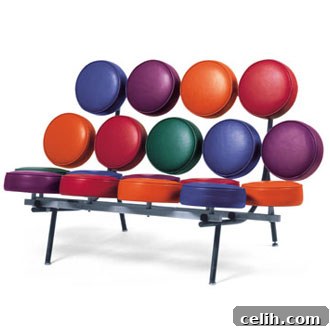
The Enduring Icon: Exploring the Timeless Appeal of the Marshmallow Sofa
First unveiled in 1956, the Marshmallow Sofa quickly established itself as a cornerstone of the burgeoning Pop Art movement and a landmark in modern furniture design. Far more than just a piece of seating, this whimsical yet sophisticated sofa embodies a playful rebellion against conventional aesthetics, making it an instantly recognizable and highly coveted item for design enthusiasts worldwide. Its distinctive form, a vibrant arrangement of circular cushions, seems to defy gravity, creating an illusion of lightness that has captivated generations.
Conceived by the ingenious minds of Irving Harper and George Nelson, under the umbrella of George Nelson Associates, the Marshmallow Sofa is celebrated for its innovative construction and bold visual statement. It’s a piece that doesn’t just occupy a space; it transforms it, serving as a focal point and an undeniable conversation starter in any home or office environment. Its legacy as an iconic Pop Art furniture piece continues to grow, solidifying its place in design history.
A Glimpse into its Genesis: Nelson, Harper, and Mid-Century Innovation
The story behind the Marshmallow Sofa is as fascinating as its design. It emerged from a period of intense creativity and material experimentation in post-war America. George Nelson, a pivotal figure in American modernism, was a designer, architect, and writer whose studio, George Nelson Associates, was a hotbed of talent, including the prolific Irving Harper. While Nelson is often credited with the overall vision for many iconic pieces, it was frequently the designers within his studio, like Harper, who brought these visions to life with their distinct creative flair.
The original inspiration for the sofa reportedly stemmed from a failed attempt to utilize a new self-skinning foam disc technology. When the foam proved unsuitable for its intended purpose, Harper ingeniously pivoted, proposing a design that celebrated individual upholstered discs rather than concealing them within a single form. This creative problem-solving led to the distinctive “floating” cushions that define the Marshmallow Sofa, transforming a material limitation into a revolutionary design feature. This narrative underscores the innovative spirit of mid-century design, where challenges often sparked the most imaginative solutions.
Revolutionary Design: The Anatomy of a Modern Classic
What truly sets the Marshmallow Sofa apart is its audacious and highly functional design. It’s a masterful blend of playful aesthetics and intelligent engineering, resulting in a piece that is both visually striking and remarkably practical. The structural integrity and unique appearance are derived from several key design elements:
The “Floating” Cushions: An Illusion of Lightness
The most visually striking feature of the Marshmallow Sofa is its arrangement of 18 round, plush cushions. These individual discs, meticulously spaced, appear to “float” independently on a slender, minimalist metal frame. This intentional gap between cushions creates a sense of airiness and visual lightness, a stark contrast to the heavy, monolithic sofas prevalent in earlier design periods. This unconventional approach to seating challenges traditional notions of comfort and form, inviting occupants to engage with the furniture in a fresh, more interactive way. The vibrant upholstery options further enhance this playful illusion, making each sofa a unique statement.
Modular Mastery: Customization and Practicality
Beyond their aesthetic appeal, the individual cushions offer unparalleled practicality. They are designed to be easily detached from the frame, a feature that provides numerous benefits. Firstly, this modularity allows for effortless cleaning and maintenance, making spills and wear less of a concern. Secondly, and perhaps more excitingly, the cushions can be interchanged with different colors. This means owners can personalize their sofa to match changing decor, moods, or seasons, creating a unique and dynamic look without needing to replace the entire piece. This foresight in design highlights a commitment to both adaptability and user-friendliness, a hallmark of excellent mid-century modern furniture.
Structural Ingenuity: Beyond Mere Aesthetics
Underneath its colorful exterior, the Marshmallow Sofa boasts a robust and intelligently designed framework. Typically constructed from a sturdy tubular steel armature, the frame provides the necessary support while maintaining its minimalist profile. The individual cushions are attached to this frame via specialized connectors, ensuring they remain securely in place while still allowing for easy removal. This combination of durable materials and smart construction ensures the sofa’s longevity, a crucial aspect for a piece designed to be cherished for decades. The deliberate choice of materials and construction methods reflects a belief that furniture should be both beautiful and built to last.
The Heart of Pop Art: More Than Just Furniture
The Marshmallow Sofa is often cited as a quintessential example of Pop Art furniture, and for good reason. It perfectly encapsulates the movement’s ethos: a celebration of the everyday, a playful subversion of high art, and an embrace of vibrant color and unconventional forms. Its appearance is reminiscent of comic book panels or mass-produced candies, bringing a sense of fun and accessibility to furniture design. It stood in stark contrast to the more austere, functionalist designs that preceded it, ushering in an era where furniture could be both art and a joyful expression.
This sofa doesn’t merely furnish a room; it injects personality and a sense of optimism. It’s a piece that demands attention, acting as a vibrant focal point whether placed in a minimalist contemporary space or a more eclectic interior. Its ability to spark conversations and draw admiration is a testament to its powerful visual language and enduring artistic merit. It reminds us that furniture can, and should, be more than just utilitarian objects; they can be pieces of art that enrich our daily lives.
Bringing the Marshmallow Sofa Home: A Timeless Statement Piece
Incorporating a Marshmallow Sofa into your living or working space is a declaration of style and an appreciation for iconic design. Its unique aesthetic seamlessly integrates into various interior styles, from retro-inspired decors to ultra-modern minimalist settings, proving its remarkable versatility. Whether it graces the reception area of a cutting-edge office, a vibrant living room, or a creative studio, the Marshmallow Sofa consistently delivers a powerful design statement, reflecting a sophisticated taste for distinctive, artistic furnishings.
Choosing Your Marshmallow Sofa: Authenticity and Adaptability
When considering an investment in a Marshmallow Sofa, potential buyers often navigate between acquiring an authentic vintage piece or a high-quality contemporary reproduction. Original designs, typically manufactured by Herman Miller in the U.S. and Vitra in Europe (under license from the Nelson estate), command significant value due to their historical provenance and craftsmanship. Reproductions, while often more accessible, vary widely in quality and fidelity to the original design. It’s crucial to research and choose reputable manufacturers to ensure the essence and quality of Nelson and Harper’s original vision are maintained. The array of leather and fabric colors available for the individual cushions means that whether you prefer a classic monochromatic look or a bold, multi-colored arrangement, there’s a Marshmallow Sofa to match your personal aesthetic and interior scheme.
Caring for Your Iconic Sofa
Given its distinctive construction, caring for a Marshmallow Sofa is relatively straightforward. The detachable cushions make cleaning simple and efficient. Regular dusting and occasional professional cleaning for the upholstery will help maintain its pristine condition. For the metal frame, a gentle wipe with a damp cloth is usually sufficient. This ease of maintenance ensures that your Marshmallow Sofa remains a vibrant and inviting centerpiece for many years, continuing to delight and impress.
The Marshmallow Sofa’s Lasting Legacy
More than six decades after its debut, the Marshmallow Sofa remains a beacon of innovation and artistic expression in furniture design. It continues to be celebrated in museums, design archives, and contemporary homes around the globe, solidifying its status as a timeless classic. Its influence can be seen in modular furniture trends, the continued appreciation for vibrant color palettes in interiors, and the ongoing dialogue between art and functionality in design. The collaboration between George Nelson and Irving Harper resulted in a piece that transcends mere utility, becoming a cultural artifact that speaks volumes about the creative spirit of the mid-20th century.
The Marshmallow Sofa is a testament to the power of design to evoke emotion, challenge norms, and bring joy. It’s a reminder that furniture can be playful, practical, and profoundly iconic all at once. Its ability to capture attention and stimulate conversation ensures its enduring popularity and relevance in the ever-evolving world of interior design.
Where to Find Your Own Iconic Marshmallow Sofa
For those looking to acquire this iconic piece, options vary. High-quality reproductions and vintage pieces can be found through various specialist retailers and design archives. For instance, Interior Addict offers Marshmallow sofas in a range of leather colors, typically priced around £549. We find their playful spelling of “Marshmellow” rather amusing – perhaps it perfectly encapsulates the soft, delightful sensation one feels after relaxing on this uniquely comfortable and stylish piece!
For more inspiration on contemporary seating solutions, be sure to check out our curated pick of the top 10 contemporary sofas.