
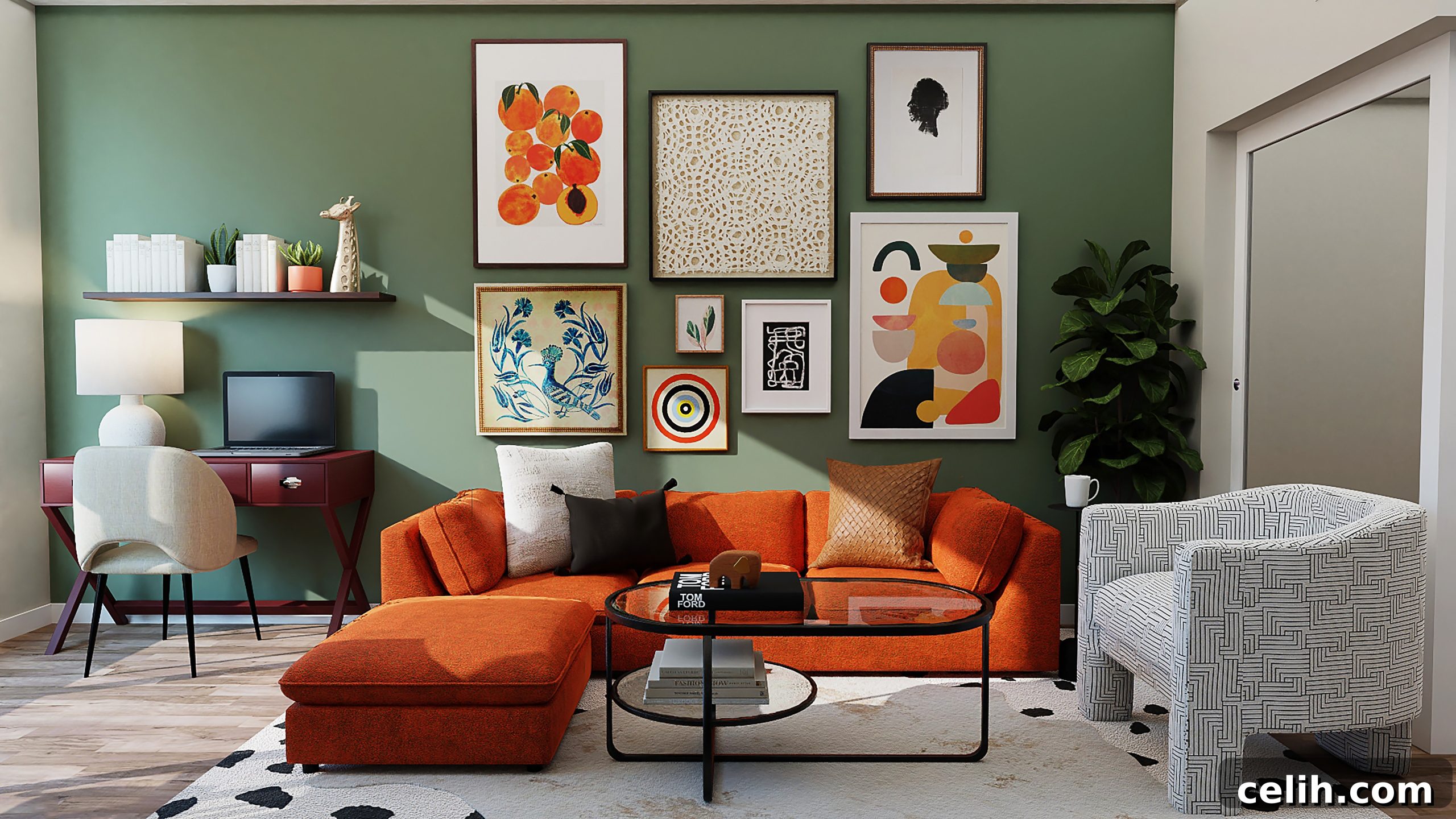
For decades, interior design trends have largely been dominated by minimalism – a philosophy centered around clean lines, neutral palettes, and sparse arrangements. This approach championed the idea of “less is more,” often touted as the ultimate solution for making small spaces appear larger and more serene. Picture pristine rooms bathed in calming creams and pale neutrals, exuding an almost austere elegance designed to maximize light and an illusion of expansive space. While beautiful, this aesthetic can sometimes feel restrictive, even sterile, and often demands a rigorous level of tidiness to maintain its pared-back perfection.
However, a vibrant and revolutionary shift is now captivating the world of home decor: maximalism. This design concept boldly challenges every tenet of its minimalist predecessor, declaring “more is more” with unapologetic enthusiasm. Far from creating cluttered chaos, a well-executed maximalist design celebrates individuality, color, texture, and personal storytelling. It invites homeowners to embrace their unique tastes, curate eclectic collections, and transform their living environments into dynamic, expressive sanctuaries. And here’s the most exciting revelation: when approached with intention, maximalism isn’t just for grand, sprawling homes; it can be an incredibly effective and transformative strategy for designing even the most compact of rooms, making them feel surprisingly spacious and rich with character.
Embracing Maximalism: A New Perspective for Small Spaces
One of the primary drawbacks of traditional minimalist designs, particularly in smaller rooms, is their restricted color palette. While intended to create calm, the reliance on an abundance of white, grey, or beige can inadvertently render spaces feeling cold, impersonal, or even unwelcoming. Furthermore, the minimalist ideal demands an almost unattainable level of order; every item must have its place, and any clutter instantly undermines the aesthetic. This often leads to homes that are beautiful in theory but challenging to live in, especially for those with busy lives or a natural inclination towards collecting cherished items.
Maximalism, by contrast, offers a liberating sense of freedom. It provides a much broader canvas for creative expression, encouraging a playful exploration of color, texture, and design choices. It’s about crafting interiors that are rich with personality, reflecting the homeowner’s journey, passions, and spirit. This approach is not only visually stimulating but also inherently more forgiving and easier to live with, as curated collections and layers of interest are celebrated rather than hidden away.
As one interiors expert succinctly puts it, “Maximalism is a loud style composed of mixed patterns, excessive, but curated collections, and saturated colours.” This definition might initially spark apprehension about its suitability for compact living areas. However, the surprising truth is that when skillfully executed, a maximalist decor can actually defy conventional wisdom and make a small home feel larger, deeper, and infinitely more intriguing. This revelation is fantastic news for anyone grappling with the challenge of designing smaller rooms, be it a cramped city apartment, a newly converted attic space, or even a ‘deceptively spacious’ new-build that lacks character.
Consider your own small interior conundrums: Do you have a compact box room yearning for a unique identity? Are you embarking on a loft conversion in a terraced house, seeking bold inspiration for that new attic retreat? Or perhaps you’re simply tired of your living accommodation feeling bland and uninspired, regardless of its actual footprint. Maximalism offers innovative solutions, inviting you to transform these challenges into opportunities for spectacular design. It’s about turning a perceived limitation into a canvas for visual storytelling and creating an environment that truly feels like home.
Crafting Depth and Illusion: Intentional Maximalist Choices
The secret to successfully integrating maximalist interiors into a small space lies not in haphazard accumulation but in intentional design. The mantra “more is more” does not translate to indiscriminately filling a room with every possession. Instead, it implies a thoughtful, curated approach where every element contributes to a cohesive, visually rich narrative. The goal is to create a dynamic environment where the eye is constantly engaged, diverting attention from the room’s physical dimensions and instead drawing it into a captivating display of art, pattern, and color.
To achieve this, we must first challenge some long-held decorating rules. Contrary to popular belief, small rooms do not necessarily benefit from small-scale patterns. In fact, embracing large, bold patterns can be a powerful tool for visual expansion. Think beyond delicate florals; consider vibrant, blowsy floral wallpapers, dramatic geometric prints, or immersive floor-to-ceiling murals. These expansive designs draw the eye upward and outward, blurring the boundaries of the room and creating an illusion of greater height and width than actually exists. A single wall adorned with a statement pattern can dramatically alter the perception of space, transforming a confined area into an expansive visual journey.
Similarly, the notion that dark colors shrink a room is often a misconception. Instead of retreating from deep hues, maximalism encourages their embrace. From the sophisticated intensity of charcoal black to the rich warmth of burnt toffee or the calming depth of deep navy, applying a single, saturated color across walls and even ceilings can perform a clever visual trick. As interior design guru Abigail Ahern, celebrated for her moody hues, explains, “going all over with one color can blur the edges of the room, so the eye can’t focus on the dimensions of the room, making it feel larger.” This monolithic approach dissolves corners and creates a seamless, enveloping effect, where the room’s boundaries become less distinct, resulting in an impression of greater depth and boundless atmosphere.
While maximalism heartily encourages bold choices in colors, textures, and patterns, the key is to ensure these elements harmonize rather than clash. This doesn’t mean everything must match perfectly; rather, it’s about establishing a sense of visual dialogue between pieces. You might achieve cohesion by selecting items with similar underlying patterns, shapes, or a consistent color temperature. For example, if your sofa, coffee table, and bookcase feature rounded edges, this subtle repetition creates an unconscious sense of unity. Similarly, if your cushions subtly echo the dominant color or a secondary pattern found in your rug, it weaves together a tapestry of design that feels thoughtfully curated, preventing the space from becoming overwhelming despite its richness.
The Art of Layering: Curating Spaces with Confidence
In the realm of small space maximalism, layering transcends mere decorative flourish; it becomes a fundamental strategy for creating visual depth and interest. With limited physical room to spread out, every component – from walls and floors to furniture and accessories – must play a dynamic role, interacting with one another to form a rich, multi-dimensional tableau. This is where the magic happens, tricking the eye into perceiving a larger area. By packing a compact space with carefully curated, layered elements, you create so much visual ground to cover that the actual dimensions of the room recede into the background, making it feel expansive and infinitely more captivating.
Successful layering demands a confident eye for what works, but this doesn’t necessitate hiring an interior design professional. Instead, adopt a patient and organic approach. The most compelling maximalist interiors often evolve over time, much like a personal art collection. Begin with a foundation – perhaps a bold wallpaper or a statement rug – then introduce one impactful piece, whether it’s an art print, a uniquely textured throw, or a piece of accent furniture. Take a moment to assess how it integrates and feels within the space. Then, slowly and deliberately, add another layer, observing the interplay of colors, patterns, and textures. This slow decoration process allows your individual style to flourish naturally, ensuring each addition feels authentic and purposeful, rather than forced. It’s an ongoing conversation between you and your space, leading to a truly personalized and harmonious maximalist sanctuary.
Think of layering in terms of textures: combine soft velvet with rough linen, smooth glass with rustic wood, and metallic accents with matte finishes. Introduce various lighting sources – ambient, task, and accent lighting – to create different moods and highlight specific areas. Integrate patterns through rugs, cushions, drapes, and artwork, ensuring a cohesive color story subtly ties them all together. The goal is to build visual interest that encourages the eye to explore, creating a sense of unfolding discovery that makes the room feel endlessly intriguing and, consequently, larger than its physical boundaries suggest.
Achieving Harmony: Balancing Busy Rooms with Clever Tricks
Even within the exuberance of a maximalist design, the concept of negative space remains crucial. Far from being a contradiction, deliberate pockets of visual respite are essential to prevent a room from feeling overly cluttered or chaotic. These blank spaces allow the eye to rest and the brain to process the rich tapestry of elements, enhancing the overall impact rather than diminishing it. Consider leaving some open space on shelves, a section of an otherwise busy wall unadorned, or ensuring a clear border of flooring is visible around a rug. These strategic voids act as anchors, grounding the design and ensuring the room feels interesting and layered, rather than overwhelming.
When selecting furniture for a maximalist small room, a useful guideline is to choose relatively simple, well-proportioned pieces that can anchor the space. These foundational items, such as a streamlined sofa or a clean-lined console table, provide a stable base onto which you can lavish maximalist touches with decorative pieces, vibrant textiles, and art. Maximize functionality by making clever use of awkward nooks and crannies with built-in storage solutions. These can be seamlessly integrated into the room’s architecture, then personalized with a bold color scheme or an interesting textured finish to add personality without sacrificing precious floor space. Floating shelves, custom cabinetry, or even clever hidden storage within benches can contribute to an uncluttered foundation.
Furthermore, challenge the conventional wisdom regarding furniture scale. There’s no rigid rule dictating that furniture must perfectly match the size of the room. In fact, incorporating one or two large, statement pieces into a bijou room can be incredibly effective without causing it to feel crowded. A generously sized sofa, for instance, can serve as a powerful focal point, drawing attention and providing a sense of luxurious comfort. Similarly, an oversized feature mirror not only adds a touch of glamour but also brilliantly tricks the eye, reflecting light and creating the illusion of expanded space. The key is to balance these larger items with other, smaller pieces and ample negative space to maintain equilibrium and prevent the room from feeling swamped. This thoughtful juxtaposition creates dynamic tension, ensuring the room feels well-composed and visually intriguing rather than simply crammed.
Storytelling Through Decor: Showcasing Your Most Treasured Possessions
At its heart, maximalist decorating is an unparalleled opportunity for personal expression and a joyous celebration of your life’s story. It provides the perfect framework to proudly display your treasures, transforming your home into a living memoir. Regardless of your home’s size, identify focal points like a console table, a mantelpiece, or open shelving where you can curate vignettes of meaningful keepsakes, cherished heirlooms, captivating travel souvenirs, or unique vintage market finds. Filling your living environment with items that resonate deeply and evoke positive memories can profoundly boost your mood and enhance your overall sense of happiness and well-being. Each displayed item tells a story, contributing to the rich narrative of your home.
One of the most popular and impactful maximalist features is the gallery wall. This dynamic display is particularly fantastic for smaller rooms, especially those that possess more height than width. A gallery wall allows you to combine an eclectic mix of family photographs, original artworks, textural wall hangings, framed prints of old masters, and intriguing curiosities. The sheer density and variety of a well-composed gallery wall compel the eye to move across the entire surface, creating an illusion of expanded space and boundless visual interest. To further enhance the sense of height, consider extending your gallery wall all the way up to the ceiling line. This vertical emphasis draws the eye upwards, making the walls appear taller and the room feel grander, turning a potentially overlooked wall into a stunning focal point and a testament to your personal style.
When designing your gallery wall, experiment with different frame styles, sizes, and colors to add further depth and texture. Don’t be afraid to incorporate three-dimensional objects, mirrors, or even small shelves to hold mini sculptures or tiny plants. The key is balance and flow, ensuring that despite the variety, the overall arrangement feels cohesive and intentional. This visual richness not only distracts from the room’s physical size but also injects an incredible amount of personality and warmth, making even the smallest space feel utterly unique and inviting.
A Breath of Fresh Air: Providing a Natural Boost with the Power of Plants
To truly complete a maximalist small space, take a leaf out of biophilic design principles and generously infuse your room with living plants. Introducing greenery is a phenomenal way to add organic texture, vibrant natural color, and a sense of life that instantly enriches the environment. Plants visually break up the space, providing diverse forms and hues that beautifully complement the existing maximalist layers. They act as natural sculptures, softening hard lines and counteracting any potential danger of the room veering towards a ‘stuffy museum’ aesthetic.
Experiment with different plant types to add variety in scale, texture, and visual interest. Consider tall, slender plants like snake plants or fiddle-leaf figs to draw the eye upwards and emphasize verticality. Cascading Pothos or String of Pearls look stunning in hanging planters or trailing from shelves, adding dynamic movement. Cluster smaller plants on a windowsill or coffee table to create a mini indoor garden. Play with various pot materials – terracotta, ceramic, woven baskets – to further integrate different textures and colors into your overall scheme. The presence of living plants not only enhances the visual appeal but also contributes to improved air quality and a greater sense of well-being, transforming your maximalist haven into a truly holistic and inviting space.
Interior design trends are cyclical, constantly evolving and reinventing themselves. However, maximalism, far from being a fleeting fad, appears to be cementing its place as a enduring and powerful design philosophy. It’s much more than just an aesthetic; it’s a celebration of personality, a canvas for self-expression, and a daring exploration of “the art of more.” With thoughtful planning and a bit of strategic thinking, the maximalist approach can be brilliantly applied to spaces of any size, proving that even the most compact rooms in your home can be transformed into captivating, expansive, and deeply personal sanctuaries that truly reflect who you are. Embrace the maximalist spirit, and unleash the full potential of your small space!