
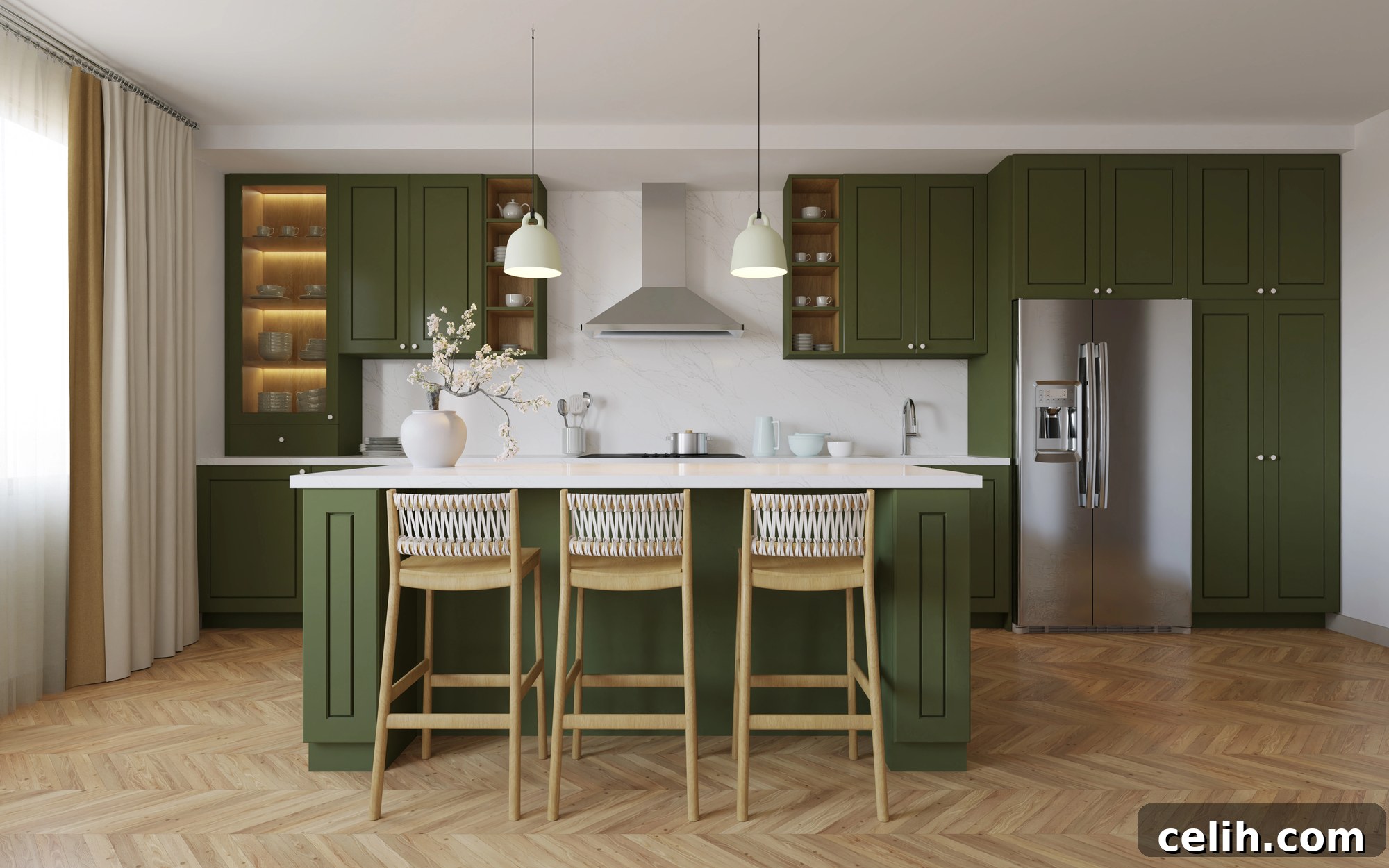
There comes a pivotal moment in every interior design project when the abstract truly needs to meet the tangible. As a designer, you’ve meticulously curated mood boards, presented tactile fabric samples, and meticulously sketched floor plans, guiding your clients through the initial conceptual labyrinth. While they may nod in agreement, a subtle flicker of uncertainty often betrays their struggle to fully envision the transformation. The leap from a two-dimensional drawing or a small swatch to a fully realized, immersive space often feels just a bit too vast for many.
This challenge is profoundly familiar to designers. For decades, our arsenal has consisted of traditional tools: intricate hand-drawn perspectives, carefully assembled material boards, and inspirational tear sheets from glossy magazines. These methods are undeniably beautiful and evocative, yet they frequently leave clients to bridge significant imaginative gaps on their own. Some possess the natural ability to make that imaginative leap effortlessly. Many others, however, find it incredibly difficult. And even for those who can visualize, their mental image might diverge significantly from the designer’s intended outcome.
This is precisely where professional 3D rendering services emerge as an indispensable asset. Far from being a mere replacement for intuitive design or a shortcut around the intricate creative process, 3D rendering acts as a powerful bridge. It meticulously closes the crucial gap between a designer’s abstract vision and a client’s concrete understanding. When executed with precision and artistry, a high-quality rendering transcends simply showing clients what a room will look like; it masterfully conveys how that space will genuinely feel, allowing them to experience the design before it even begins to take shape.
The Transformative Power of Material Realism in 3D Rendering
Consider this common design scenario: you’re specifying a bespoke sofa, perhaps upholstered in a rich, deep emerald velvet, destined for a living room bathed in abundant southern light throughout the afternoon. The small fabric sample, under the neutral glow of a showroom’s fluorescent lights, appears undeniably gorgeous, radiating a sumptuous, jewel-toned richness. Yet, the critical question remains: what will this exquisite fabric truly look like at 4 p.m. on a Tuesday, when that intense, warm light pours through the windows and floods the space?
Or, envision the elegant honed limestone you’re proposing for a bathroom – chosen specifically for its soft, tactile quality rather than a polished sheen. Your client nods, seemingly in agreement, but do they genuinely grasp the subtle yet profound difference? Can they truly picture how natural light will gently absorb into that honed surface, creating depth and a muted elegance, versus bouncing off a reflective, polished finish?
This is precisely where high-quality 3D interior rendering services revolutionize the design conversation. It moves beyond merely showing what materials look like in isolation; it demonstrates how they behave and interact within a specific environment. Imagine seeing how that emerald velvet subtly shifts its hue, transitioning between a deep forest green and an almost-black charcoal, depending on the angle of natural light and the viewer’s perspective. Witness how the honed limestone gracefully absorbs ambient light, fostering a sense of serene depth rather than producing harsh glare. Observe the delicate dance of texture on a hand-troweled plaster wall as the sun’s rays slowly traverse its surface throughout the day, revealing its artisanal craftsmanship.
The transformation in the decision-making process is nothing short of striking. Instead of presenting clients with three distinct marble samples and asking them to painstakingly imagine each option across an entire kitchen island, advanced 3D rendering makes it possible to generate highly realistic visualizations of all three choices, precisely within their future kitchen space and under its specific lighting conditions. This capability instantly shifts the conversation from tentative preferences and abstract guesswork to confident, informed decisions. It fundamentally changes the dynamic, moving from asking clients to stretch their imagination to empowering them to make choices with their own eyes, experiencing the design as if it were already built.
Crafting Perfection: The Precision of 3D Product Modeling for Custom Designs
Here’s a common, often frustrating, scenario that designers encounter more frequently than anyone cares to admit: you’ve meticulously designed a stunning custom credenza for a dining room. It’s specified in rich walnut, adorned with elegant brass pulls, and precisely proportioned to complement the room’s unique dimensions and aesthetic. You send detailed technical drawings to the fabricator, confident in your vision. Six weeks later, the piece arrives, and to your dismay, something feels subtly off. The proportions, which looked perfect on paper, now appear unexpectedly heavy in the actual space. The brass, intended to pop against the warm wood, doesn’t quite achieve the envisioned contrast.
Professional 3D product modeling services are instrumental in preempting these costly and disheartening disappointments. When you can vividly demonstrate to a client – and, critically, to the skilled craftsman tasked with building the piece – precisely what you envision in three dimensions, complete with accurate material textures, exact dimensions, and realistic lighting, everyone involved operates from an identical, unambiguous blueprint. This level of clarity ensures that the final custom piece is an authentic realization of the initial design intent.
Real-world projects vividly underscore the effectiveness of this approach. Cabinetmakers, for instance, now routinely reference detailed 3D models on tablets directly on the workshop floor, allowing them to verify intricate details and precise dimensions in real-time. The invaluable result? Custom-fabricated pieces that flawlessly align with the design vision, eliminating the need for expensive revisions, time-consuming rebuilds, and the frustrating compromises that often plague traditional methods.
However, the true power of 3D product modeling extends far beyond simply avoiding errors. It fundamentally transforms the creative process by dramatically expanding the possibilities for exploration and refinement. Imagine effortlessly visualizing how that custom sofa would appear if rotated fifteen degrees. What if the room were to feature mohair instead of bouclé – how would the ambiance shift? Would that console table you adore actually fit seamlessly into the space, or would it inadvertently obstruct a crucial sightline from the entry? These are no longer time-consuming hypotheticals demanding days of new drawings or physical mock-ups. They are design variations that can be instantly generated, evaluated, and refined within a single afternoon.
The positive impact on client relationships is profoundly significant. Instead of losing momentum during the crucial design development phase, when clients can often feel overwhelmed by abstract decisions and complex specifications, the ability to visualize proposed changes and options in real-time keeps the entire process dynamic and engaging. Presenting multiple options side-by-side instills a deep sense of confidence in clients, and that confidence frequently translates into a greater willingness to embrace bolder, more innovative design choices, knowing precisely how they will manifest in their finished space.
Establishing a Shared Visual Language for Flawless Communication
A subtle but pervasive misunderstanding often characterizes client meetings. The designer confidently articulates a vision, perhaps suggesting “cerused oak with a sophisticated matte finish,” and the client nods thoughtfully, perhaps picturing something entirely different – it might be walnut, it might have a glossy sheen, but it almost certainly isn’t cerused. Everyone smiles, everyone appears to agree, yet each individual is harboring a slightly different mental image of the proposed design element.
Consider the nuances of color. “We should opt for a warm greige for the walls,” you might suggest. The client readily agrees. You, the designer, envision a sophisticated taupe with subtle, inviting pink undertones, radiating warmth and elegance. The client, however, might be imagining… well, who knows? Is it a bland beige? A stark gray? Or perhaps that specific shade their friend used that they secretly disliked? The ambiguity is palpable and can lead to significant misinterpretations down the line.
High-quality 3D architectural visualization cuts through this polite yet confusing ambiguity with unparalleled clarity. When you can present a client with a precise rendering of that exact cerused oak, meticulously depicted within their specific space, under its unique lighting conditions, a remarkable shift occurs. Suddenly, both designer and client are unequivocally looking at the same thing. The conversation instantly transitions from a hesitant “Do you understand what I mean?” to a confident and collaborative “Is this the feeling and aesthetic we truly desire?”
A recent project offers a compelling illustration: clients requested a primary bedroom that felt “warm but not traditional.” Instead of presenting a myriad of fabric samples and spending weeks painstakingly defining abstract aesthetic terms, three distinct renderings were generated. Each depicted the identical room and layout but featured vastly different color palettes and material combinations. Within minutes, the desired direction was unequivocally clarified, allowing the remainder of the meeting to focus productively on subtle refinements and intricate details that genuinely demanded expert design input.
This newfound clarity becomes particularly invaluable when substantial budgets are at stake. When you’re asking a client to make a significant investment in a unique, hand-knotted rug sourced from Turkey, a set of rare vintage light fixtures discovered through a Paris dealer, or a bespoke plaster treatment for the dining room, the ability to visually demonstrate precisely how these premium pieces integrate and harmonize within the overall design isn’t just helpful; it becomes absolutely essential for building trust and ensuring confidence. It ensures that every investment is seen as a well-understood and desired component of the grand vision.
One crucial aspect that rendering does not achieve, however, is transforming the client into a designer. Your role, as the trained professional with the vision, expertise, and discerning eye, remains paramount. The technology simply serves as an incredibly powerful conduit, ensuring that your clients can accurately perceive and appreciate the exact vision you hold.
Embracing Creative Freedom and Design Experimentation
In discussions with designers, a consistent theme emerges regarding the primary factor that often inhibits them from proposing bolder, more unconventional design choices: client apprehension. Imagine the stunning deep aubergine you instinctively know would be absolutely perfect for a sophisticated library – yet the client immediately envisions something dark, oppressive, and unwelcoming. Or consider the striking oversized chandelier that would undeniably make a dramatic statement in the dining room; the client, however, worries it will feel too heavy or disproportionate for the space.
The inherent beauty and immense value of 3D interior rendering lie in its unparalleled ability to visually demonstrate precisely why bold design choices not only work but often elevate a space dramatically. Take, for instance, a client steadfastly set on a palette of pale neutrals for a living room that, with its beautiful architectural bones and incredible natural light, is practically begging for a vibrant infusion of color. You can present one rendering showcasing their safe, preferred beiges. Then, immediately follow with another, identical rendering that features deep teal on the walls, while retaining the same furniture and layout. More often than not, the bolder, more vibrant option unequivocally wins. Sometimes, people simply need visual permission to take creative risks, and seeing the stunning potential result makes that permission feel entirely safe and compelling.
This principle extends far beyond just color choices. Material combinations that might sound inherently risky or unconventional when described abstractly – such as the sophisticated interplay of brass and black iron, or the juxtaposition of rough, textural stone with sleek, glossy lacquer – become obviously harmonious and correct once you can actually visualize them together within the specific context of the room. Furniture arrangements that a client might initially insist “won’t work” can be rendered both ways, allowing the inherent logic and flow of the redesigned space to speak for itself, compellingly demonstrating the optimal configuration.
Furthermore, 3D rendering has profoundly altered how many designers approach the critical task of sourcing furniture and finishes. Instead of scheduling multiple, time-consuming trips to showrooms with the client to physically compare dining chairs, the selection process can be significantly streamlined using initial renderings. You can present “Here’s the room with Option A,” followed by “Here’s Option B,” and then “Here’s Option C.” The client can quickly and confidently select their favorite, allowing you to then order physical samples of only that chosen option, thereby respecting everyone’s valuable time and minimizing decision fatigue.
Color studies, in particular, have become almost astonishingly easy and efficient. The desire to show a client how a primary bedroom would appear in six different wall colors previously meant obtaining physical paint samples, waiting for them to dry, painstakingly holding them up in varying lights, and still often contending with the client’s uncertainty about the final look. Now, you can effortlessly present six distinct renderings, each vividly depicting the entire room in a different, carefully chosen palette. The decision becomes remarkably clear, and exceptionally fast, transforming a laborious process into an intuitive visual exploration.
Navigating the Nuance: The Pitfall of Excessive Perfection in Renderings
Herein lies a critical subtlety regarding 3D renderings: they possess the capability to appear almost too pristine, too flawless. This can sometimes result in an aesthetic that is excessively reminiscent of a sterile showroom, rather than an inviting, lived-in home where real people reside.
You’ve undoubtedly encountered them – those impeccably crafted images where every single decorative pillow is positioned with surgical precision, every surface gleams with an unnatural perfection, and the space feels so utterly devoid of life that you can almost anticipate an echo. Are they undeniably beautiful from a purely technical standpoint? Certainly. Are they believable or relatable as a genuine living environment? Not truly.
The most exceptional 3D rendering work implicitly understands that authentic rooms possess a soul, a unique character imbued with subtle imperfections and the vibrant essence of life. A truly well-executed rendering might deliberately showcase the gentle unevenness inherent in a meticulously hand-applied plaster finish. It could highlight the natural, organic variations in a reclaimed wood floor, conveying its history and texture. It might even subtly depict the graceful wear pattern of a vintage rug in high-traffic areas, which, rather than appearing shabby, actually adds a rich layer of character and authenticity to the space.
Achieving this level of nuanced realism necessitates collaboration with rendering partners who possess a profound understanding of core design principles, not merely technical proficiency with software. This is the crucial distinction between mere technical skill and genuine design sensibility. A competent 3D artist can render objects to look convincingly real. However, a truly exceptional one can imbue those renderings with an emotional resonance, making them feel genuinely real and inviting.
The most intelligent and effective approach often involves the strategic, selective application of rendering. Utilize it judiciously for the overarching, impactful decisions – the foundational layout, the placement of major furniture pieces, the definitive wall colors, and the primary material selections. However, the more ephemeral elements, such as accessories and spontaneous styling moments – those nuanced details that infuse a space with personality, warmth, and individuality – frequently develop more organically and authentically as the physical project progresses, rather than being rigidly locked in during the initial design development phase.
Ultimately, it’s about harnessing this powerful technology where it genuinely serves and elevates the design vision, ensuring it enhances the creative process rather than dominating or dictating it.
The Unchanging Core of Design in a Evolving Technological Landscape
Despite the enthusiastic discourse surrounding technology’s transformative impact on the design process, it is crucial to recognize that the fundamental tenets of design remain steadfastly unchanged. A sophisticated 3D rendering can unequivocally show a client precisely what a room will look like upon completion, but it inherently lacks the capacity to dictate what that room should look like. That profound insight, that guiding vision, continues to be the exclusive domain of a designer’s trained eye, extensive experience, and invaluable instinct.
The technology itself is undeniably impressive, pushing the boundaries of realism and efficiency. Yet, at its core, it remains precisely what it is: a tool. Albeit an exceptionally potent tool that streamlines certain facets of the job, making them more accessible and efficient, it is nonetheless just a tool. The originating vision, the boundless creativity, the empathetic ability to truly understand how someone desires to live and subsequently translate those aspirations into a tangible, functional, and beautiful space? That remains an exclusively human endeavor, requiring profound psychological insight and artistic interpretation.
This enduring human element is likely why the designers who have most successfully integrated 3D rendering into their practices are not those who perceive it as a revolutionary disruption. Rather, they are the forward-thinking individuals who view it as an evolutionary enhancement – another sophisticated means to effectively communicate intricate ideas, to efficiently solve complex spatial problems, and most importantly, to empower clients to feel profoundly confident and secure in making significant design decisions for their homes or businesses.
The traditional tools of design unequivocally retain their rightful place and intrinsic value. The intuitive art of sketching, the inspirational curation of mood boards, and the practical necessity of bringing fabric samples to a site to observe them under authentic natural light – these remain foundational and essential components of the holistic design process. However, when the moment arrives to present the client with a cohesive, comprehensive vision of how all these disparate elements coalesce into a harmonious whole, 3D rendering stands as the unparalleled bridge, seamlessly connecting the designer’s nuanced vision with the client’s crystal-clear understanding.
And perhaps that is the ultimate, profound value of this technology. It doesn’t aim to supersede or render obsolete the time-honored tools and methods that have consistently proven their efficacy. Instead, it brilliantly complements them, providing designers with an advanced and dynamic avenue to continue doing what they have always done best: meticulously creating spaces that are not only aesthetically beautiful and supremely functional but also deeply personal and uniquely reflective of the individuals who will inhabit them.
As technology continues its relentless evolution, 3D renderings will undoubtedly become even more photorealistic, faster to produce, and simpler to modify. Yet, the essential, profound work of design itself – the intricate understanding of space, the nuanced play of light, the tactile quality of materials, and the empathetic connection with people – remains unchanged at its core. It is simply gaining increasingly powerful and precise tools to bring these timeless principles to life with unprecedented clarity and impact.