
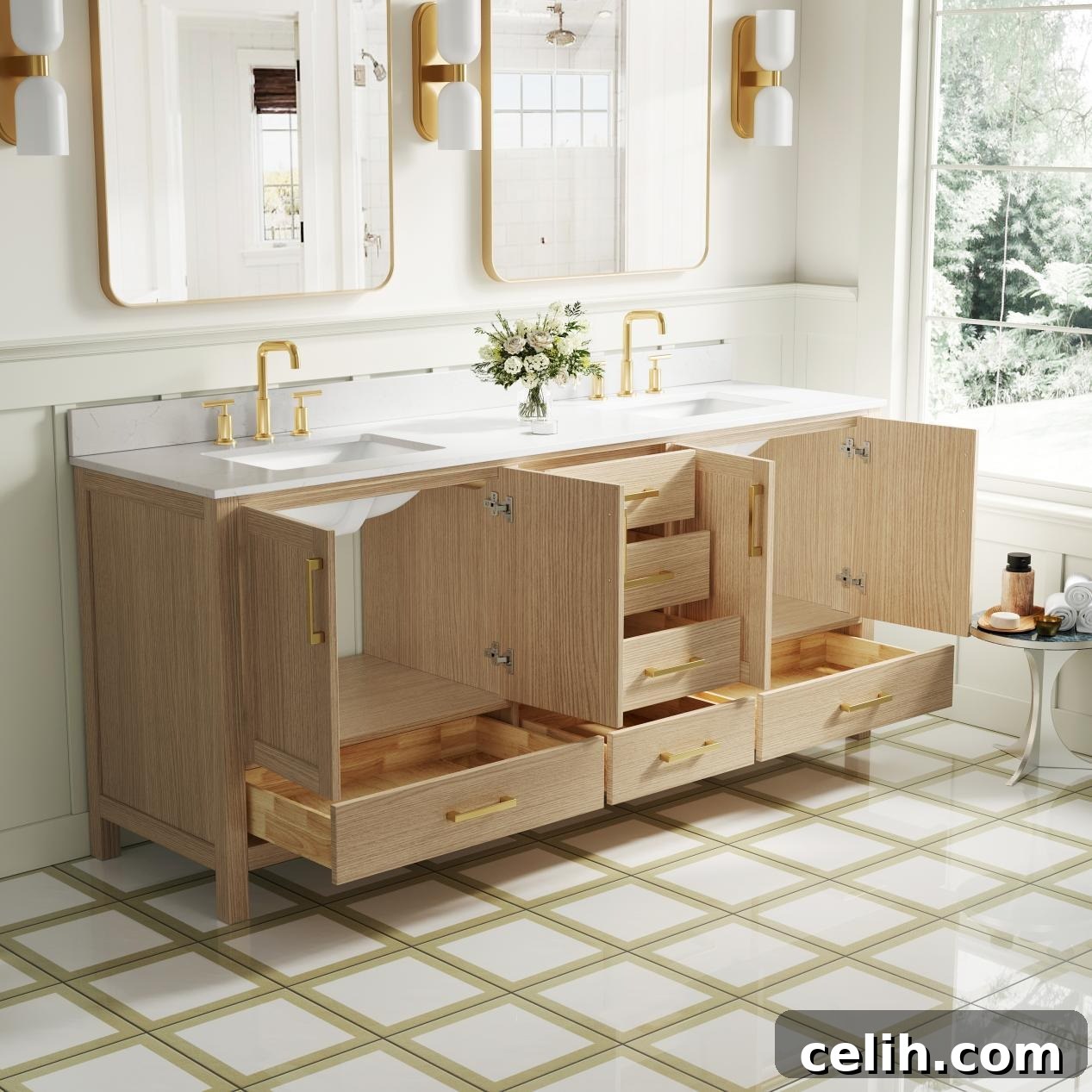
Light wood bathroom vanities—from white oak to light walnut and natural oak grain—have become one of the fastest-growing trends in home decor. As consumers increasingly prefer natural materials and warm tones, wood-coloured vanities have surged in popularity. According to the 2024 US Bathroom Decoration Trends Report by Houzz, wood tones now lead consumer preferences for bathroom cabinets at 26%, surpassing traditional white and gray options.
Industry professionals say the rise of light wood vanities reflects not only a desire for natural design but also a broader shift: bathrooms are evolving from purely functional rooms into calming, restorative spaces.
So, what colours pair best with light wood bathroom vanities in today’s market?
Why light-coloured wood has become mainstream
More than 76% of bathroom renovation projects include replacing the vanity, and wood-grain colour schemes have grown steadily over several years. In 2022, 30% of homeowners chose wood-toned vanities; by 2024, natural wood remained a top choice.
Designers point to three main advantages of light wood:
- It creates a warm, natural atmosphere.
- It can increase the perceived openness of small bathrooms.
- It pairs easily with modern, Nordic, Japanese, and contemporary farmhouse styles.
At the same time, residential design is shifting away from the cold gray palettes of the past decade toward warmer, earthier hues and natural wood tones.
First Choice: Warm white
Warm white remains the safest and most widely accepted pairing for light wood vanities. Warm white walls and finishes highlight the wood grain and lift the room’s brightness. Unlike cool white, warm white carries beige or cream undertones that naturally complement the yellow and brown elements in wood.
Common, successful pairings include:
- White oak vanities with cream white walls for a timeless, welcoming palette that showcases wood grain while reflecting light.
- Light wood cabinets with white quartz countertops to combine timber warmth with the clean look of quartz for a fresh contemporary finish.
- Warm white subway tiles and brushed brass fixtures paired with light wood for a classic, versatile aesthetic that suits Scandinavian and transitional interiors.
- Natural oak cabinets with warm white walls and light stone flooring to maximise brightness and openness in smaller bathrooms.
- White oak vanities with warm wall paint and soft beige textiles to introduce gentle texture while keeping a calm, cohesive palette.
Designers favour warm white for its flexibility: it enhances the richness of wood grain and creates a softer, more inviting atmosphere, while allowing accessories and hardware to be updated over time without overhauling the scheme.
Second Choice: Sage green
If warm white represents the classic choice, sage green reflects current trends. Demand for calming, natural “healing” interiors has risen, and design firms list sage green among the most popular bathroom colours for 2025–2026.
Color psychology shows green promotes calm and balance; combined with the warmth of light wood, it creates a soothing spa-like environment. Practical applications include:
- Sage green wall tiles as feature walls, shower surrounds, or splashbacks to form an organic palette with light wood cabinetry.
- Sage accessories—towels, dispensers, baskets, artwork, and plants—to add subtle, cohesive colour touches without overpowering the design.
- Sage floor tiles or patterned flooring to add depth and texture while complementing wood tones for a restful atmosphere.
On the U.S. West Coast and Northeast, “white oak and sage green” has become a frequent and well-regarded pairing.
Third Choice: Beige and milk-coffee tones
As the “Chromatic Neutral” concept gains traction, traditional gray is being replaced by beige, milk-coffee, and light camel shades. These hues create a warmer alternative to pure white while preserving a modern, refined look.
Examples of effective pairings:
- Beige walls for a gentle transition between wood tones and other finishes, maintaining wood grain as a focal feature.
- Milk-coffee ceramic tiles to add depth and layered colour without dominating the space.
- Camel-coloured soft furnishings—towels, bath mats, window treatments—that add richness and understated luxury to the palette.
Designers view these warm neutrals as a livelier, more contemporary alternative to cool gray—especially popular in mid- to high-end residential projects where white oak vanities pair with light beige walls and cream stone countertops for a cohesive natural look.
Fourth Choice: Light blue
Blue has long been a bathroom classic because of its connection to water. Light blue tones enhance a bathroom’s refreshing, airy character and work well with light wood vanities.
- Sky blue brings a coastal, relaxed vibe—perfect for a bright, uplifting bathroom.
- Grey-blue tones complement light wood in minimalist and contemporary interiors, balancing warmth and coolness.
- Haze blue adds soft depth and texture for a refined, calm space without the intensity of stronger blues.
In coastal regions such as Florida and California, the light wood and blue combination remains a popular and enduring choice, balancing natural warmth with modern freshness.
Fifth Choice: Dark accent colours
While trends favor lighter palettes, dark accents are increasingly used to create contrast and definition. Strategic dark elements can prevent a space from feeling too uniform and enhance the perceived luxury of light wood vanities.
- Matte black hardware—taps, handles, shower fittings, and towel rails—provides bold contrast and a contemporary designer look.
- Dark grey frames and fixtures add structure and focal points that balance softer wood tones.
- Deep blue storage units introduce richness and personality while complementing the warmth of light wood.
Many homeowners and designers note that pairing light wood with black hardware effectively elevates a bathroom’s sense of luxury without making it feel heavy or monotonous.
What industry professionals say
Experts predict bathrooms will continue moving toward natural, wellness-focused design over the next several years. Houzz research indicates 76% of homeowners plan to upgrade vanities, and 61% prefer custom or semi-custom options.
Wooden vanities are a leading choice as the industry shifts from cool gray palettes toward warmer, more natural colour schemes.
Conclusion
Based on market data and professional insight, the best colours to pair with light wood bathroom vanities are warm white, sage green, milk-coffee beige, light blue, and selective dark accents. Warm white remains the most widely accepted and universal choice, while sage green shows significant momentum as a trend-forward option. As consumers increasingly prioritise natural materials, healthy living, and emotional comfort, light wood vanities combined with natural, warm colour schemes are likely to remain a dominant direction in modern bathroom design beyond 2026.