
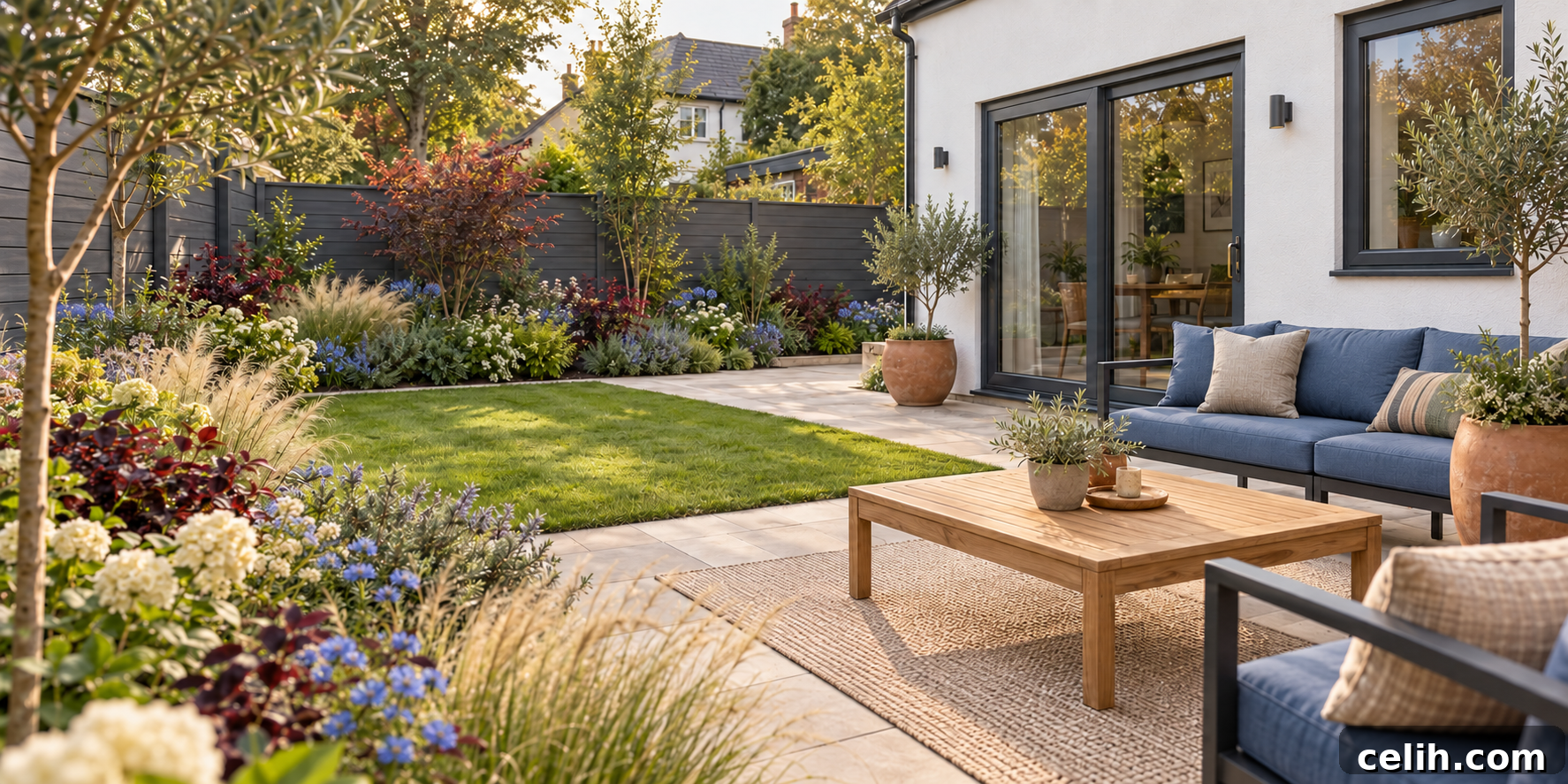
Ask someone about their garden colour scheme and they’ll probably start talking about flowers. Pink roses, purple alliums and white hydrangeas certainly add colour, but step outside in January and most flowers have gone. What remains are the elements that form the garden’s permanent backdrop.
Brickwork, fences, paving, decking, pots, the shed, garden furniture and evergreen plants are visible year-round. These are the colours that define the garden’s long-term palette and shape how the space feels.
Colour influences how we perceive a space and the mood it creates. Some combinations feel calm and restful, while others seem warmer, brighter or more energetic. In a garden, that effect comes from much more than flowers.
Choosing a garden colour palette is therefore like decorating a room. Rather than adding colours one purchase at a time, start with what you already have and build a small, coherent palette that links the house, hard landscaping and planting.
Start With the Colours You Cannot Easily Change
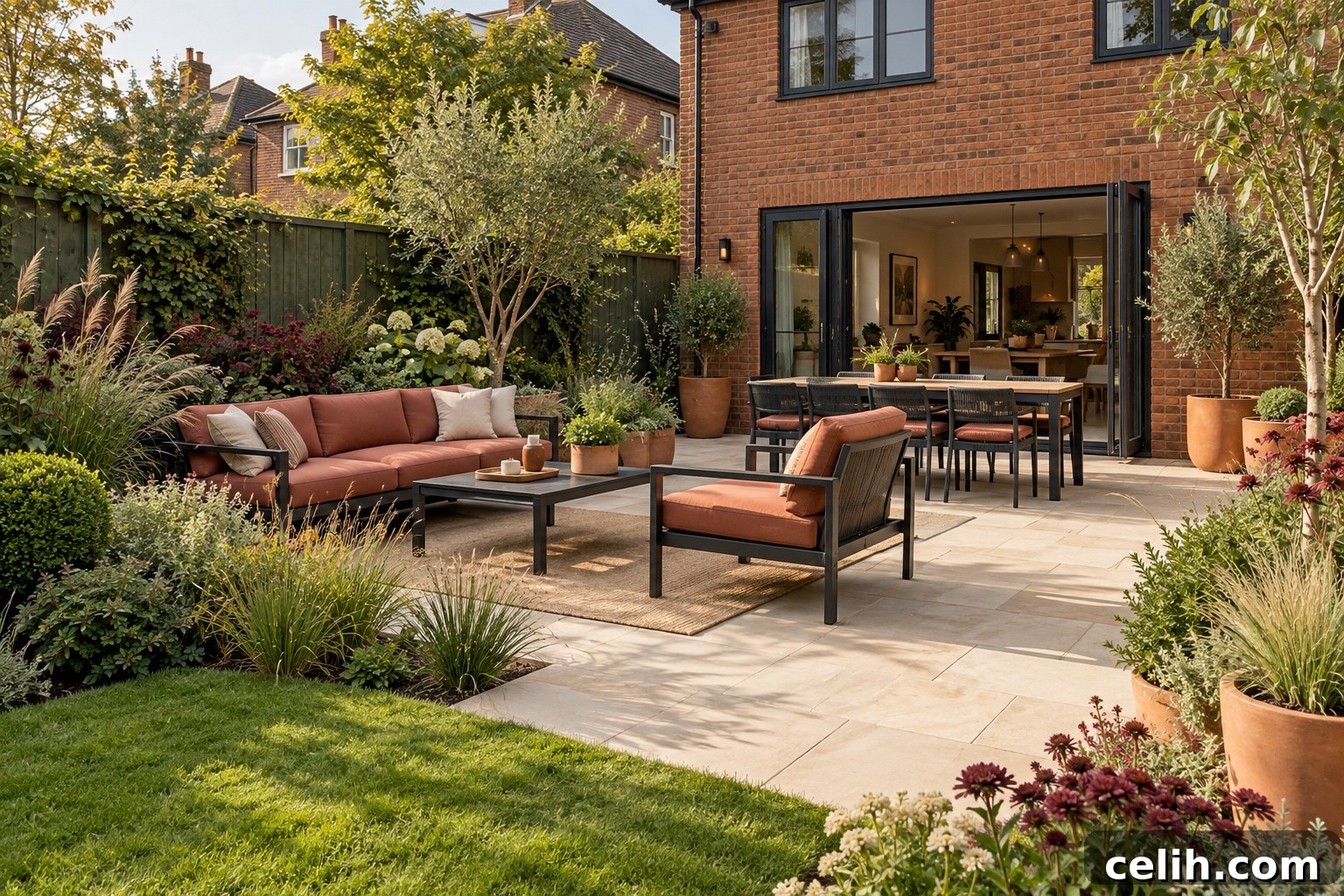
Before consulting paint charts or planting guides, stand outside and study your house. Brick can read as red, orange, brown, buff or purple-tinged; render may be cream, white or grey. Window frames, doors and roof tiles add further tones. These fixed elements should guide the garden’s palette.
If your house has warm red brick, for example, introducing cool greys, bright-white fencing and yellow-toned paving can create visual competition. Repeating warmer or more muted shades usually produces a calmer result. You don’t need exact matches—subtle harmony is the aim.
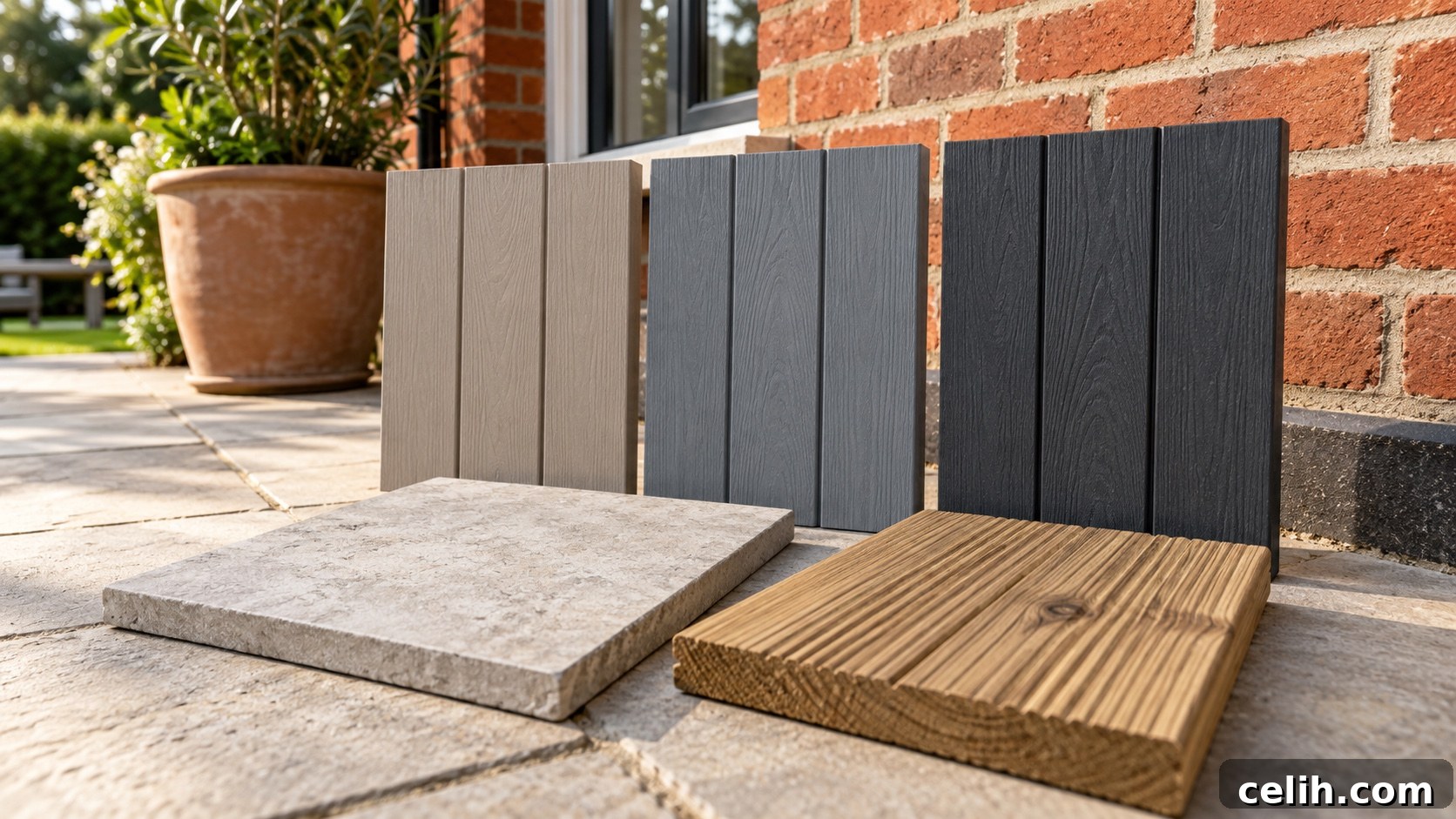
Because subtle undertones matter, order physical samples of external materials when possible. A grey can carry blue, green or warm undertones that change how it reads alongside brick, stone or planting.
Build Your Garden Around Three Colour Layers
To avoid colour chaos, think in three layers:
1. The permanent layer
This includes the house, paving, walls, fencing and decking. These large, fixed colours deserve the most thought because they are costly or difficult to change.
2. The flexible layer
Furniture, cushions, planters and painted accessories can introduce bolder tones because they are easy to replace or repaint.
3. The living layer
Plants provide leaves, bark, stems, berries and seed heads, as well as flowers. This layer brings seasonal change and tactile variety.
Let the permanent layer form a calm background, use the flexible layer to add personality, and let planting provide the seasonal pops of colour.
Decide Whether Your Boundaries Should Disappear or Stand Out
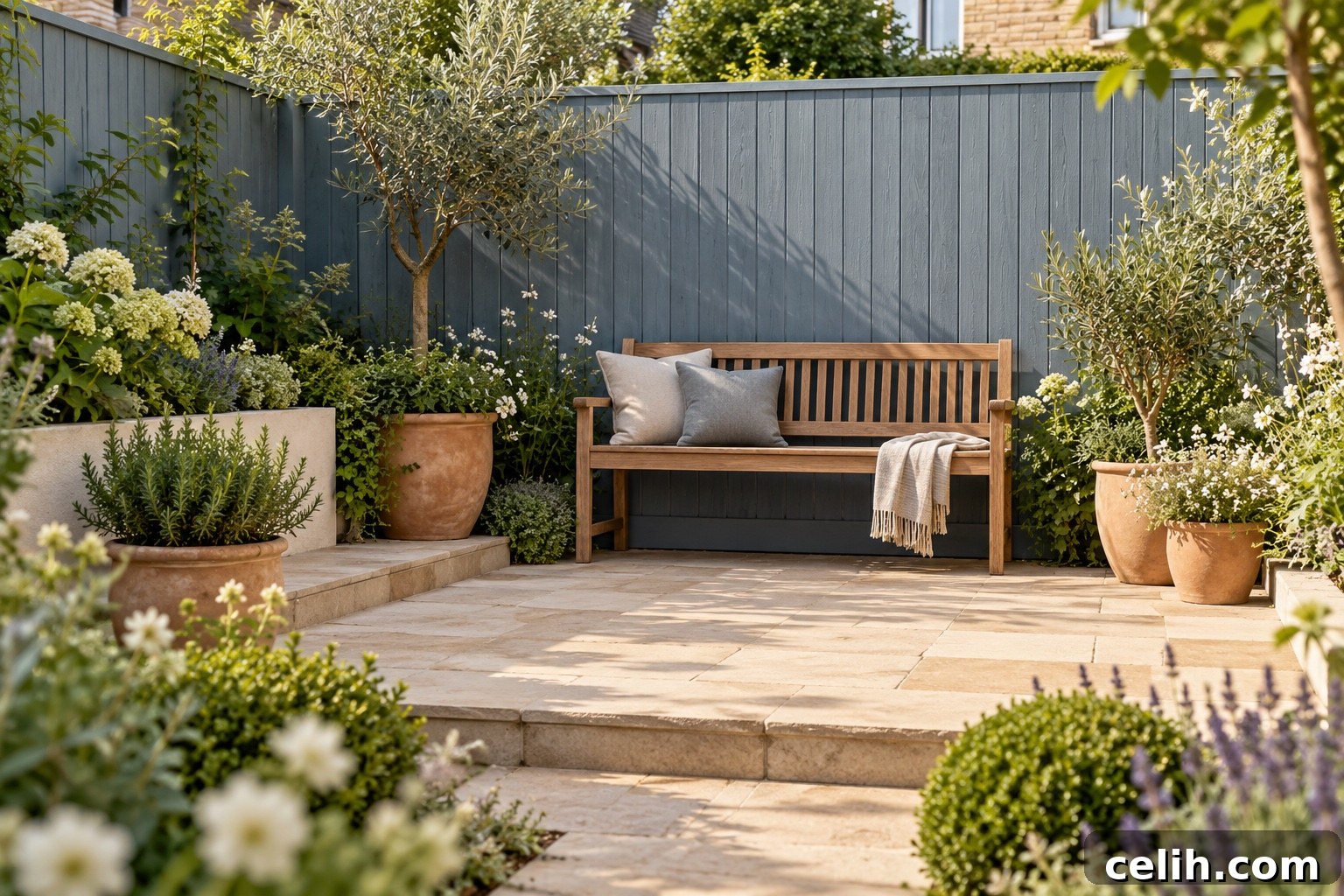
Fences occupy a surprising amount of visual space, especially in small gardens. Two side fences in an average-length garden can create many square metres of vertical surface, so their colour strongly affects the overall feel.
Subdued shades such as dark green, brown or charcoal help boundaries recede and let planting take centre stage. Lighter or more distinctive finishes can turn a fence into a feature. There’s no single best choice—decide whether you want boundaries to blend in or to make a statement.
If you’re selecting a material with a fixed finish, get samples and view them beside your brickwork, paving and plants at different times of day. Materials age differently, so check care recommendations before committing.
Repeat Colours Instead of Continually Adding New Ones
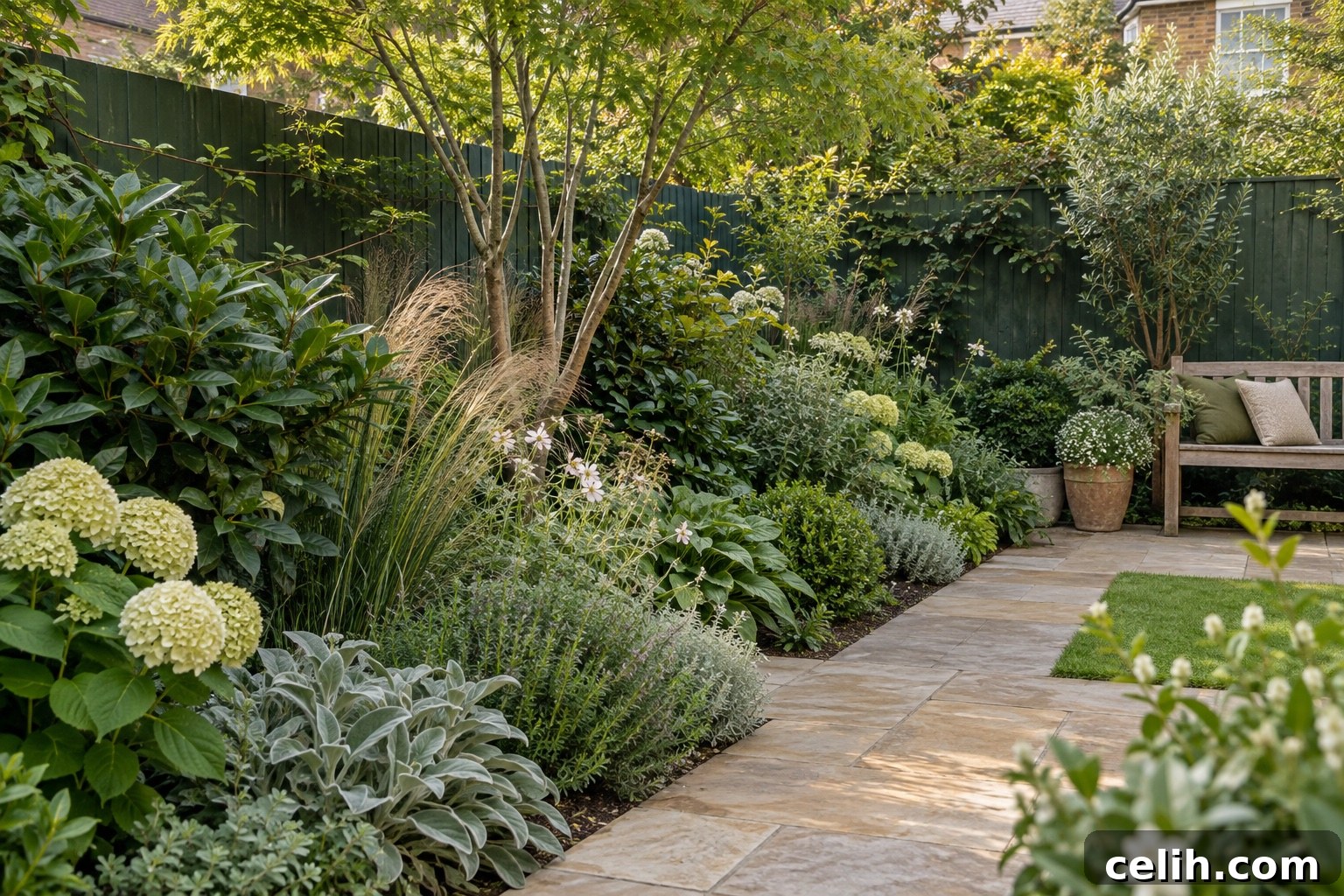
Repetition makes a garden feel intentionally designed. Echo a window frame colour in a planter or furniture frame, match warm brick with terracotta pots, or carry a paving tone into gravel. These relationships don’t need to be obvious—our eyes notice subtle connections.
Remember that green is a colour too. Gardens offer a vast range of greens: blue-green conifers, lime grasses and soft grey-green foliage all behave differently. Glossy evergreen leaves reflect light differently from mat foliage, and bark, stems and seed heads provide late-season interest. Choose plants partly for leaf colour and texture as well as their blooms to maintain colour through winter.
Use Flowers as the Changing Part of the Palette
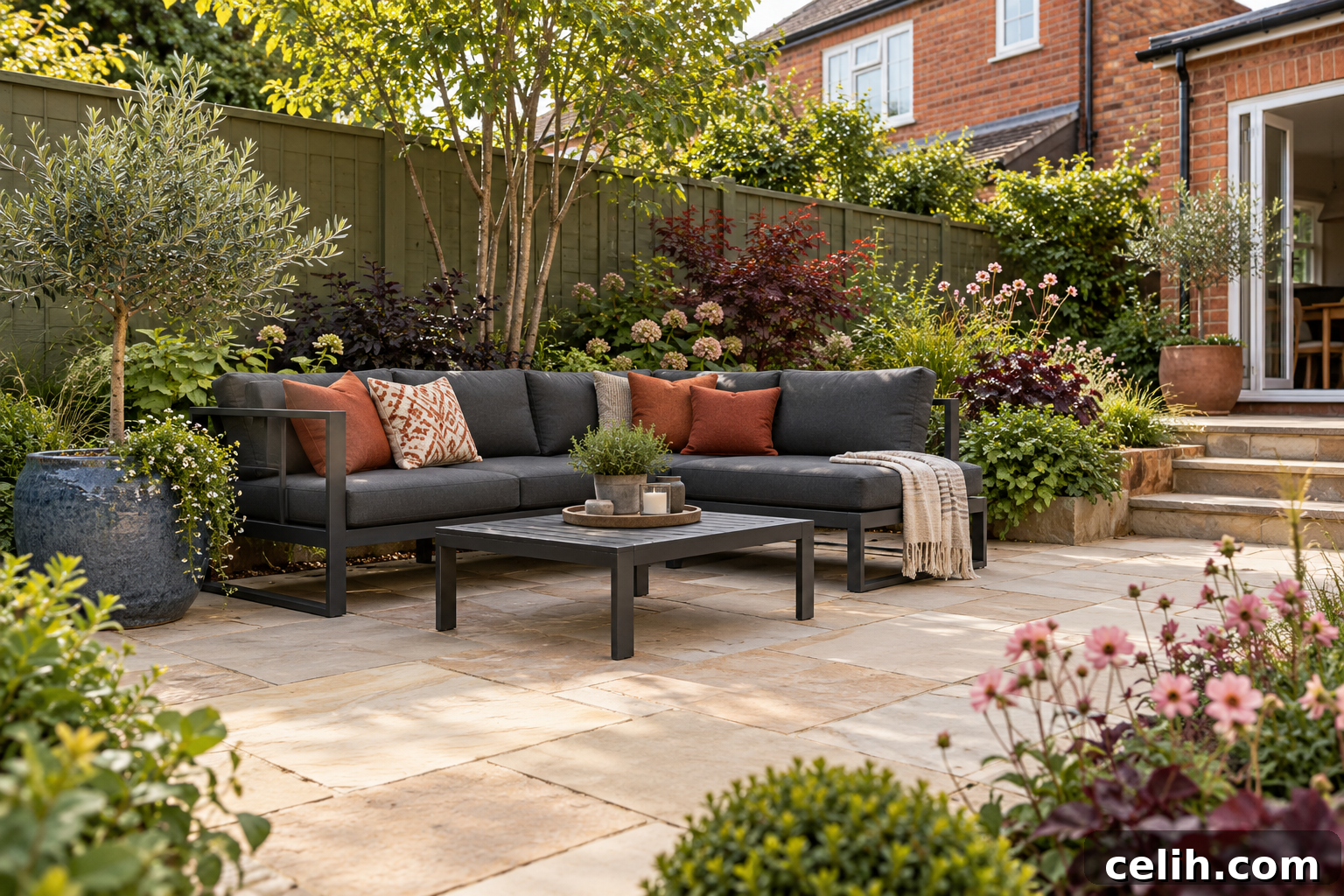
Once the permanent palette works, choosing flowers becomes easier. You might keep hard landscaping subdued and use planting for bold reds and oranges, or build around soft pinks, whites and blues against muted boundaries. A practical approach is to pick two or three main flower colours and repeat them across the garden rather than buying disparate blooms at random.
Don’t Choose Outdoor Colours from a Screen Alone
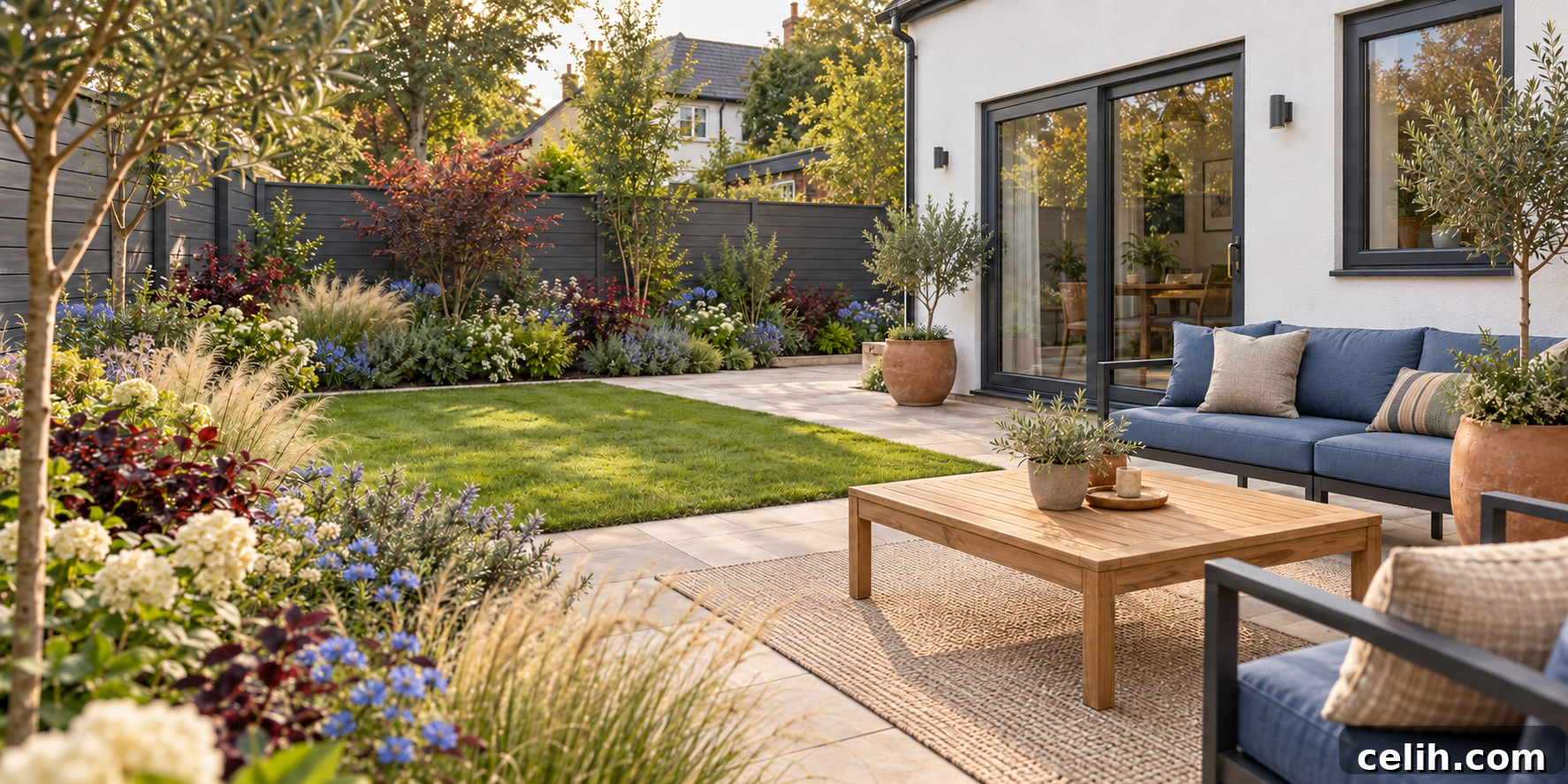
Screens are useful for inspiration but not a final decision. Display settings and brightness affect how colours appear. For significant, permanent features, order samples and view them together in natural light at different times of day. Remember that timber weathers, metals have coatings, and composites age differently—confirm maintenance and longevity before you buy.
Give Your Garden a Palette, not a Rulebook
A successful garden colour scheme doesn’t demand that every pot match the fence or that every flower follow a strict formula. The objective is to make the major colour decisions deliberately: start with the house, choose a restrained permanent palette, decide whether boundaries should blend in or stand out, repeat a few connecting colours, and let plants and accessories provide seasonal variety.
Do this and the garden keeps its identity even when the last summer bloom fades. Flowers then act as the changing decoration, while the garden itself provides the coherent, year-round palette.