
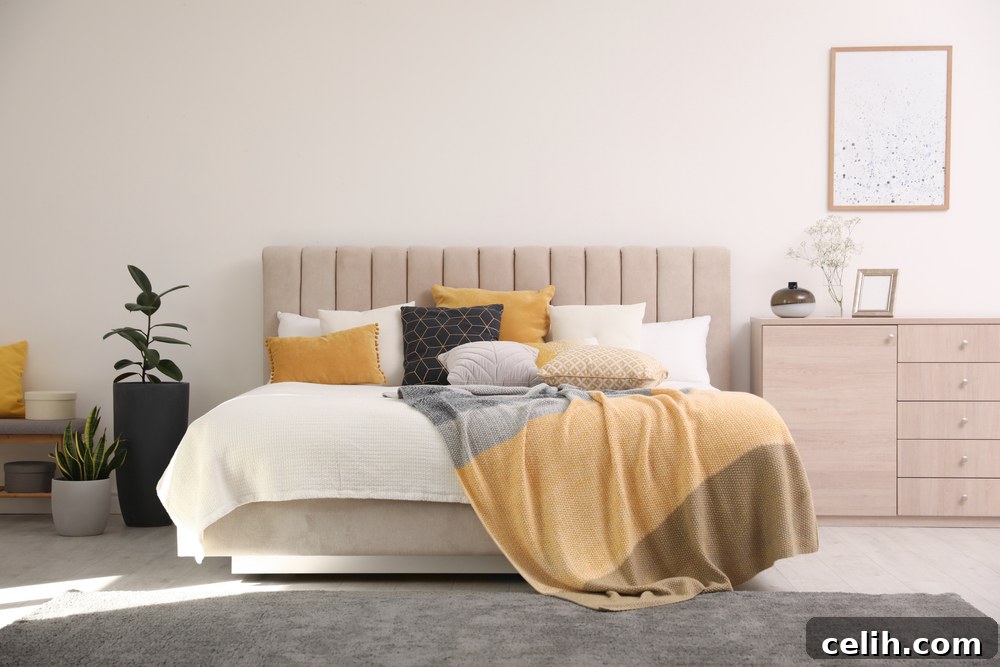
Living in a smaller home or apartment often comes with its unique charm and a host of design opportunities. While sprawling mansions certainly have their appeal, there’s immense satisfaction in transforming a compact living area into a sanctuary that feels both expansive and inviting. The primary challenge for many with smaller rooms, however, is making those spaces feel as light, open, and airy as possible. The good news? You don’t need a complete architectural overhaul to achieve this. Whether you’re optimizing a cozy bedroom, a compact living room, or even a cleverly designed loft conversion, there are numerous strategic design choices that can dramatically enhance the sense of space and brightness. Below, we’ll explore a comprehensive guide to unlocking the full potential of your smaller areas, making them feel significantly larger and more luminous.
1. The Power of Your Colour Palette: Light, Bright, and Beyond
When it comes to creating an illusion of space, your colour palette is your most potent tool. Dark, rich colours, while beautiful in certain contexts like a dramatic study or a sophisticated dining room, tend to absorb light, making small rooms feel even smaller and more enclosed. Instead, gravitate towards a spectrum of light, bright, and airy hues. Think classic whites, warm creams, soft greys, and gentle pastels like pale blues, mint greens, or blush pinks. These colours reflect natural and artificial light, immediately expanding the visual boundaries of your room and fostering a sense of openness. For a cohesive and seamless look, consider painting the ceiling a slightly lighter shade than the walls, or even the same colour, to blur the lines between them. This trick prevents the eye from stopping abruptly, making the room feel taller. If you crave a touch of deeper colour, introduce it through carefully chosen accent pieces like cushions, throws, or artwork, rather than dominating large wall surfaces. A monochromatic or analogous colour scheme (using colours next to each other on the colour wheel) can also create a harmonious flow, preventing visual clutter and promoting a calm, spacious feel.
2. Mirrors: Your Room’s Strategic Expander
Mirrors are not just for checking your reflection; they are interior design superheroes for compact living areas. Their reflective properties work wonders, making any room appear significantly larger and brighter than its actual dimensions. The key lies in strategic placement. Position a large mirror directly opposite a window to capture and bounce natural light deeper into the room, instantly amplifying its luminosity. If you don’t have a great view, place it opposite a piece of art or another attractive feature to double its visual impact. Consider floor-length mirrors leaning against a wall, or a collection of smaller mirrors arranged as a gallery wall to create interesting reflections and add depth. Mirrored furniture, such as a coffee table or a dresser with mirrored accents, can also subtly contribute to the expansive feel by reflecting light and minimizing their visual weight. This simple yet highly effective trick is often the first step in transforming a cramped space into one that feels open and inviting.
3. Embrace Minimalism: Declutter for Clarity and Space
One of the most immediate and cost-effective ways to make a small space feel larger is to declutter relentlessly. A cluttered room, regardless of its size, will always feel cramped and chaotic. Every item takes up visual and physical space, contributing to a sense of overwhelm. Begin by adopting a “less is more” philosophy. Go through your belongings with a critical eye, asking yourself if each item truly serves a purpose or brings you joy, as advocated by Marie Kondo. If it doesn’t, thank it and let it go. Focus on clearing surfaces, minimizing knick-knacks, and organizing what remains. Implement a “one in, one out” rule to prevent new items from accumulating. Utilize clever storage solutions to tuck away necessities, ensuring everything has a designated home. A clean, organized, and minimalist environment not only frees up physical space but also provides mental clarity, making your small room feel like a serene oasis rather than a storage unit.
4. Furniture with Purpose: Size, Transparency, and Versatility
The type and scale of furniture you choose can profoundly impact how spacious your room feels. In a small area, oversized or bulky pieces can quickly overwhelm, making the room feel cramped and uninviting. Instead, opt for furniture that is proportional to the size of your space. Look for slimline sofas with exposed legs, which allow light to pass underneath and create a visual sense of openness. Armchairs should be scaled down, and coffee tables should be compact or even nesting, allowing them to be tucked away when not in use. Consider transparent materials like acrylic or glass for tables and chairs; their see-through nature minimizes their visual weight, allowing the eye to travel through them without interruption. Additionally, choose pieces that are multifunctional, such as ottomans with hidden storage, sofa beds, or extendable dining tables. Arranging furniture away from the walls, even by a few inches, can also create a sense of breathing room, while keeping pathways clear ensures smooth movement throughout the space. Prioritize essential pieces and avoid filling every available corner.
5. Layered Lighting: Crafting Atmosphere and Depth
Effective lighting is paramount in creating a sense of space and warmth. Relying solely on a single overhead light fixture can cast harsh shadows and make a small room feel flat and uninviting. Instead, embrace a layered lighting approach, combining different types of light sources to create depth, dimension, and a cozy ambiance. Start with natural light; keep windows clean and use minimal, sheer coverings to maximize its entry. Supplement this with ambient lighting, such as recessed lights or a dimmer-controlled ceiling fixture. Add task lighting where needed, like a stylish desk lamp for reading or a pendant light over a specific work area. Finally, introduce accent lighting to highlight features or create mood, using wall sconces, small table lamps, or even string lights for a whimsical touch. The goal is to distribute light evenly throughout the room, eliminating dark corners and creating pockets of inviting warmth. Warm-toned bulbs (around 2700K-3000K) can also contribute to a more welcoming and cozy atmosphere.
6. Curtains: Elevate and Illuminate
Your choice and placement of curtains can make a surprisingly significant difference in how tall and open your room appears. The golden rule for small spaces is to hang your curtain rods as high as possible, often just a few inches below the ceiling. This draws the eye upward, creating the illusion of greater ceiling height and more expansive windows. Extend the rod beyond the window frame by several inches on each side to make the window appear wider, allowing more light in when the curtains are open. For the fabric itself, opt for light, airy materials like sheer linen, cotton voile, or lightweight blends. These materials allow natural light to filter through, maintaining brightness while still offering privacy. Choose colours that are light or match your wall colour to create a seamless visual flow. Heavy, dark drapes, while luxurious in a grand space, can feel oppressive and visually shrink a smaller room, blocking precious light and making the space feel closed off. Minimalist blinds or Roman shades are also excellent alternatives that offer clean lines and don’t take up much visual space.
7. Multifunctional Furniture: The Transformers of Compact Living
In the world of compact living, multifunctional furniture is a true game-changer. These ingenious pieces are designed to maximize utility without occupying additional footprint, making them essential for saving space and enhancing efficiency. Think beyond just a bed with storage underneath. Explore options like an ottoman that serves as extra seating, a footrest, and a hidden storage bin. A console table can transform into a desk or a dining surface when needed. Nesting tables can be pulled out for guests and neatly tucked away afterwards. Sofa beds are classics for a reason, providing both seating and an extra sleeping area. Wall-mounted drop-leaf tables can serve as a workstation or dining spot and then fold flat against the wall, disappearing when not in use. These “transformers” of interior design mean you don’t have to compromise on functionality or comfort, allowing a single piece of furniture to adapt to various needs throughout the day, ensuring your small space works harder and smarter for you.
8. Bring the Outdoors In: The Freshness of Plants
Adding indoor plants is a simple yet incredibly effective way to infuse life, colour, and a sense of freshness into any room, especially smaller ones. Beyond their aesthetic appeal, plants are natural air purifiers, helping to clean and oxygenate the air. This natural purification can make a confined space feel less stuffy and more breathable, counteracting any potential claustrophobic feelings. Choose plants that thrive indoors and are suitable for smaller spaces, such as snake plants, ZZ plants, pothos, or small ferns. Integrate them creatively: a hanging planter frees up floor space, a narrow plant stand can add vertical interest, or a few small potted plants on a shelf can bring a touch of nature without overwhelming the area. The vibrant greenery provides a refreshing contrast to lighter walls and helps to connect your indoor environment with the natural world, promoting a sense of calm and openness.
9. Strategic Use of Art and Decor
While decluttering is crucial, it doesn’t mean your walls need to be bare. Thoughtful placement of artwork and decor can enhance the feeling of space. Instead of many small, busy pieces, consider one large piece of art or a carefully curated gallery wall. A large painting can act as a focal point, drawing the eye and making a wall seem larger. For a gallery wall, choose frames that are similar in style or colour to maintain cohesion. Avoid overly ornate frames or chunky decor items that protrude too much into the room. Floating shelves can be used for display, but keep them minimally styled. Choose decor items with reflective surfaces like glass or polished metals to catch and bounce light. Remember, every piece should be intentional and contribute to the overall aesthetic without adding visual clutter.
10. Flooring: Consistency is Key
The flooring you choose can significantly impact the perceived size of a room. For small spaces, maintaining consistent flooring throughout adjacent areas, especially in open-plan layouts, creates an uninterrupted visual flow. This seamless transition prevents the eye from stopping at doorways or room divisions, making the entire area feel larger and more connected. Opt for lighter-coloured flooring materials such as light wood, pale tiles, or neutral carpets. Dark flooring can absorb light and make a room feel heavy and confined. If using rugs, ensure they are appropriately sized – too small, and they emphasize the room’s diminutive nature; too large, and they can overwhelm. A rug that leaves about 10-18 inches of exposed floor around its perimeter is usually ideal. Striped flooring can also be used strategically to elongate a narrow room if the stripes run parallel to the longer dimension.
Embracing a smaller footprint doesn’t mean sacrificing style, comfort, or the feeling of spaciousness. With clever design choices, a strategic approach to colour, lighting, and furniture, and a commitment to organization, you can transform any compact area into a wonderfully light, airy, and inviting haven. Tiny can indeed be beautiful, efficient, and surprisingly grand.