
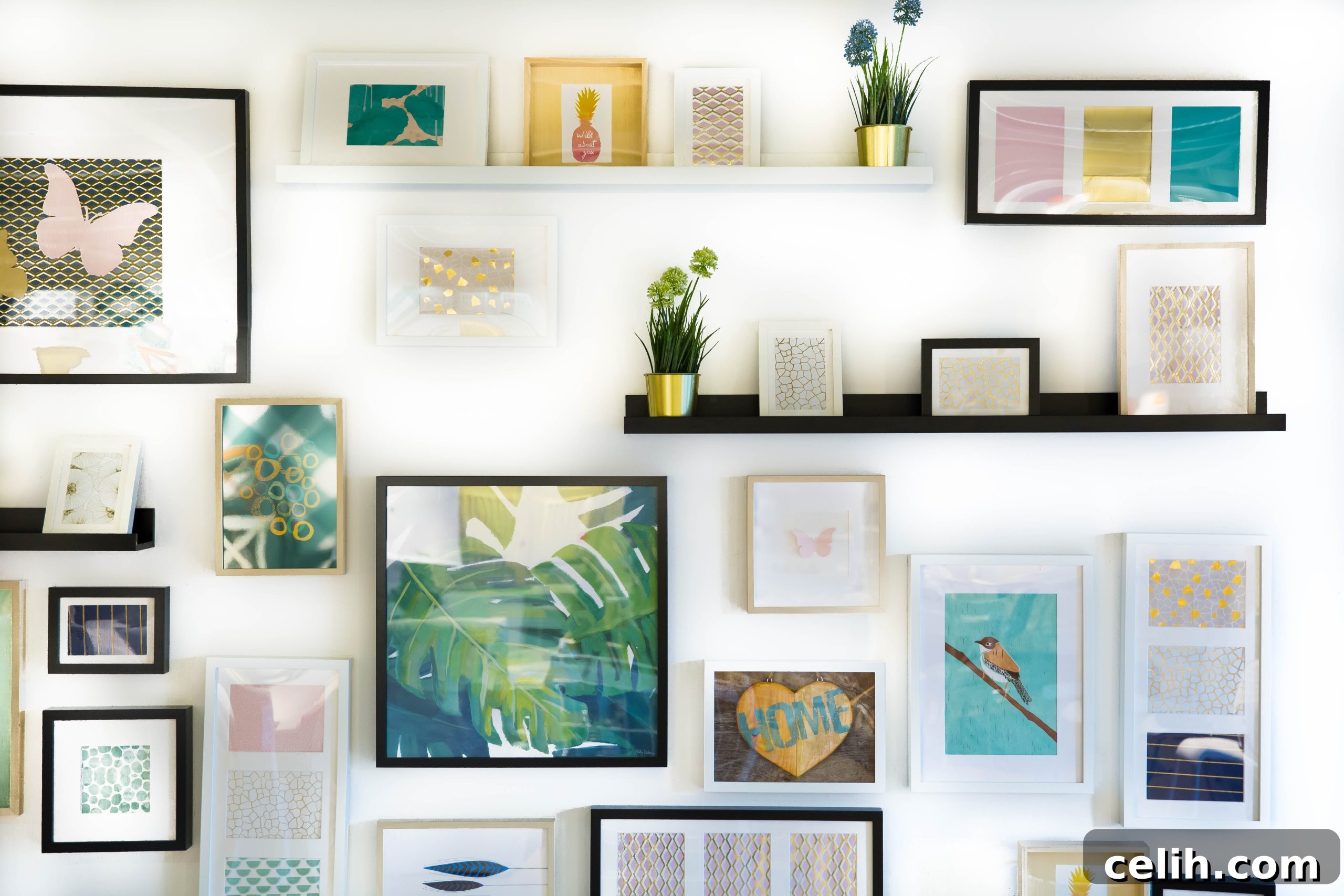
Transform Your Space: The Ultimate Guide to Creating Stunning Gallery Walls
Gallery walls have emerged as a timeless trend in interior design, offering a unique opportunity to infuse personality and artistic flair into any room. Whether you’re a seasoned art collector or simply looking to display cherished memories, a well-curated gallery wall can become the focal point of your home. It’s more than just hanging pictures; it’s about storytelling, creating visual harmony, and making a space truly your own. From meticulously arranged, symmetrical layouts to wonderfully chaotic and eclectic collections, the possibilities are endless. This comprehensive guide will explore five innovative ideas, complete with practical tips and inspiration, to help you craft a gallery wall that not only looks incredible but also reflects your unique style and vision.
1. The Power of Cohesion: Create Impact with a Single Color Gallery Wall
Imagine walking into a room where every piece of art on the wall, despite varying subjects, frames, and sizes, shares a common thread: color. A single-color gallery wall creates an incredibly sophisticated and impactful statement, drawing the eye without overwhelming the senses. This approach brings a remarkable sense of unity and calm to your space, making it feel intentionally designed and harmoniously balanced. It’s particularly effective in rooms where you want to introduce a specific mood or reinforce an existing color palette. For instance, a wall adorned with various shades of green, as depicted in the inspiring example below, can bring a refreshing, natural vitality to an otherwise neutral room.
Image source
To achieve this impactful look, focus on collecting artworks, photographs, or even abstract pieces that predominantly feature a single hue or a range of its shades. You can play with different textures and styles—from vibrant landscapes to subtle watercolors—as long as the dominant color remains consistent. Consider how the chosen color interacts with your existing wall paint. A striking contrast, like the fresh green against white walls, creates a lively pop, while a subtle tonal variation with a similar wall color can offer a more subdued, architectural feel. This technique is perfect for adding a touch of elegance and thoughtful design to any living room, bedroom, or hallway, proving that sometimes, less is indeed more when it comes to visual impact.
2. Timeless Elegance: Go Monotone with a Stylish Black and White Gallery Wall
Few design choices evoke a sense of classic sophistication quite like a black and white gallery wall. This timeless aesthetic transcends trends, offering an elegant backdrop that highlights the composition, texture, and emotion of each piece rather than distracting with color. A monochrome display instantly elevates a space, lending it a refined and artistic character that feels both modern and traditional. It’s an incredibly versatile option, capable of fitting into almost any decor style, from minimalist and industrial to farmhouse chic and bohemian. The absence of color allows for a deeper appreciation of form and contrast, making every image stand out with stark beauty.
Creating your own black and white gallery wall is an exciting creative endeavor. Start by gathering a diverse collection of black and white photography, architectural prints, abstract illustrations, or even typographic art. You can mix and match different frame styles—sleek black, crisp white, natural wood, or even metallic accents—to add visual interest without compromising the monochromatic theme. The beauty of this approach lies in its ability to bring disparate elements into a cohesive narrative. For those who crave a subtle hint of vibrancy, consider introducing a single piece with a vibrant splash of color, perhaps a brightly colored mat within a black frame, or a single photograph where one element is colorized against an otherwise monochrome scene. This unexpected pop can draw the eye and add an intriguing dimension, as seen in beautifully curated spaces like the one from the Lettered Cottage. A black and white gallery wall is not just about decorating; it’s about making a profound artistic statement that resonates with enduring grace.
3. Seamless Integration: Match Your Gallery Art to Your Wall Color
For a truly harmonious and sophisticated aesthetic, consider an ingenious design trick: matching your gallery art directly to the color of your wall. This technique creates an incredibly refined and understated look, allowing the art to feel like an organic extension of the architectural space rather than simply an addition. The result is a calming, intentional environment where everything feels perfectly balanced and unified. This approach is particularly effective in spaces where you desire a minimalist feel, or when you want the art to make a subtle statement, providing texture and form without stark visual interruption. It communicates a high level of design sensibility and attention to detail.
Image source
To achieve this elegant integration, select artwork that features a dominant color closely matching your wall paint. This could involve abstract pieces where the background blends seamlessly, landscapes with a sky or element in your wall’s hue, or even minimalist art with a focus on tone-on-tone textures. Alternatively, you can use colored mats that echo the wall color, creating a subtle border that enhances the artwork while maintaining cohesion. This strategy looks particularly organized and refined, as demonstrated in this inspiring design from House Beautiful. It’s a masterful way to create visual continuity, allowing your gallery wall to contribute to the overall ambiance of the room without competing for attention, fostering a sense of serene beauty and thoughtful design.
4. Embrace Individuality: Be Eclectic and Think Outside the Box/Frame
A gallery wall is perhaps the ultimate canvas for personal expression, and sometimes, the most captivating displays are those that dare to break conventional rules. An eclectic gallery wall encourages you to think beyond traditional framed prints and photographs, inviting you to curate a collection of items that truly resonate with your personal story, passions, and adventures. This approach celebrates individuality and creativity, transforming your wall into a dynamic tapestry of memories, interests, and unique treasures. It’s about letting your personality shine through every piece you choose, creating a space that is authentically and unapologetically yours. The beauty of eclecticism lies in its freedom, allowing you to blend diverse elements into a cohesive, yet wonderfully unpredictable, display.
Image source
The possibilities for an eclectic gallery wall are truly limitless. Beyond conventional art, consider incorporating items like vintage mirrors of varying shapes and sizes, decorative plates, unique textiles or tapestries, old maps, small sculptures, or even pressed flowers. Think about significant personal mementos: travel souvenirs, cherished family heirlooms, children’s artwork, or concert tickets. The board game wall created by Gourley Girl & Guy, shown above, is a fantastic example of this creative spirit – turning everyday objects into a vibrant, fun, and deeply personal display. To ensure your eclectic wall feels curated rather than chaotic, try to find a unifying element: perhaps a consistent frame color, a particular theme (e.g., travel, nature, vintage), or a balanced layout that distributes visual weight evenly. This imaginative approach transforms a simple wall into a conversation starter, a reflection of your journey, and a truly one-of-a-kind piece of home decor.
5. Flexible Displays: Create a No-Hang Gallery Wall Effect
For renters, those with challenging wall surfaces, or anyone who simply prefers the flexibility of rearranging decor without the commitment of nails and holes, a “no-hang” gallery wall is an absolute game-changer. This innovative approach offers all the visual impact of a traditional gallery wall with none of the permanent fuss, making it ideal for experimental stylists and temporary living situations. It’s about utilizing existing surfaces and furniture to create stunning, layered displays that are easy to update, adapt, and move. This method embraces a more relaxed, lived-in aesthetic, proving that beautiful art arrangements don’t always require a hammer and nails.
Image source
There are several creative ways to achieve a no-hang gallery wall. The most popular method involves dedicating an entire wall shelf or several strategically placed picture ledges to display your favorite photos, prints, and small artworks. As seen in the example from House to Home, you can mix different sizes and frames, layering them against each other to create depth and visual interest. Another fantastic option is to simply lean larger framed pieces against the wall on the floor, on top of a dresser, sideboard, or mantelpiece. This creates an effortlessly chic and relaxed vibe. Experiment with varying heights and orientations, incorporating small decorative objects, plants, or books amongst your art to create engaging vignettes. The beauty of a no-hang gallery wall lies in its fluidity—you can swap pieces, adjust arrangements, and completely refresh your display whenever inspiration strikes, offering endless creative possibilities without any commitment.
Essential Tips for Planning Your Perfect Gallery Wall
Creating a truly stunning gallery wall, whether structured or eclectic, requires a bit of planning and thoughtful execution. Here are some essential tips to guide you through the process, ensuring your final display is cohesive, balanced, and perfectly complements your space:
Measure Your Space and Collection
Before you even think about hanging, accurately measure the wall space you intend to use. Consider the height and width, and how the gallery wall will relate to furniture placed beneath it. Similarly, take stock of all the art and objects you plan to include, noting their dimensions, frame styles, and colors. This preparation helps in visualizing the scale and proportion of your display.
Plan Your Layout on the Floor
This is arguably the most crucial step. Lay all your framed pieces and objects on the floor in front of your chosen wall. Experiment with different arrangements, moving pieces around until you find a layout that feels balanced and aesthetically pleasing. Consider the spacing between items, ensuring there’s enough breathing room to prevent the wall from looking too cluttered. A common practice is to start with a central anchor piece and build outwards.
Use Paper Templates for Precision
Once you’ve finalized your floor layout, cut out paper templates the exact size of each frame. Label them, then tape these paper cutouts onto your wall using painter’s tape. This allows you to visualize the exact placement, make adjustments easily, and mark where each nail or hanger should go without damaging your walls prematurely. It’s an invaluable step for ensuring accuracy and avoiding unnecessary holes.
Choose Your Frames Wisely
Frames play a significant role in the overall look of your gallery wall. For a unified style, opt for matching frames in terms of color (e.g., all black, all white, all natural wood) or material. For an eclectic look, feel free to mix and match different frame styles, but try to find a common element, such as similar tones or textures, to prevent the display from looking too chaotic. Consider the matting too; a white mat can provide a crisp, clean border that unifies diverse artworks.
Select the Right Hanging Hardware
Invest in good quality picture hanging hooks or strips appropriate for the weight of your frames. Use a level to ensure everything is straight, and a tape measure for consistent spacing. For heavier pieces, wall anchors or stud finders might be necessary. Command strips offer a great alternative for lighter frames, especially for renters, as they provide strong hold without damaging walls.
Consider Lighting
Proper lighting can dramatically enhance your gallery wall. Natural light is ideal, but if your wall is in a darker area, consider adding picture lights above specific pieces or installing track lighting to illuminate the entire display. Good lighting ensures your art is seen and appreciated, bringing out its colors and details.
Mix Mediums and Textures
Don’t be afraid to incorporate different types of art and objects. Mix photographs with paintings, illustrations, mirrors, small sculptures, or even textile art. This variety adds depth, interest, and a rich tactile quality to your gallery wall, making it far more engaging than a simple collection of identical prints.
For even more creative concepts and visual inspiration, be sure to explore our Gallery Wall Display Ideas board on Pinterest.
Featured image credit: Photo by Jonny Caspari on Unsplash
Conclusion: Your Wall, Your Story
A gallery wall is more than just a decorative element; it’s a dynamic and evolving portrait of your life, tastes, and passions. From the sleek sophistication of a monochromatic theme to the playful charm of an eclectic collection, each approach offers a unique way to personalize your living space. We hope these five ideas and practical tips have inspired you to embark on your own gallery wall project. Remember, there are no strict rules—the best gallery wall is one that brings you joy, reflects your personality, and makes your house feel like a cherished home. So gather your favorite pieces, get creative with your layout, and transform your walls into a captivating display that tells your unique story.