
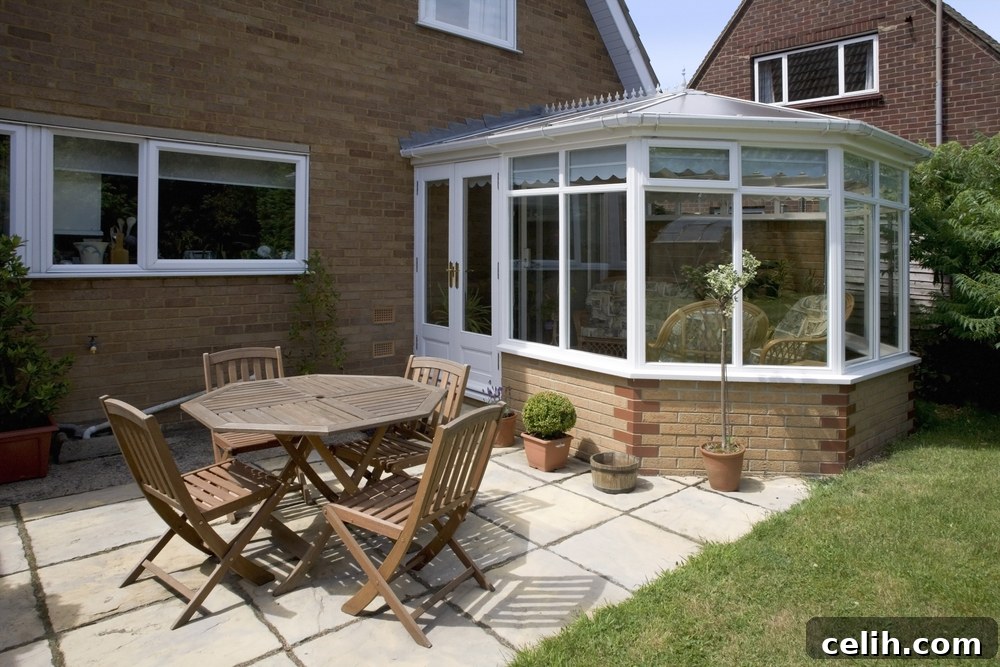
Imagine a space in your home where natural light floods in, offering serene views of your garden, a tranquil retreat from the hustle and bustle of daily life. This is the dream of a conservatory – a beautiful, sun-drenched extension designed to bring the outdoors in. Perhaps you’ve recently moved into a property boasting one of these charming additions, or maybe you’re contemplating having one built to enhance your living space and provide a versatile room for relaxation and enjoyment.
However, many conservatory owners quickly discover a common challenge: making this idyllic space comfortable throughout the year. Without proper planning and intervention, conservatories can become excessively hot during the summer months and unpleasantly cold and damp when winter arrives. This often relegates them to seasonal use, diminishing their potential as a valuable, year-round living area.
Fortunately, transforming your conservatory into a consistently warm, bright, and inviting sanctuary – regardless of the season – is entirely achievable. By implementing a few strategic improvements, you can combat extreme temperatures and ensure your conservatory remains a delightful and uplifting space to enjoy every single day of the year. From innovative insulation techniques to smart heating solutions and elegant interior touches, let’s explore how to unlock the full potential of your conservatory.
Optimizing Conservatory Insulation: Your Key to Year-Round Comfort
When it comes to creating a comfortable and energy-efficient conservatory, superior insulation is your most powerful ally. While traditional house walls allow for various insulation methods, conservatories present a unique challenge due to their predominantly glazed structure. The roof, being the largest surface area exposed to the elements, is often the primary culprit for heat loss in winter and heat gain in summer. Addressing this directly is paramount for achieving true year-round usability.
Modern advancements in conservatory technology mean you no longer have to settle for a perpetually chilly or sweltering space. The most effective solution for combating temperature extremes and retaining crucial warmth is the installation of high-performance insulated roof panels. These panels are specifically designed to significantly improve the thermal efficiency of your conservatory, transforming it from a seasonal room into a consistently comfortable extension of your home.
Insulated roof panels come in various forms, including lightweight tiled roofs, solid conservatory roof systems, and composite panels. Each option offers distinct benefits, but all aim to create a much more thermally stable environment. Unlike traditional polycarbonate or glass roofs, which offer minimal insulation, these advanced panels incorporate layers of insulation material that dramatically reduce heat transfer. This means that in winter, the warmth generated within your conservatory is effectively trapped, preventing it from escaping through the roof. Conversely, during the increasingly hot summer months, these panels act as a barrier against solar heat gain, keeping your conservatory refreshingly cool and comfortable.
Beyond thermal performance, insulated roof panels offer a host of other advantages. They can significantly reduce external noise, making your conservatory a quieter and more peaceful retreat. The glare from direct sunlight is also minimized, creating a softer, more ambient light perfect for reading or relaxing. Furthermore, many systems are aesthetically pleasing, offering a seamless integration with your existing property and potentially increasing its overall value. For instance, reputable providers like Rosy Roof Conservatories offer state-of-the-art insulated conservatory roof panels in Norfolk. Such installations often come with comprehensive guarantees, including a 2-year installation guarantee and a 10-year manufacturer’s guarantee, providing peace of mind and assurance of quality. Investing in a high-quality insulated roof is a fundamental step towards making your conservatory a genuinely versatile and enjoyable space in any weather.
Sealing the Deal: Enhancing Conservatory Doors and Windows
After upgrading your roof insulation, the next crucial area to focus on for optimizing your conservatory’s thermal performance is its doors and windows. These glazed elements, by their very nature, are potential weak points for heat loss and draughts. Ensuring they are in excellent condition and offer adequate insulation is vital for maintaining a comfortable indoor temperature and preventing energy wastage.
Many older conservatories feature single-glazed windows, which provide minimal insulation. If your conservatory falls into this category, upgrading to double-glazed windows is perhaps one of the most impactful improvements you can make. Double glazing consists of two panes of glass separated by a sealed gap, often filled with an inert gas like argon. This creates an insulating barrier that significantly reduces heat transfer, keeping your conservatory warmer in winter and cooler in summer. For even greater thermal efficiency, consider triple glazing or specialized low-emissivity (low-E) glass, which has a microscopic coating to reflect heat.
Beyond the type of glazing, the integrity of your windows and doors is paramount. Regularly inspect window handles to ensure they are fully operational and allow the windows to close securely. A faulty handle or a mechanism that doesn’t engage properly can leave small gaps, inviting cold air and moisture into your conservatory. Similarly, pay close attention to the seals around both windows and doors. Over time, rubber or silicone seals can degrade, crack, or become compressed, compromising their effectiveness. Damaged seals are a prime source of draughts and can lead to significant heat loss. If you notice any signs of wear, replacing these seals promptly can make a dramatic difference to your conservatory’s comfort and energy efficiency.
For doors, especially those leading directly to the garden, a simple yet highly effective solution for blocking cold air is a draught excluder. Positioned firmly against the bottom of the door, these accessories create a barrier against cold currents. From fabric-covered “sausage” designs to brush or rubber strips, there’s a wide range of options to suit your aesthetic and functional needs. Furthermore, ensuring your door frames are robust and properly fitted, free from gaps or warping, is essential. Regular maintenance, such as checking hinges and locks, also contributes to a well-sealed and insulated conservatory, ensuring every opening and closing mechanism functions perfectly to keep the elements at bay.
Smart Heating Solutions for a Consistently Cozy Conservatory
Even with excellent insulation and draught-proofing, maintaining a comfortable temperature in your conservatory during the colder months often necessitates some form of supplemental heating. As external temperatures plummet towards or below freezing, a dedicated heat source becomes essential if you wish to truly unwind and appreciate those valuable garden views year-round.
A common misconception is that extending your home’s central heating system into the conservatory is the most straightforward solution. However, this often involves navigating significant red tape and regulatory hurdles. In many regions, planning permission and adherence to specific building regulations are required for such modifications. These regulations typically aim to prevent conservatories from becoming primary living spaces without meeting stringent energy efficiency standards, which can be costly and complex to achieve. Therefore, for most homeowners, heating the conservatory independently from the main house system is the most practical and efficient approach.
Fortunately, the market offers a diverse range of independent heating options, each with its unique advantages and considerations for your personal tastes and budget:
- Electric Radiators: These are a popular choice due to their ease of installation and flexibility. Modern electric radiators, including oil-filled models and convection heaters, offer excellent heat output and can be controlled individually. Many feature programmable timers and thermostats, allowing you to optimize energy use. While the running costs can be higher than central heating, their targeted use makes them efficient for specific spaces.
- Underfloor Heating: For ultimate comfort and an uncluttered aesthetic, underfloor heating (either electric or wet systems) is an excellent solution. It provides a gentle, even warmth that rises from the floor, creating a luxurious feel. While installation can be more involved, especially for wet systems, the operating costs can be surprisingly efficient, particularly when combined with smart thermostats.
- Trench Heating: This discreet system involves heating units installed within a trench in the floor, often beneath windows. Heat is emitted upwards, creating a thermal curtain that prevents cold air from entering. Trench heating is highly effective, aesthetically subtle, and a great option for conservatories where wall space is limited.
- Infrared Heaters: Unlike traditional heaters that warm the air, infrared heaters directly warm objects and people in the room, similar to the sun’s rays. This can feel very comfortable and is highly energy-efficient, as less heat is lost to draughts. They are also quick to heat up and can be wall-mounted or freestanding.
- Air Conditioning Units with Heat Pumps: A highly versatile option, modern air conditioning units often come with a reverse cycle or heat pump function. This allows them to provide efficient heating in winter and cooling in summer, making them a true year-round climate control solution.
When selecting a heating system, it’s crucial to consider the size of your conservatory, its insulation levels, and your desired temperature. Thorough research and perhaps consultation with a heating specialist will help you choose the best solution to keep your conservatory wonderfully warm and inviting, even on the chilliest days.
Mastering Light and Temperature with Smart Shading Solutions
The amount of natural light a conservatory receives is one of its greatest assets, but it can also be its biggest challenge when it comes to temperature regulation. The ever-changing British weather, with its stark contrast between brilliant summer sunshine and dim winter days, profoundly impacts how comfortable – or uncomfortable – your conservatory can be. During the height of summer, intense solar gain can transform your conservatory into an unpleasantly hot oven, while in the grey and gloomy winter months, the lack of sun can make it feel excessively chilly and unwelcoming.
Effectively controlling the amount of light that enters your conservatory is a powerful and aesthetic way to regulate its internal temperature. By strategically managing solar gain, you can create a space that feels refreshingly cool when the sun is blazing and comfortably warm when temperatures drop. The most versatile and aesthetically pleasing method for achieving this balance is by installing high-quality blinds or other shading solutions on all your conservatory windows and roof panels.
Blinds offer unparalleled flexibility; you can open them fully to maximize natural light on a dull day, partially close them to filter harsh glare, or completely shut them to provide privacy and crucial insulation. In winter, closed blinds act as an additional insulating layer, trapping warmth generated inside and preventing heat loss through the glass. In summer, they effectively block direct sunlight, dramatically reducing solar heat gain and keeping the interior much cooler. Modern blinds can even be motorized and integrated into smart home systems, allowing for automated control based on temperature sensors or time of day, enhancing both convenience and energy efficiency.
There are so many different ways to use blinds and a vast array of types to choose from, each offering unique benefits for conservatory environments:
- Pleated Blinds (especially Duette/Cellular Blinds): These are exceptionally effective for insulation due to their honeycomb structure, which traps air and creates an insulating barrier. They are excellent for both heat retention in winter and heat reflection in summer.
- Roller Blinds: Available in a wide range of fabrics, from sheer to blackout, roller blinds are simple, sleek, and highly versatile. Blackout fabrics are particularly useful for maximum light control and privacy.
- Vertical Blinds: Ideal for larger windows and doors, vertical blinds allow you to precisely control light and privacy by tilting the slats.
- Venetian Blinds: Offering excellent light manipulation, Venetian blinds allow you to direct light upwards or downwards without fully blocking the view.
- Roman Blinds: These fabric blinds add a touch of elegance and softness to a conservatory, and can be lined for additional thermal properties.
- Conservatory Roof Blinds: Crucial for overhead light control, these are specifically designed to fit the unique angles of conservatory roofs, significantly impacting overall temperature.
Beyond traditional blinds, consider external shading solutions like awnings or pergolas for large south-facing conservatories, which can prevent heat build-up before it even enters the space. By carefully selecting and strategically using shading, you can transform your conservatory into a perfectly modulated environment, comfortable and inviting no matter the intensity of the sun or the chill in the air.
Crafting an Inviting Conservatory: Interiors That Inspire Relaxation
Finally, once the practical elements of insulation, heating, and light control are in place, the exciting task of perfecting your conservatory’s interiors awaits. This is where you infuse personality and warmth, ensuring your conservatory is not just functional, but also a truly homely and appealing space where you and your loved ones can unwind and connect with nature, regardless of the season.
Decorating a conservatory offers a unique opportunity to blend indoor comfort with outdoor aesthetics. The key is to create a seamless transition, extending your home’s style while embracing the bright, airy nature of the space. There are myriad decorating techniques you can employ to achieve a stylish, cosy, and inviting atmosphere:
- Color Palette: Embrace calming neutral colors such as soft peach, serene grey, warm cream, or gentle pale blue for walls, larger furniture pieces, and window treatments. These hues reflect light beautifully and create a sense of spaciousness and tranquility. You can then introduce pops of richer color through accessories like cushions, throws, and artwork to add visual interest and warmth.
- Embrace Greenery: Conservatories are natural havens for plants, providing abundant light that allows many varieties to thrive. Introducing a generous collection of mood-boosting indoor plants not only enhances the aesthetic but also helps to purify the air and maintain a healthy indoor environment. Conservatories are perfect places for many kinds of houseplants, from vibrant tropical ferns and elegant palms to flowering orchids, fragrant citrus trees, and easy-care succulents. Having these living elements helps maintain a vital connection with the outdoors, even when the weather outside is too miserable to venture into the garden.
- Furniture Selection: Choose comfortable, durable furniture that can withstand temperature fluctuations and direct sunlight without fading or deteriorating. Rattan, wicker, and aluminum frames with weather-resistant cushions are popular choices. Opt for modular pieces or smaller-scale furniture to maintain an open feel and allow for flexibility in arrangement.
- Soft Furnishings and Textiles: Introduce warmth and texture with inviting soft furnishings. Layering throws, blankets, and plush cushions on sofas and chairs not only enhances comfort but also adds a cosy touch, especially during cooler evenings. A well-chosen rug can anchor the space, add warmth underfoot, and define different zones within the conservatory.
- Thoughtful Lighting: While natural light is abundant during the day, evening lighting is crucial for creating an inviting ambiance. Incorporate a mix of ambient, task, and accent lighting. Soft overhead fixtures, floor lamps, table lamps, and even fairy lights can transform the atmosphere, making it perfect for evening relaxation or entertaining.
- Personal Touches: Adorn your conservatory with personal items that bring you joy – perhaps cherished photographs, art pieces, a small water feature for soothing sounds, or a collection of books. These elements make the space uniquely yours and enhance its homely appeal.
Whether you choose to mirror the sophisticated style of your lounge or venture in an entirely different, more playful direction, the ultimate goal is to create a comfortable, beautiful, and homely space that beckons you to relax, unwind, and enjoy, all year round. A well-designed conservatory becomes more than just an extension; it transforms into a cherished part of your home, enriching your lifestyle and providing a perpetual connection to the beauty of your garden.