
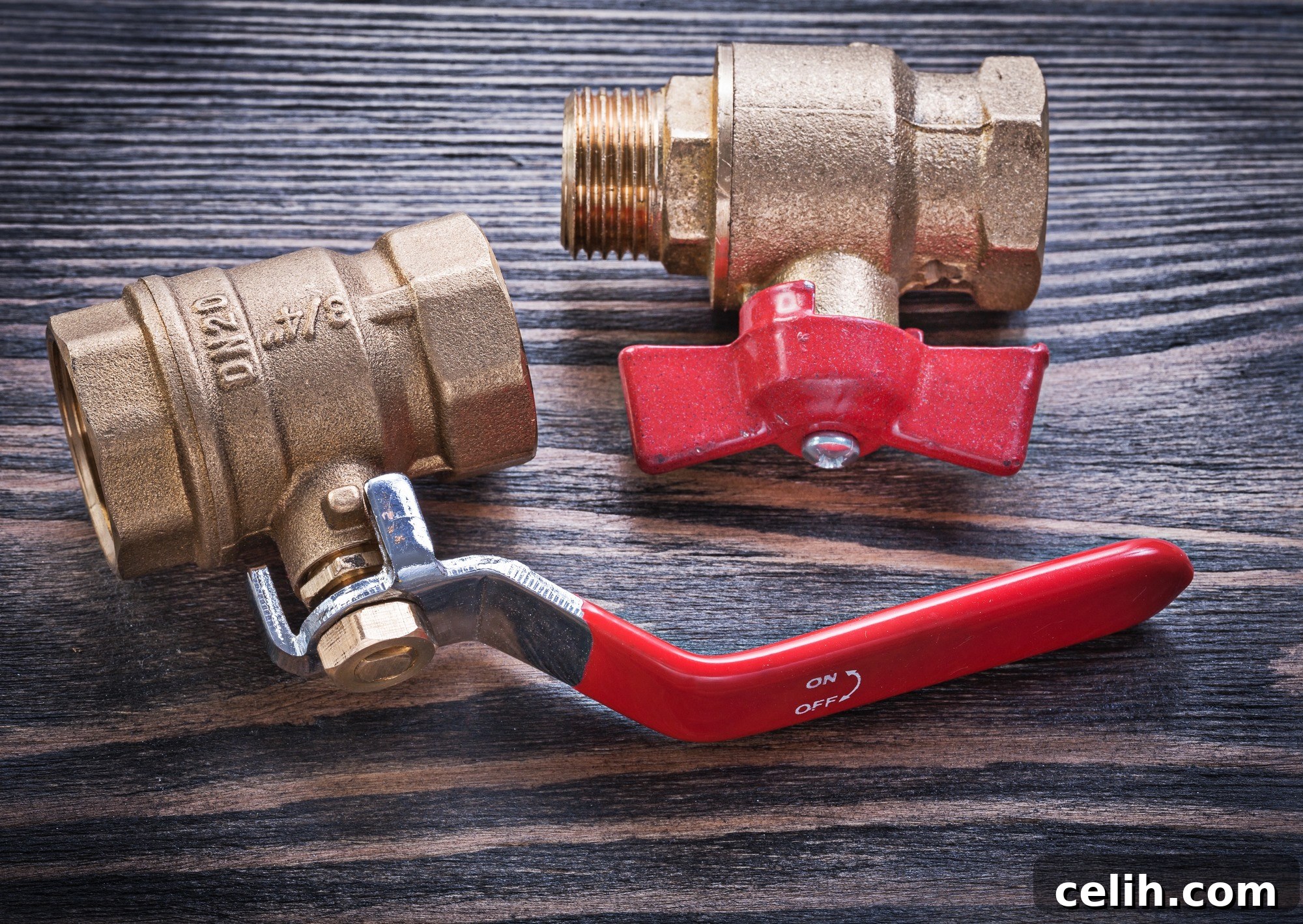
Ball valves are fundamental components in modern residential plumbing systems, offering unparalleled reliability and ease of use for controlling water flow throughout your home. These quarter-turn valves utilize a spherical ball with a bore to regulate the passage of fluids, making them a top choice for both new plumbing installations and essential repairs in household settings. Their robust design and straightforward operation have solidified their position as the preferred shut-off valve for homeowners and professional plumbers alike.
When selecting the best ball valve parts for your home, it’s crucial to consider several factors: material compatibility with your water supply, ease of operation for quick shut-offs, and overall durability to ensure the longevity and efficiency of your plumbing infrastructure. A comprehensive understanding of their key components and how they apply to residential use will empower you to make informed decisions that protect your home from leaks and ensure consistent water pressure where you need it most.
Understanding the Anatomy: Key Components of Ball Valves in Residential Settings
A ball valve, while seemingly simple, is a marvel of engineering composed of several essential parts that work in harmony to control fluid flow. Each component plays a vital role in the valve’s performance, reliability, and suitability for everyday home use.
1. Valve Body and Bonnet: The Foundation of Control
The valve body is the primary housing that encapsulates all internal components and serves as the crucial connection point to your home’s plumbing pipes. In residential applications, ball valve bodies are predominantly crafted from robust and corrosion-resistant materials such as brass, bronze, PVC, or CPVC. The choice of material often depends on the valve’s intended purpose: brass and bronze are favored for main water supply lines and hot water applications due to their strength and heat resistance, while PVC is a cost-effective and highly corrosion-resistant option for cold water, outdoor irrigation systems, or drain lines. The body’s design directly impacts the valve’s ability to withstand household water pressure and prevent unwanted leaks, making its material and construction paramount for long-term plumbing integrity.
2. The Ball and Its Seats: Precision Flow Regulation
At the heart of every ball valve is the “ball”—a spherical disc with a bore (a hole) through its center. This ball rotates within the valve body to either align the bore with the pipe (allowing flow) or turn it perpendicular to the pipe (blocking flow). For residential plumbing, the ball is typically manufactured from corrosion-resistant materials like brass or stainless steel, ensuring enduring performance even with varying water quality. Surrounding the ball are the “seats,” which are critical for creating a watertight seal between the ball and the valve body. These seats are most commonly made from PTFE (Polytetrafluoroethylene), often referred to as Teflon. PTFE offers exceptional chemical resistance, a low friction coefficient for smooth operation, and the flexibility to compress slightly, ensuring a tight seal that prevents leaks even under fluctuations in household water pressure and temperature.
3. Stem and Actuator: The Interface for Operation
The stem is the connecting rod that links the internal ball to the external handle or actuator, allowing homeowners to manually control the valve. For residential ball valves, stems are typically constructed from durable, corrosion-resistant materials like brass or stainless steel. Many modern ball valves feature a “blow-out proof” stem design, where the stem is inserted from the inside of the valve body, preventing it from being expelled under pressure—a significant safety feature. Homeowners primarily interact with manual actuators, most commonly lever handles. These lever handles are designed for easy, quarter-turn operation, allowing for rapid shut-off or opening of water flow in different zones of the home, from individual fixtures to the main water supply.
4. Seals and Gaskets: The Guardians Against Leaks
Beyond the ball seats, various seals and gaskets are strategically placed within the ball valve to provide additional layers of protection against leaks. These components are absolutely crucial for maintaining the integrity of your household plumbing system. Made from flexible and resilient materials such as PTFE, various elastomers (like EPDM or FKM), or specialized synthetic rubbers, these seals are chosen for their ability to maintain a tight seal under varying household water pressures and temperatures. They prevent water from escaping around the stem (stem packing) and between different sections of a multi-piece valve body, ensuring your plumbing remains watertight and efficient over many years of service.
5. End Connections: Integrating with Your Plumbing
The end connections are the parts of the valve body that connect directly to your piping system. In residential plumbing, several types are common:
- Threaded Connections (NPT): Most common, these use male and female pipe threads to screw into fittings. Require pipe sealant or Teflon tape for a leak-free joint.
- Sweat/Solder Connections: Used with copper piping, these require soldering the valve onto the pipe, creating a permanent and strong bond.
- Compression Connections: Often used for smaller diameter lines, such as under sinks for faucets or toilets. They use a nut and a compression ring to create a seal.
- Push-Fit Connections (e.g., SharkBite): A popular DIY-friendly option that allows for quick and tool-free connections to copper, PEX, or CPVC pipes.
- PEX Crimp/Clamp Connections: Specific to PEX tubing, these use crimp rings or stainless steel clamps to secure the valve to the PEX pipe.
Choosing the right end connection is vital for proper installation and system compatibility.
Applications and Key Considerations for Homeowners
Ball valves are incredibly versatile and are utilized in a myriad of applications throughout residential homes, from meticulously managing the main water supply to precisely controlling outdoor irrigation systems. Their inherent reliability and ease of use make them indispensable for efficient and secure water management.
Common Residential Use Cases for Ball Valves
In homes, ball valves are ubiquitously employed as primary shut-off valves for the main water supply entering the house, providing a critical emergency cut-off point. Beyond this, they are essential for isolating individual plumbing fixtures such as sinks, toilets, water heaters, and washing machines. Their ability to deliver a swift, tight seal with minimal effort makes them ideal for quickly isolating a leak or performing maintenance without disrupting water to the entire household. Outside the home, ball valves are crucial for managing water flow to garden hoses, intricate irrigation systems, and outdoor faucets, ensuring reliable operation through various seasons and weather conditions.
Here are some specific applications:
- Main Water Shut-off: The most critical application, allowing you to turn off all water to your home in an emergency or for major plumbing work.
- Individual Fixture Shut-offs: Installed at sinks, toilets, dishwashers, and washing machines for easy maintenance or repair without affecting other water access.
- Water Heater Isolation: Essential for draining, flushing, or replacing your water heater.
- Outdoor Spigots and Hose Bibs: To control water flow to your garden hose or outdoor watering needs.
- Irrigation Systems: Used to zone off different sections of your sprinkler system or to shut off the entire system.
- Water Filtration and Softener Loops: Allow for easy bypass or isolation of these systems for cartridge replacement or maintenance.
- Hydronic Heating Systems: To control zones or isolate components in radiant floor heating or boiler systems.
Material and Design Selection for Homeowners
When selecting ball valves for your home, the choice of material is paramount and should align with the valve’s specific application and environmental conditions. Brass ball valves are a gold standard for indoor plumbing due to their exceptional durability, resistance to corrosion, and ability to handle hot water temperatures. They are typically certified lead-free for potable water applications. For outdoor applications, where exposure to harsh weather, UV radiation, and potential freezing is a concern, PVC ball valves offer a highly cost-effective and completely corrosion-resistant option, although they are generally limited to cold water applications and are more susceptible to physical damage if struck. Stainless steel ball valves provide superior corrosion resistance and strength, often used in more demanding or specific residential scenarios, though they come at a higher cost. Bronze ball valves offer similar properties to brass but with slightly different alloy compositions, often chosen for their robust nature.
Valve Specifications Based on Home Use: Port Design and Ratings
In residential settings, while pressure and temperature ratings are typically lower than in industrial applications, it’s still vital to choose valves that are adequately rated for your home’s specific water pressure and potential hot water temperatures. A key specification to consider is the valve’s port design:
- Full-Port Ball Valves: These valves have an oversized ball with a bore that is the same diameter as the connecting pipeline. This design ensures that when fully open, there is no restriction to water flow, resulting in minimal pressure drop. Full-port valves are highly preferred in homes because they maximize water flow, making them ideal for main water lines, showers, or garden hoses where strong water pressure is desired. They also minimize sediment buildup due to the unrestricted flow path.
- Standard-Port (or Reduced-Port) Ball Valves: In these valves, the ball’s bore is smaller than the pipe diameter, causing a slight restriction in flow and a minor pressure drop. While they are more compact and less expensive to manufacture, they are generally less preferred for critical applications in homes where maximum flow is essential. They might be suitable for drain lines or less critical shut-offs where a slight flow reduction is acceptable.
Always check that your chosen ball valve meets local plumbing codes and any relevant certifications, such as NSF/ANSI 61 for potable water safety, ensuring it is safe for your drinking water supply.
Installation and Maintenance for Long-Term Performance
Proper installation is as crucial as selecting the right valve. While some push-fit or threaded connections can be DIY-friendly, more complex installations like soldering copper or working on main water lines are often best left to a licensed plumber to ensure leak-free and code-compliant work. When installing, always use appropriate sealants (Teflon tape or pipe dope for threaded connections) and avoid over-tightening, which can damage threads or valve components.
Fortunately, ball valves are renowned for being low-maintenance. Their simple quarter-turn mechanism and robust internal components mean they rarely require servicing. However, periodically operating (opening and closing) all your ball valves, especially those not frequently used, can prevent mineral buildup and ensure they remain easy to turn when needed. For outdoor valves in cold climates, proper winterization to prevent freezing is essential, which often involves draining the line past the valve.
Regular visual inspections for any signs of corrosion or minor drips can help catch potential issues before they escalate into major leaks. A well-installed and occasionally operated ball valve can reliably serve your home for decades.
The Undeniable Benefits of High-Quality Ball Valves in Your Home
Investing in high-quality ball valves for your residential plumbing system offers a multitude of benefits that extend beyond simple water control, contributing significantly to your home’s safety, efficiency, and long-term value.
- Superior Reliability and Durability: Constructed from robust materials like brass or stainless steel, residential ball valves are designed to withstand years of continuous use and varying water conditions without degradation, ensuring consistent performance.
- Exceptional Leak Prevention: Thanks to their precise spherical ball and tight-sealing PTFE seats, ball valves create an almost impenetrable barrier when closed, virtually eliminating the risk of drips and leaks that are common with other valve types.
- Effortless Operation: The simple quarter-turn (90-degree) operation of a lever handle makes opening or closing a ball valve quick and easy, even for individuals with limited hand strength. This rapid action is invaluable during plumbing emergencies.
- Optimized Water Flow Efficiency: Especially with full-port designs, ball valves offer minimal restriction to water flow when fully open. This ensures consistent water pressure throughout your home, from powerful showers to efficiently filling washing machines.
- Enhanced Safety and Emergency Preparedness: The ability to quickly and reliably shut off the water supply to your entire home or an individual fixture is a critical safety feature. In the event of a burst pipe, major leak, or appliance malfunction, a readily accessible ball valve can prevent significant water damage and costly repairs.
- Long-Term Cost Savings: While the initial cost might be slightly higher than some older valve types, the longevity, minimal maintenance requirements, and superior leak prevention of ball valves translate into significant savings on repairs and water bills over their lifespan.
Conclusion: Empowering Homeowners with Reliable Water Control
Ball valves stand as a critical cornerstone of any efficient and reliable residential plumbing system, offering precise and dependable control over water flow for an extensive array of household applications. An in-depth understanding of their key components—including the robust valve body, the precisely engineered ball and seats, the durable stem, and the essential seals—empowers homeowners to confidently choose the right valves tailored to their specific needs.
By prioritizing proper selection based on material, port design, and application, alongside diligent installation and minimal maintenance of your ball valve parts, you can ensure long-lasting performance, significantly reduce the risk of troublesome leaks, and enhance the overall efficiency and safety of your home’s plumbing system. Investing in quality ball valves is an investment in the peace of mind and smooth operation of your most vital home utility.