
Unveiling the Masterpieces: A Deep Dive into the RHS Chelsea Flower Show’s Most Captivating Gardens
The RHS Chelsea Flower Show stands as a global beacon for horticultural excellence and innovative garden design, an annual pilgrimage for garden enthusiasts, designers, and royalty alike. Each year, its hallowed grounds transform into a breathtaking tapestry of artistry and nature, showcasing the vanguard of landscape architecture and planting trends. With an overwhelming array of stunning gardens and pioneering ideas, selecting favorites can be a delightful challenge. This year, we were particularly captivated by a selection of five extraordinary gardens that pushed the boundaries of design, sustainability, and cultural expression, each offering a unique narrative and an abundance of inspiration for gardeners everywhere.
1. The Royal Bank of Canada Garden: A Symphony of Curves and Edible Elegance
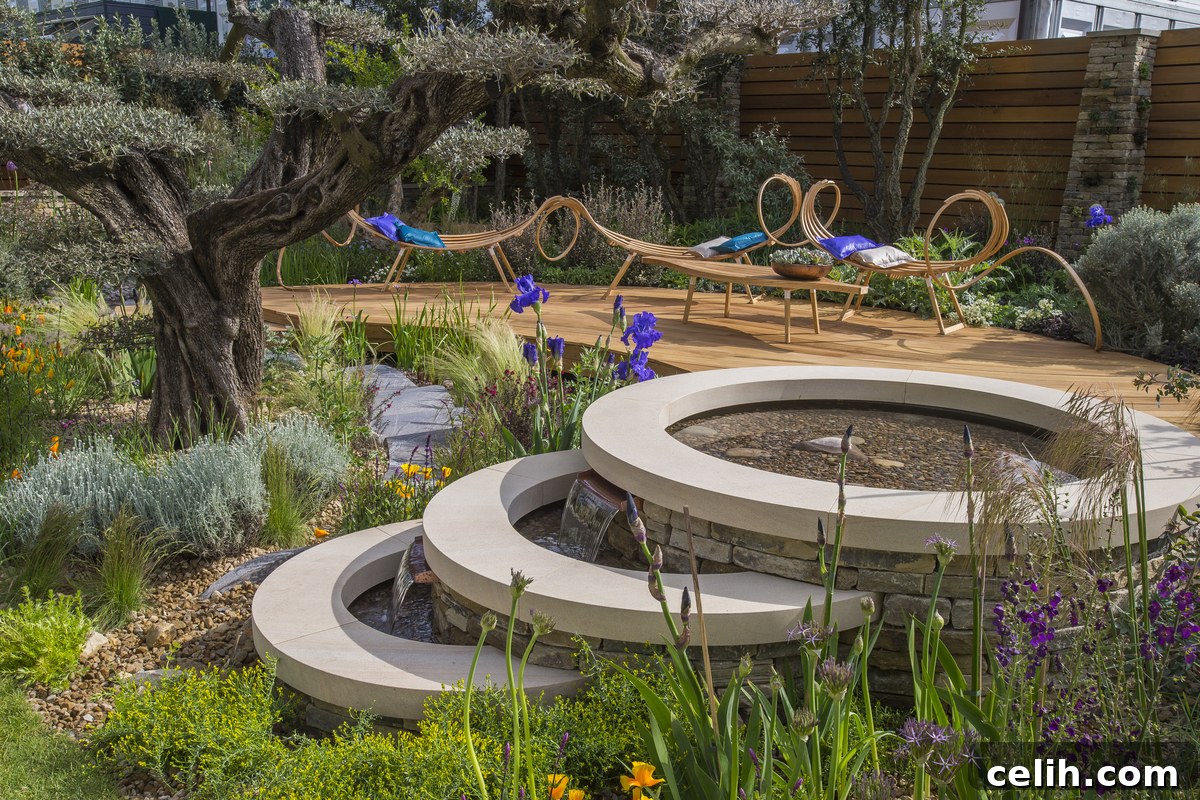
The Royal Bank of Canada Garden, meticulously designed by the acclaimed Matthew Wilson, immediately distinguished itself with its masterful incorporation of flowing curves. These organic lines were not merely an aesthetic choice but a fundamental element dictating the garden’s movement and serene atmosphere. The design gracefully guided visitors through a captivating landscape, creating a sense of journey and discovery that is both visually arresting and remarkably calming. This innovative use of soft geometry ensured that every vista within the garden felt harmonious and inviting, allowing the eye to sweep effortlessly across its varied textures and colours.
What truly resonated with many, including ourselves, was the garden’s intelligent and beautiful blend of planting. Breaking from traditional ornamental displays, Wilson skillfully integrated edible plants alongside vibrant flowers and verdant bushes. This deliberate mix highlighted the growing trend of productive gardens, demonstrating that functionality can coexist splendidly with high-end design. Imagine harvesting fresh herbs or salad greens steps away from a fragrant rose bush – the garden beautifully illustrated how modern living can embrace both aesthetic pleasure and sustainable practices. This thoughtful layering of plants not only enriched the biodiversity of the space but also offered a multi-sensory experience, combining visual appeal with potential culinary delight.
A particularly appealing feature was the exquisitely designed decked area, seamlessly integrated into the garden’s curving embrace. Crafted from high-quality materials, this outdoor living space exuded contemporary elegance and comfort. The inviting seats, strategically placed within this serene setting, practically begged visitors to pause, unwind, and soak in the tranquil beauty. This functional zone served as a perfect extension of the living space, illustrating how even a small urban garden can be transformed into a versatile retreat for relaxation and entertainment. The overall design, expertly brought to life by Clifton Nurseries, showcased a remarkable balance of sophisticated landscaping and practical, livable elements, proving that award-winning design can indeed offer tangible inspiration for homeowners seeking to elevate their own outdoor spaces. The Royal Bank of Canada Garden rightfully earned a silver-gilt medal, a testament to its exceptional concept and execution, and its inspiring vision for a harmonious, productive, and beautiful domestic landscape.
2. The Cloudy Bay Garden in Association with Vital Earth: A Journey Through Wine and Wilderness
The Cloudy Bay Garden, a truly imaginative creation by the talented brothers Harry and David Rich, captivated visitors with its audacious concept: a landscape inspired by the tasting notes and characteristics of two of Cloudy Bay’s most celebrated wines—a robust Pinot Noir and a crisp Sauvignon Blanc. This novel approach translated the ephemeral qualities of wine into tangible garden elements, resulting in a design that was both evocative and deeply immersive. The rich, earthy tones and textures reminiscent of Pinot Noir were subtly interwoven with the brighter, more vibrant hues and lighter foliage associated with Sauvignon Blanc, creating a dynamic visual and sensory dialogue throughout the garden. This innovative concept showcased how abstract ideas can be beautifully manifested through thoughtful plant selection and material choices.
One of the garden’s most striking features was the sophisticated design and construction of its boundaries and walls. The Rich brothers masterfully blended modern architectural elements with traditional craftsmanship, creating a timeless aesthetic that felt both contemporary and deeply rooted. This fusion of old and new was evident in the textural interplay of rugged natural stone against sleek, clean lines, demonstrating a deep respect for materials and building heritage. The boundaries didn’t just enclose the space; they became integral design statements, providing a strong structural backbone to the otherwise naturalistic planting scheme. This combination of robust architecture and untamed flora gave the garden a distinct personality—wild yet refined, strong yet sensitive.
The planting itself was a triumph of naturalism, eschewing overly manicured beds for a more wild, free-flowing aesthetic. This approach created a sense of discovery and allowed the plants to express their inherent forms and textures, reminiscent of a natural vineyard landscape or a wild, untamed meadow. The careful selection of indigenous and complementary species contributed to a sense of effortless beauty and ecological integrity, creating a habitat that felt alive and authentic. It demonstrated that a naturalistic planting scheme could be profoundly elegant and surprisingly sophisticated, moving beyond mere wildness to achieve a curated wildness that invited contemplation and connection with nature.
Adding a touch of playful charm and practical intrigue was a rather fun moveable shack. This unique feature served as an intimate refuge within the garden, perhaps an ideal spot for wine tasting or simply enjoying the peaceful surroundings. Its rustic yet contemporary design perfectly encapsulated the garden’s ethos of blending old and new, tradition and innovation. The entire Cloudy Bay Garden, expertly built by Rich Landscapes and Big Fish Landscapes and sponsored by Cloudy Bay and Bord na Mona, was an invitation to linger, to engage with the senses, and to appreciate the artistry of nature and design. It was, without a doubt, a garden we longed to spend time in, perhaps with a glass of its inspirational wines in hand. Its exceptional creativity, execution, and immersive experience were deservingly recognized with a prestigious gold medal, solidifying its place as one of the standout exhibits.
3. The Beauty of Islam Garden with Al Barari Firm Management LLC: A Sanctuary of Serenity and Cultural Resonance
The Beauty of Islam Garden, a profound and exquisitely crafted space designed by Kamelia Bin Zaal, offered visitors a serene sanctuary, a place of quiet contemplation and profound beauty. This garden transcended mere aesthetics, serving as a powerful cultural statement that resonated deeply with the principles of Islamic garden design. It masterfully captured the essence of traditional Islamic gardens – often conceived as earthly representations of paradise – by creating an enclosed, tranquil haven where one could truly relax and unwind from the bustling world outside. The concept was not just to observe beauty, but to experience it as a form of spiritual nourishment and peace, emphasizing the importance of introspection and quietude.
Every element within this garden was meticulously chosen to reflect and celebrate Arabic and Islamic cultures, creating an immersive experience rich in symbolism and artistic detail. Poetry and calligraphy were gracefully integrated into the design, perhaps etched into stone panels or subtly incorporated into water features, offering layers of meaning and an intellectual dimension to the visual feast. The carefully selected textures, from smooth marble to intricate tiling, engaged the tactile senses, further deepening the visitor’s connection to the space. These details served not just as decorative elements but as narratives, telling stories of a rich cultural heritage and its enduring artistic traditions.
A striking visual harmony was achieved through the deliberate contrast between pristine white stonework and the vibrant, lush green planting. The brilliant white of the hardscaping elements – pathways, walls, and perhaps a central pavilion – provided a clean, architectural structure that perfectly highlighted the organic softness of the foliage. This contrast was not only visually stunning but also symbolically significant, representing clarity and purity alongside the vibrancy of life. The greenery, often incorporating fragrant plants and shade-giving trees characteristic of traditional Islamic gardens, contributed to a cool, inviting atmosphere, offering respite from the sun and a feast for the senses. Water, a quintessential element in Islamic gardens, likely played a central role, providing soothing sounds and reflective surfaces that further enhanced the garden’s contemplative mood, even if not explicitly detailed in the original brief.
The garden, expertly built by The Outdoor Room, was more than just a display; it was an educational journey and an artistic triumph. It invited visitors to delve into a rich cultural tapestry, appreciating the intricate relationship between nature, art, and spirituality. Kamelia Bin Zaal’s vision for this garden was clearly to create a space that not only looked beautiful but also felt sacred, offering a true escape. Its profound message and impeccable execution were rightly recognized with a silver-gilt medal, cementing its place as an unforgettable and deeply meaningful exhibit at the RHS Chelsea Flower Show.
4. The Morgan Stanley Healthy Cities Garden: Cultivating Community Through Green Spaces
The Morgan Stanley Healthy Cities Garden, an insightful and conceptually powerful creation by the esteemed Chris Beardshaw, transcended conventional garden design by serving as a vivid metaphor for Morgan Stanley’s global Healthy Cities initiative. This innovative garden was meticulously crafted to represent the intricate framework of a thriving urban community, highlighting the vital role of green spaces in promoting health, well-being, and social cohesion. Beardshaw’s design eloquently communicated complex societal concepts through the language of horticulture, making abstract ideas tangible and inspiring.
At the heart of its symbolic narrative, the garden utilized its structural elements to represent the foundational aspects of a community. The carefully delineated paths, manicured hedges, and robust walls were not just design features but emblematic of the infrastructure that underpins any urban environment – the roads, the communication networks, the essential services that connect people and places. These elements provided a sense of order and connection, guiding visitors through the garden just as urban infrastructure guides daily life. This deliberate parallelism underscored the importance of well-planned environments in fostering robust, healthy communities.
In stark yet harmonious contrast to the structured hardscaping, a wide array of plants, bursting with diverse colours and forms, symbolized the rich social tapestry of a community. Each plant, with its unique characteristics, contributed to a collective beauty, much like individuals contribute to the vibrancy of a neighborhood. We were particularly captivated by the exquisite planting, which showcased a truly lovely selection of blues and purples. This deliberate palette created a serene yet dynamic visual experience, demonstrating how thoughtful horticultural choices can evoke specific moods and messages. The cool, calming blues blended seamlessly with the regal, inviting purples, forming a tapestry of floral brilliance that represented the diversity and harmony within urban populations.
Chris Beardshaw, renowned for his ability to weave compelling narratives into his designs, once again showcased his mastery in this garden. His signature blend of classical composition with contemporary relevance was evident, creating a space that was both aesthetically pleasing and intellectually stimulating. Built with precision by Keith Chapman Landscapes, the garden was a testament to meticulous craftsmanship and a deep understanding of horticultural principles. Beyond its immediate impact at Chelsea, the Morgan Stanley Healthy Cities Garden held a remarkable and inspiring post-show legacy: it was destined to be transferred to a new community project in East London. This incredible initiative transformed the garden from a temporary exhibition into a permanent, living asset, directly benefiting an urban neighborhood by providing a much-needed green space for recreation, education, and community gathering. This transition epitomized the “Healthy Cities” ethos, turning symbolic design into tangible urban improvement. For its powerful message, stunning aesthetics, and invaluable legacy, the Morgan Stanley Healthy Cities Garden was deservingly awarded a gold medal, highlighting its profound impact and innovative contribution to garden design and social responsibility.
5. A Perfumer’s Garden in Grasse by L’Occitane: An Olfactory Journey to the Heart of Fragrance
Oh, the irresistible allure of a garden path that beckons you to explore! “A Perfumer’s Garden in Grasse by L’Occitane,” conceived by the visionary James Basson, was precisely that—an invitation to embark on an olfactory and visual journey. This garden wasn’t just seen; it was felt, breathed, and remembered, transporting visitors directly to the sun-drenched landscapes of Grasse, the historic heart of the world’s perfume industry. From the moment one stepped into its embrace, there was an undeniable charm, a quaint and traditional elegance that hinted at stories of bygone eras and the delicate art of fragrance creation. Basson’s genius lay in his ability to craft a narrative-rich landscape that celebrated the heritage of perfume.
The design faithfully reflected the historic nature of the perfume industry in Grasse, particularly addressing the challenge of traditional plantations that had become overgrown or abandoned over time. Basson’s approach was one of sympathetic restoration, celebrating the wild beauty of nature reclaiming its space while simultaneously highlighting the precious, aromatic plants that are the foundation of L’Occitane’s products. This created a garden that felt authentic, deeply rooted in its geographical and historical context. Imagine walking through a landscape where every breath brought a new, enchanting scent, a living testament to the craft of the perfumer.
The garden was a symphony of fragrance, an immersive sensory experience designed to evoke the very essence of Grasse. One could almost feel the warm Mediterranean sun on their skin as they encountered a rich tapestry of aromatic plants, each carefully chosen for its contribution to the world of perfume. Imagine the heady scent of jasmine mingling with the sweet notes of roses, the fresh zest of citrus, the earthy aroma of iris, and the soothing fragrance of lavender. These were not just plants; they were the raw ingredients of luxury, their presence in the garden a homage to their invaluable role in perfumery. The genius of the planting was not just in its scent but also in its visual texture and form, creating a harmonious and naturalistic ensemble that felt effortlessly beautiful.
Built with exquisite skill by Peter Dowle and sponsored by L’Occitane, a brand synonymous with natural beauty and Provencal charm, this garden was a triumph of concept and execution. It was a tangible expression of L’Occitane’s commitment to preserving botanical heritage and celebrating the natural world. This garden didn’t just tell a story; it allowed visitors to step into it, to breathe it in, and to understand the profound connection between nature and human artistry. We can only imagine the divine scents that wafted through the air, creating an unforgettable impression on all who experienced it. Its unparalleled sensory richness and historical depth were rightly honored with a coveted gold medal, establishing it as one of the most memorable and beloved gardens at the Chelsea Flower Show.
Beyond the Blooms: The Enduring Legacy of Chelsea’s Best Gardens
The RHS Chelsea Flower Show is more than just an exhibition; it is a vital platform for innovation, a source of endless inspiration, and a powerful testament to the transformative power of nature and design. The five gardens highlighted here—the curvaceous elegance of the Royal Bank of Canada Garden, the wine-inspired wilderness of Cloudy Bay, the serene cultural depth of The Beauty of Islam, the community-centric vision of Morgan Stanley Healthy Cities, and the fragrant allure of L’Occitane’s Perfumer’s Garden—each offered a unique perspective on contemporary garden design. They showcased how gardens can be sustainable, culturally resonant, socially impactful, and deeply personal. From embracing edible landscapes to creating urban sanctuaries and preserving historical crafts, these award-winning designs demonstrate the limitless possibilities when creativity meets horticulture.
These gardens, whether they won gold or silver-gilt, leave an indelible mark, influencing trends, inspiring home gardeners, and fostering a deeper appreciation for the art of landscape architecture. They remind us that a garden is never just a plot of land; it is a canvas for expression, a haven for relaxation, and a vital connection to the natural world. As we reflect on these masterpieces, we are continually reminded of the extraordinary talent and dedication that converge annually at Chelsea, setting the benchmark for garden design worldwide and encouraging us all to cultivate beauty, purpose, and sustainability in our own outdoor spaces.