
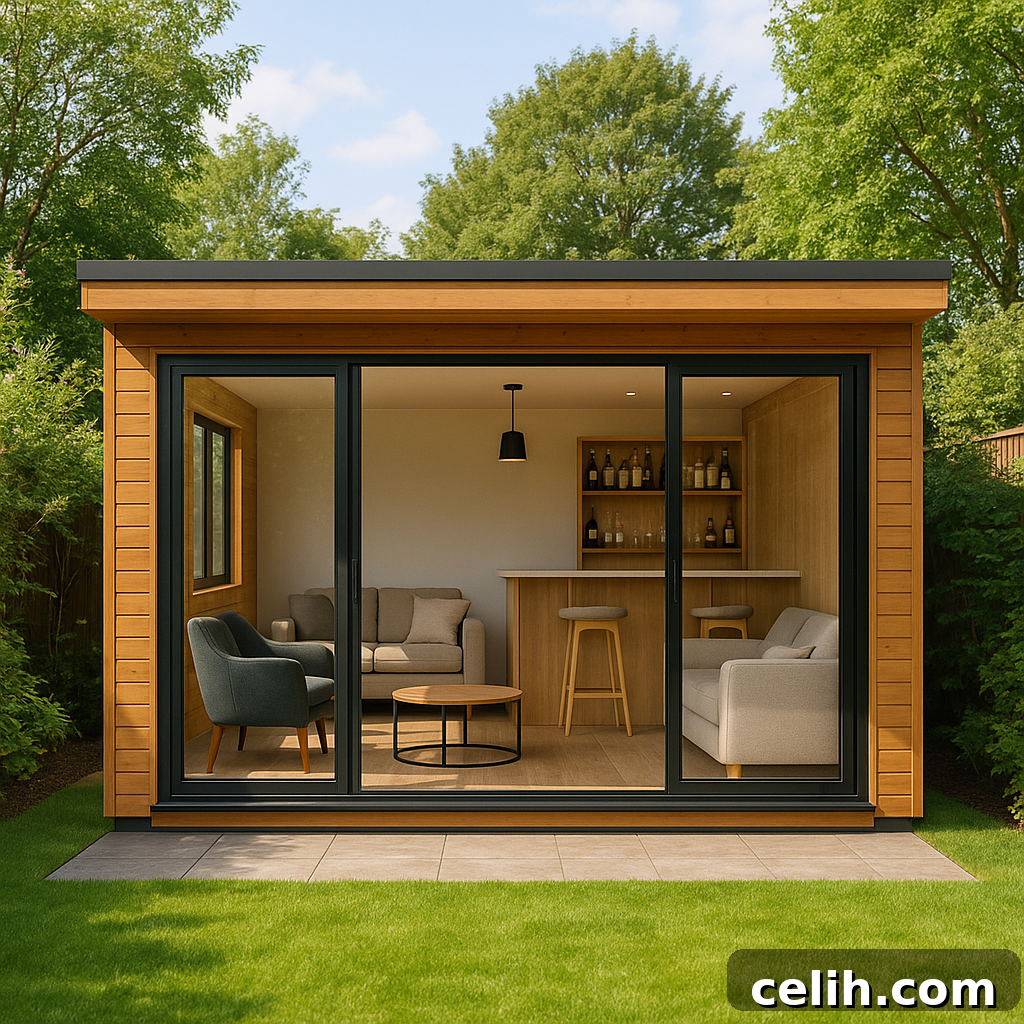
Imagine a tranquil space nestled in your garden—a place where creativity flourishes, productivity soars, or relaxation takes center stage. A modern garden room offers precisely this potential, transforming an underutilized corner of your outdoor area into a valuable extension of your home. Whether envisioned as a sun-drenched home office, a vibrant art studio, a serene yoga retreat, or simply a peaceful nook for a morning coffee, its appeal lies in its versatility and connection to nature.
Often, the initial excitement of planning a garden room revolves around its aesthetic appeal: the sleek lines of a glazed façade, the warmth of timber cladding, or the airy feel of a large skylight. Homeowners dream of soft furnishings, integrated lighting, and perhaps even a bi-fold door inviting the outside in. However, beneath this captivating veneer lies a foundational truth: the true strength and longevity of any garden room depend not just on its visual charm, but on its underlying structural integrity. What, precisely, holds this dream together?
The structural foundation, often overlooked in the early design phases, is the unsung hero of a lasting garden room. Without the right “bones,” even the most exquisitely designed space risks succumbing to the elements, manifesting issues like sagging roofs, shifting walls, or drafts. Crafting a garden room that is as robust and enduring as it is stylish begins with a critical choice: the framing material. This decision profoundly influences every subsequent design and construction aspect, determining the room’s resilience, its potential for open, adaptable layouts, and its overall lifespan.
Crafting the Dream: The Art of Garden Room Design
The concept of a garden room has evolved dramatically from its humble origins as a basic garden shed. Today, these structures are sophisticated extensions of personal style and lifestyle, meticulously designed to reflect how individuals aspire to live, work, and unwind. The diversity in design is remarkable: some embrace minimalist aesthetics with expansive glass cubes that blur the lines between indoor and outdoor environments, creating a seamless connection with nature. Others evoke the cozy charm of miniature cabins, featuring rich timber finishes and tactile comforts that offer a warm, inviting escape.
Strategic design elements are paramount in defining the character and functionality of a garden room. Lighting, for instance, plays a transformative role. Abundant natural light, often achieved through large windows, skylights, or glazed doors, creates an open, airy atmosphere, enhancing mood and productivity. Thoughtful artificial lighting, whether ambient or task-oriented, allows the space to transition effortlessly from day to night. Similarly, a well-conceived layout is crucial. Even in compact spaces, subtle zoning techniques can enable a single garden room to serve multiple functions—perhaps a dedicated desk area for focused work and a comfortable reading nook for relaxation, all within the same cohesive environment.
Material selection further elevates the design, lending a sense of intention and polished sophistication. Choices like matte black fixtures can introduce a modern, industrial edge, while reclaimed timber imbues a space with rustic charm and character. Polished concrete floors offer a contemporary, low-maintenance solution, and sustainable wood options like cedar or larch provide natural beauty and durability. Each material contributes to the overall narrative of the space, transforming it from a mere structure into a personalized sanctuary.
However, truly exceptional design transcends mere aesthetics; it begins with a clear purpose. Before selecting finishes or fixtures, it’s essential to define the primary function of the garden room. Is it destined to be a vibrant studio for artistic endeavors, a quiet haven for remote work, a dynamic home gym, a comfortable guest suite, or a versatile entertainment space? Understanding its intended use is fundamental, as it dictates the optimal layout, storage solutions, electrical requirements, and insulation needs. A well-designed garden room not only accommodates daily activities but also fosters a sense of calm, cohesion, and thoughtful consideration, seamlessly integrating with its surroundings and enhancing the daily lives of its occupants.
Built to Endure: The Imperative of Structural Integrity
In the exciting journey of planning a new garden room, it’s remarkably easy to become captivated by the allure of surface details. The choice of paint colours, the texture of floor tiles, the pattern of wallpaper—these are the elements that bring a space to life visually. Yet, amidst this creative fervor, the fundamental question of what physically holds the entire structure together often receives insufficient attention. While a robust roof and perfectly sealed windows are undoubtedly vital, the long-term performance, safety, and comfort of your garden room hinge on something far more fundamental: its frame.
The structural frame is the backbone of your garden room, influencing every critical aspect of its existence. It dictates how effectively the room withstands varying weather conditions, from torrential rain and strong winds to heavy snow loads and intense summer heat. A well-engineered frame ensures dimensional stability, preventing issues like warping or twisting. Crucially, it determines the maximum open spans you can achieve, directly impacting the ability to incorporate large windows or open-plan layouts that are so desirable in modern design. Perhaps most importantly, the frame dictates how gracefully the structure ages, maintaining its integrity and aesthetic appeal over decades.
Conversely, frames that are inadequately designed or constructed for stability can lead to a litany of pervasive and costly problems. These might include noticeable sagging of the roof or floors, unsettling shifting in the walls, cracks in plasterwork, or persistent drafts that compromise thermal efficiency. Such structural deficiencies may not immediately manifest after completion but can emerge insidiously over time, leading to significant repair expenses and profound frustration. This highlights why the material and engineering behind the walls are not merely technical considerations but are critical investments in the future of your garden room.
Traditional timber framing, while a common and accessible choice, isn’t always the optimal solution for every garden room project. While suitable for smaller, more conventional designs, timber can have limitations. It is susceptible to issues like rot, pest infestations (such as termites), and moisture absorption, especially in damp climates or where ground contact is unavoidable. Depending on the size, architectural ambition, and specific purpose of the space, alternative framing options can offer superior strength, greater spanning capabilities, and a lighter structural footprint. In the context of a relatively small building like a garden room, efficiency is a multifaceted concern—it matters not only visually, by allowing for larger openings and sleeker profiles, but also structurally, by ensuring maximum stability with minimal material bulk and long-term durability.
Unseen Strength: How Metal Trusses Revolutionize Garden Room Construction
For individuals committed to creating a garden room that stands the test of time, gracefully enduring through all seasons and decades, the choice of frame is paramount. One increasingly prevalent and highly effective solution that has gained significant traction in contemporary garden room construction is the strategic integration of metal trusses. Once primarily confined to large-scale agricultural buildings, industrial warehouses, or commercial structures due to their inherent strength and cost-efficiency, these robust engineered components are now making their mark in modern residential and backyard builds—and for excellent reasons.
The advantages of utilizing metal trusses in garden room design are compelling and far-reaching:
- Unrivaled Strength and Spanning Capability: Metal trusses are engineered to bear significant loads, allowing for remarkably wide, open-plan areas without the necessity of intrusive internal support columns or load-bearing walls. This design flexibility is a game-changer for garden rooms, enabling designers and homeowners to create expansive, uninterrupted interior spaces that feel truly open and adaptable to various functions.
- Exceptional Durability and Longevity: Unlike traditional timber, metal trusses exhibit superior resistance to a host of environmental challenges. They are impervious to rot, making them ideal for any climate, particularly those with high humidity or frequent rainfall. Furthermore, they are entirely resistant to common pests such as termites and carpenter ants, eliminating the need for costly and recurring pest control treatments. Their non-combustible nature also provides an added layer of fire resistance, enhancing safety. This inherent durability translates directly into a significantly longer lifespan for the garden room and considerably lower long-term maintenance requirements.
- Moisture and Climate Resilience: In regions prone to damp conditions, coastal salt spray, or extreme temperature fluctuations, the stability of metal is a distinct advantage. It will not warp, twist, or swell due to moisture absorption in the way wood can, ensuring the structural integrity and aesthetic consistency of the building envelope over many years.
- Design Versatility: A strong structure doesn’t necessarily have to be overtly visible or aesthetically dominant. Metal trusses can be cleverly concealed within the ceiling or wall cavities, contributing to a clean, minimalist interior aesthetic where the focus remains on the finishes and natural light. Alternatively, for those who appreciate an industrial-chic aesthetic, exposed metal trusses can become a striking design feature, adding character and a contemporary edge to the space. Either approach ensures the underlying strength is undeniably present, supporting a functional, beautiful space that is truly built to be used, enjoyed, and cherished for generations.
By opting for metal trusses, homeowners invest in a foundational element that guarantees not just the immediate beauty of their garden room, but also its enduring resilience, adaptability, and minimal maintenance throughout its lifetime.
Harmonizing Industrial Strength with Modern Design Excellence
The notion that structural strength must dictate or overwhelm the aesthetic appeal of a space is a misconception. In fact, some of the most captivating and sophisticated garden rooms masterfully integrate robust industrial strength with refined modern design principles. These contemporary sanctuaries often draw inspiration from industrial aesthetics—characterized by clean lines, expansive open spans, and a thoughtful curation of subtle, high-quality materials. When structural metal elements, whether exposed or concealed, are artfully combined with natural textures like warm wood, tactile linen fabrics, or earthy stone, these spaces achieve a profound sense of grounding without ever feeling cumbersome or heavy.
Leading publications in home design and renovation frequently showcase inspiring examples of how structure and style engage in a quiet, yet powerful, collaboration. For instance, designs highlighted by authoritative sources like Homebuilding & Renovating consistently demonstrate that ambitious architectural features—such as elegant floating roofs that appear to defy gravity, expansive floor-to-ceiling glazing that floods interiors with light, or dramatic sculptural silhouettes—are only feasible when the underlying supporting frame is unequivocally up to the task. It’s the hidden strength that unlocks visible architectural freedom.
The inherent beauty of a powerful, structurally sound core is its capacity to liberate creative design. A robust frame allows architects and homeowners to conceptualize and construct garden rooms that are taller, wider, and cleaner in their lines, without the visual clutter of excessive supports. This foundational strength empowers bolder design choices, enabling larger glass panels, more dramatic cantilevers, or unique geometric forms that would be impossible with less capable framing materials. Crucially, this enhanced design freedom is achieved without any compromise on the essential elements of comfort, character, or the long-term durability of the space. It’s a synergy where the invisible strength actively enhances the visible artistry.
Garden Room Inspiration: Where Form Meets Ultimate Functionality
The most successful garden rooms transcend mere visual appeal; they are meticulously crafted spaces imbued with a profound sense of purpose. Their design is a thoughtful interplay of elements: they are artfully shaped by the generous embrace of natural light, constructed from materials chosen not only for their aesthetic qualities but also for their ability to age gracefully and perform reliably over time, and meticulously laid out to seamlessly support and enhance the specific activities intended for the space. These elements coalesce to create environments that are both beautiful and eminently practical.
Consider the diverse range of functions a garden room can fulfill. Some are envisioned as sleek, glass-wrapped studios, offering an inspiring, light-filled environment perfect for artistic creation, graphic design, or intensive writing. Their minimalist design maximizes views and fosters a feeling of openness. Others are designed to provide greater privacy and enhanced insulation, making them ideal for focused remote work, quiet meditation, a dedicated home gym, or comfortable guest accommodation, suitable for year-round, seasonal use, regardless of external weather conditions. Each stylistic choice, whether minimalist or cozy, prioritizes specific user needs.
Regardless of the chosen style or primary function, the overarching goal remains consistent: to create a garden room that effortlessly adapts to the evolving demands of your life and steadfastly maintains its integrity and comfort over many years. This adaptability and longevity are not accidental; they are direct outcomes of intelligent design and robust construction choices. The structure, though often out of sight, plays an absolutely quiet yet utterly essential role in achieving this delicate balance.
Insights into developing a bespoke garden room, such as those found in comprehensive guides like this resource, consistently underscore how spaces that are meticulously designed with both visionary aesthetics and unwavering practicality in mind are the ones that truly deliver lasting comfort, remarkable flexibility, and enduring value. It’s a testament to the power of thoughtful planning, where every decision, from the choice of cladding to the selection of the framing material, contributes to a holistic and harmonious outcome.
Final Reflections: Building a Legacy in Your Backyard
A garden room should be much more than a temporary addition to your property; it should be a lasting reflection of your lifestyle today, yet robust enough to adapt gracefully to the changes life inevitably brings tomorrow. This enduring quality is not achieved through superficial embellishments alone. It is fundamentally rooted in the strategic synergy between strong foundations and beautiful finishes. It’s about understanding that the external elegance of a garden room is merely an outward expression of its internal fortitude.
The critical importance of careful framing cannot be overstated. A meticulously engineered frame, particularly one built with advanced materials like metal trusses, offers a multitude of benefits that permeate every aspect of the room’s experience. It allows for superior natural light infiltration through larger, unhindered openings, creating brighter, more inviting interiors. It enables greater architectural openness and design flexibility, freeing you from the constraints of traditional structural limitations. Furthermore, a robust frame significantly reduces the need for extensive maintenance and costly repairs down the road, offering peace of mind and preserving the room’s value.
Ultimately, when innovative design and uncompromising structural integrity work in perfect concert, the result is far more profound than a mere backyard upgrade. It culminates in the creation of a truly exceptional space—a garden room that not only looks stunning and functions flawlessly but also feels as if it has always been an integral, cherished part of your home and garden, destined to be enjoyed for many years to come.