
The kitchen is often hailed as the true heart of the home, a vibrant hub where culinary creativity thrives, family bonds strengthen, and cherished memories are made. For families, this space takes on even greater significance, serving as a dynamic arena for everything from morning routines and homework sessions to celebratory dinners and spontaneous baking adventures. Encouraging children to get involved with cooking and food preparation from an early age not only teaches invaluable life skills but also fosters healthy eating habits and a deeper connection to what they consume. Therefore, designing a kitchen that grows with your family, offering ample storage, comfortable space for togetherness, and functional features for all ages, is a wise investment in your home and your lifestyle.
Before embarking on a complete kitchen overhaul, it’s crucial to meticulously plan how you envision using this central space. Consider your family’s unique dynamics, daily routines, and future needs. What activities will unfold here? How can the layout support seamless movement and interaction? By thoughtfully addressing these questions, you can lay the groundwork for a family-friendly kitchen design that is both stunningly beautiful and inherently practical. Here are our top tips for creating a kitchen that truly works for everyone.
Prioritize Your Family’s Unique Needs and Lifestyle
Inspiration abounds on platforms like Instagram and Pinterest, showcasing countless aesthetic kitchens with minimalist work surfaces, pristine vintage furniture, and breathtaking, sleek designs. While these visuals can spark creativity, it’s easy to lose sight of practicality. The reality for most bustling households is that a magazine-worthy kitchen might not always be the most functional. Your family kitchen needs to withstand daily wear and tear, accommodate various activities, and streamline routines, rather than simply looking picture-perfect.
Begin by taking an honest inventory of your family’s habits and preferences. Do your children prefer a casual breakfast bar where they can perch and chat, or would a formal dining table be more suitable for your mealtime rituals? How often do you entertain guests? Do you need a flexible space that can expand to host larger gatherings, or one that allows little ones to invite friends over for after-school snacks and playtime without disrupting your cooking flow? Consider the current shortcomings of your kitchen: is there enough counter space? Is the layout ergonomic for multiple cooks? Is there a designated spot for homework or crafts? By carefully analyzing how your family genuinely uses the kitchen today, and identifying what’s missing or inconvenient, you can design a layout that truly supports your lifestyle, ensuring it’s a joy to use rather than a source of frustration.
Embrace Low-Maintenance, Fuss-Free Materials
A cornerstone of any successful family-friendly kitchen is the selection of low-maintenance materials that are incredibly easy to clean and sanitize, yet robust enough to endure the constant demands of busy family life. Spills, sticky fingers, and dropped items are inevitable, so choose surfaces that can take a beating and still look great. For kitchen cabinets, prioritize finishes that wipe clean effortlessly. Gloss kitchen cabinetry is an excellent choice for its smooth, non-porous surface, making it resistant to grime and splashes. Alternatively, consider semi-gloss or eggshell paint finishes on woodwork, which offer similar wipeability and durability compared to matte options that tend to absorb stains.
Similarly, your kitchen worktop must be exceptionally hard-wearing, stain-resistant, and easy to sanitize. Natural stones like granite remain a popular choice, renowned for their incredible durability, heat resistance, and elegant appearance, striking a perfect balance between functionality and style. Other fantastic options include engineered quartz, which offers superior scratch and stain resistance with a vast array of colors and patterns, or solid surface materials like Corian, known for their seamless appearance and repairability. When it comes to flooring, opt for materials like porcelain tiles, luxury vinyl tile (LVT), or engineered wood that can withstand heavy foot traffic, resist moisture, and are a breeze to mop up. Backsplashes, too, should be chosen for ease of cleaning, with large format tiles or solid slab options minimizing grout lines where dirt and grime can accumulate.
Cultivate an Open-Plan Environment for Connection
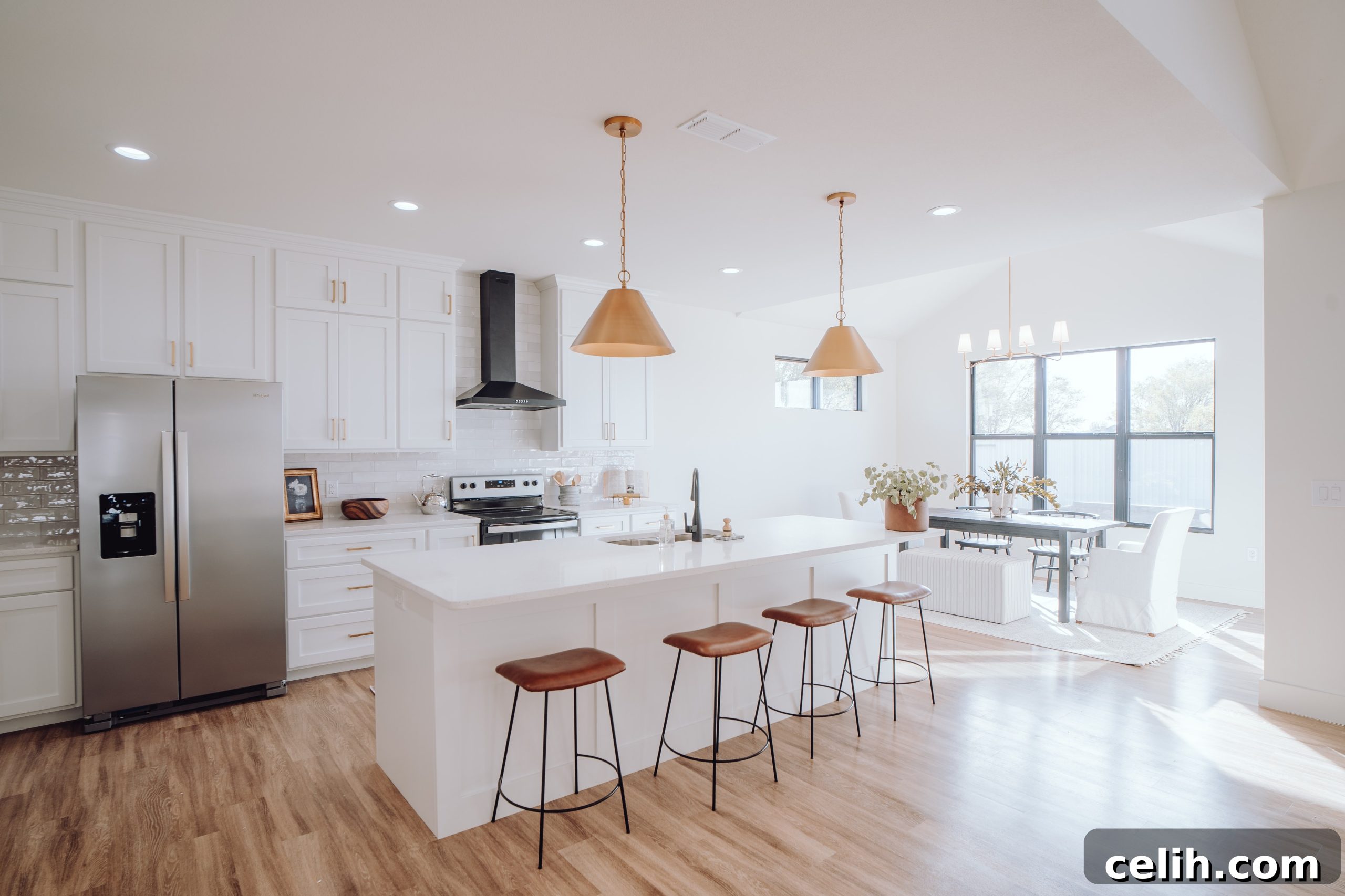
An open-plan layout, seamlessly merging the kitchen with living or dining areas, is a highly favored option for contemporary family homes. This design strategy offers unparalleled flexibility, creating the illusion of significantly more space and fostering a powerful sense of connection. By opening up the kitchen to adjacent rooms, you invite natural light to flow freely, making the entire area feel brighter and more expansive. Beyond aesthetics, this configuration transforms the kitchen into a truly communal space, allowing adults to prepare meals while simultaneously supervising children playing, helping with homework, or engaging in conversation with family and guests. It means no one is isolated during meal preparation, keeping everyone part of the action.
If extensive structural changes like knocking down walls aren’t feasible for your home, introducing a well-designed kitchen island can offer similar benefits. A multi-functional island acts as a central hub, providing additional counter space for food prep, casual dining, a dedicated homework zone, and valuable extra storage. It naturally encourages social interaction, creating a focal point where family members can gather. When designing an island, consider incorporating power outlets for charging devices or using small appliances, and choose comfortable, sturdy seating that accommodates both adults and children. This versatile and hardworking layout is perfect for a growing family, adapting effortlessly to evolving needs and activities, from a bustling morning breakfast to a quiet evening of baking.
Incorporate an Interactive Chalkboard or Whiteboard
The chalkboard trend is far more than a decorative fad; it’s a remarkably practical addition to a family kitchen that offers a multitude of benefits. Installing a chalkboard wall or even a large chalkboard panel can be a game-changer for household organization and child engagement. For younger children, it provides an irresistible canvas for artistic expression, keeping them happily occupied and within sight while you manage meal preparation. This creative outlet can significantly reduce screen time and encourage imaginative play right in the heart of the home.
Beyond entertainment, a chalkboard serves as an invaluable family command center. Use it to jot down important reminders for the week – appointments, school events, or household chores. It’s perfect for maintaining a running grocery list, ensuring you never forget an essential ingredient. You can even use it for meal planning, letting everyone know what’s for dinner, or to celebrate family achievements, whether it’s a work promotion, a great test score from school, or a personal milestone. As an alternative, consider using magnetic paint or whiteboard paint for similar interactive surfaces, offering different aesthetic and functional possibilities. The sheer versatility of an interactive wall makes it an essential feature for any dynamic family kitchen.
Make Intelligent Storage a Top Priority
Regardless of size, every family needs robust and intelligently designed storage throughout the home, and nowhere is this more critical than in the kitchen. A well-organized kitchen not only looks better but also functions more efficiently, reducing stress and saving time. The key principle is that everything should have its designated place – from everyday plates and glasses to specialized cookware, small appliances, and pantry staples. Factoring in ample and varied storage solutions during your design phase will make it significantly easier to maintain a tidy and organized kitchen, even amidst the chaos of family life.
Think beyond eye-level cabinets. Utilize every available inch. Vertical space, such as shelves installed above doors or taller cabinets, is perfect for storing items you don’t access daily, like seasonal serving ware, specialty bakeware, or infrequently used appliances. More importantly, these higher storage areas are ideal for keeping sharp knives, cleaning supplies, medicines, and other potentially dangerous items well out of the reach of curious little hands. Incorporate smart storage solutions like deep drawers for pots and pans, pull-out pantry shelves for easy access to groceries, corner cabinet organizers (like lazy Susans or magic corners) to maximize tricky spaces, and drawer dividers for cutlery and utensils. Consider kid-height drawers or cabinets for plastic plates and cups, empowering children to help themselves and fostering independence while keeping their items accessible without adult assistance.
Design and Install a Practical Pantry System
If your kitchen layout and space permit, incorporating a dedicated pantry system is an invaluable addition for any family, offering benefits that extend far beyond simple storage. A well-designed pantry, whether it’s a walk-in, a reach-in, or a series of tall larder cabinets, is an excellent way to reduce clutter on your kitchen countertops and within your main cupboards, creating a more streamlined and spacious feel. It provides a central location for all your dry goods, canned items, and baking supplies, making grocery shopping and meal prep significantly more efficient.
Moreover, a pantry can play a crucial role in encouraging healthy eating habits within your family. By dedicating easily accessible shelves to healthy snacks – fruits, nuts, whole-grain crackers – you empower your children to help themselves to nutritious options. Conversely, less healthy treats can be stored out of sight or on higher shelves, making them less of a temptation. Another brilliant use for pantry or larder cupboards is to create dedicated appliance stations. Imagine a breakfast station tucked away, complete with your coffee machine, toaster, and all accompanying cereals and mugs. Or perhaps a smoothie station with your blender, fresh fruits, and protein powders. These designated zones keep all the necessary ingredients and tools for specific tasks in one convenient location, minimizing morning chaos and avoiding family members getting in one another’s way when everyone is rushing to get ready for work and school.
Select Thoughtfully Designed Kid-Friendly Furniture
Children are undeniably messy, and sticky fingerprints, food smudges, and accidental spillages are an unavoidable part of family life. Therefore, when selecting furniture and cabinetry for your kitchen, prioritize styles that feature minimal crevices, intricate details, or decorative grooves. Smooth, flat surfaces are significantly easier to wipe clean, preventing crumbs, liquids, and grime from getting trapped and becoming a breeding ground for bacteria. Opt for cabinetry with integrated handles or a push-to-open mechanism to eliminate potential snagging points for clothing or curious fingers.
Beyond cleanliness, consider accessibility and safety. Choose seating options that are easy for children to climb onto and off without constant adult assistance. Sturdy chairs with crossbars at the bottom provide natural footholds, while comfortable benches can offer flexible seating for multiple children. Step stools are an absolute must-have, allowing little ones to safely reach the sink for hand washing or access the worktop to help with food prep, fostering independence and involvement. For tables and islands, rounded corners are a smart choice to minimize the risk of bumps and bruises.
Furthermore, if your kitchen island incorporates electrical elements such as a hob, microwave, or power outlets for appliances, safety must be paramount. Ensure that hobs have clear safety indicators to show when they are on or still hot. Position seating as far as possible from cooking zones, and consider induction hobs which only heat the pan, leaving the surrounding surface relatively cool. Install child-safe electrical outlet covers and consider appliance locks for ovens and dishwashers. Secure tall furniture to the wall to prevent tipping, and always store sharp utensils, cleaning products, and medicines in locked cabinets or high out of reach. These thoughtful considerations create a truly secure environment, allowing you to cook with peace of mind while keeping your children safe.
The kitchen is unequivocally the heart of the home, a truth amplified for busy families. If your current setup isn’t quite meeting the demands of your household, implementing these strategic changes can transform your space into a kitchen that is not only beautiful and practical but also exceptionally functional and enjoyable to use for many years to come. It’s an investment in the daily joy and harmony of your family life.