
Master Your Home’s Comfort: The Ultimate Guide to Optimal Air Conditioner Placement for Efficiency
Are you facing increasingly warm British summers or looking to enhance the comfort of your holiday retreat? Installing an air conditioning system in your home is a decision that promises significant relief and improved living conditions. However, the true magic of an AC unit isn’t just in its purchase; it’s in its strategic placement. The location of your air conditioner plays a pivotal role in optimizing its performance, ensuring efficient airflow, effective humidity control, and consistent temperature regulation. When correctly positioned, your AC system can effortlessly maintain a comfortable indoor climate while keeping energy costs to a minimum. This comprehensive guide will walk you through five essential tips to help you choose the best location for your air conditioner, transforming your home into a sanctuary of cool, fresh air.
The Foundation of Efficiency: Why Placement Matters So Much
Understanding the science behind air conditioning helps underscore the importance of placement. Air conditioners work by removing heat from your indoor air and releasing it outside, while simultaneously lowering humidity. This process relies heavily on unimpeded air circulation and accurate temperature sensing. A poorly placed unit might struggle to cool evenly, leading to hotspots, unnecessary energy consumption, and premature wear and tear on the system. Optimal placement, conversely, ensures that the unit works smarter, not harder, distributing cool air effectively throughout your living spaces, extending its lifespan, and significantly reducing your utility bills. It’s an investment in both immediate comfort and long-term savings.
Tip 1: Steering Clear of Heat Sources for Peak Performance
Many homeowners often wonder why their air conditioning units seem to run continuously, even after seemingly reaching the desired temperature. A primary culprit can be the proximity of your indoor unit to heat-generating sources. Appliances like refrigerators, televisions, lamps, and even kitchen ovens or stovetops emit significant heat. When your air conditioner is located too close to these items, its thermostat can be fooled into detecting a higher ambient temperature than the actual room temperature. This misperception causes the AC to work harder and longer than necessary, constantly trying to compensate for an artificially inflated heat reading. The result is reduced efficiency, higher electricity bills, and inconsistent cooling across the room.
To ensure your air conditioner operates at its optimal level, it is crucial to install your indoor unit well away from any direct heat sources. This includes avoiding direct sunlight streaming through a window onto the unit itself. By placing your AC unit in a cooler, less thermally disturbed area, you allow its thermostat to accurately gauge the room’s temperature, enabling it to cycle on and off efficiently and maintain a stable, comfortable environment without unnecessary strain or excessive energy consumption. A smart distance from heat sources allows your system to perform as designed, delivering consistent cool air and maximum energy savings.
Tip 2: Strategic Window Placement – A Common Misstep to Avoid
When selecting an air conditioner, choosing the right size for your space is paramount, as both undersized or oversized units can lead to inefficiency. However, even a perfectly sized unit can underperform if improperly placed, especially near windows. Windows, while essential for natural light, are also significant points of heat transfer in any home. During hot days, windows can become intensely warm, radiating heat into your living space. If your air conditioning unit is installed directly facing a window, or too close to one, the cool air it emits can immediately interact with the hot glass.
This interaction causes the cool air to absorb heat from the window pane, diminishing its cooling capacity before it even has a chance to circulate effectively through the room. Essentially, the cold air is “warmed down” by the hot window, making your room feel less cool than it should, even when the AC is running at full power. This not only wastes energy but also creates uncomfortable temperature discrepancies within your home. To counteract this, position your air conditioner away from direct window exposure. Consider using insulated curtains or blinds to reduce heat gain through windows, further supporting your AC’s efforts and enhancing overall cooling efficiency throughout your living room or bedroom.
Tip 3: Elevate Your Comfort: The Ideal Height for Air Conditioner Installation
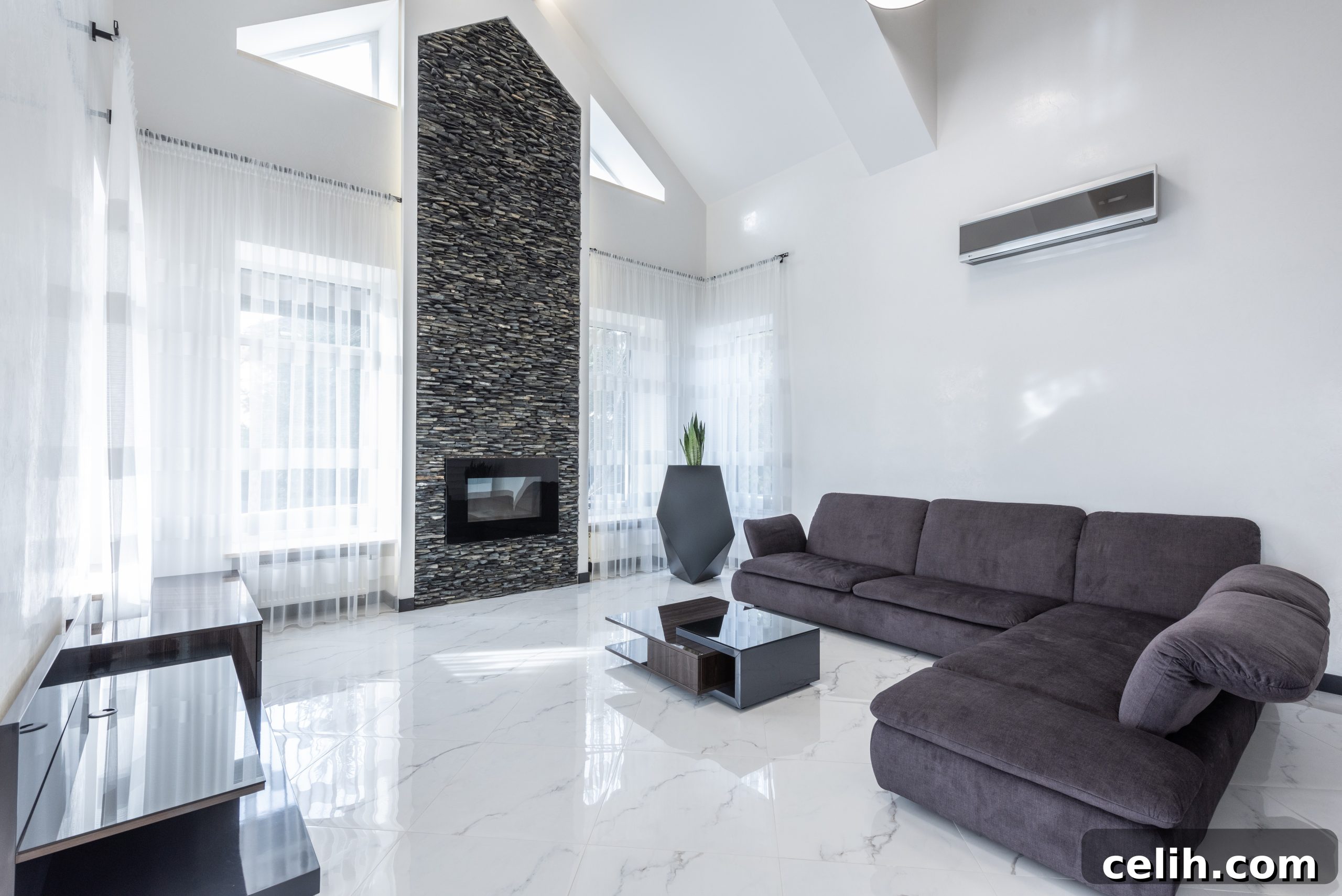
The principle of thermodynamics dictates that cold air is denser than warm air, causing it to naturally sink towards the floor. Leveraging this natural phenomenon is key to achieving optimal cooling. Therefore, it is highly recommended that you install your new air conditioning system a bit higher on the wall, typically 6 to 8 feet from the floor or closer to the ceiling. This elevated position allows the cool, dense air to descend and disperse evenly across the entire room, ensuring a consistent and comfortable temperature from top to bottom.
Conversely, if your air conditioner is installed too close to the ground, the cold air will tend to pool at the lower levels of the room. This creates an uneven cooling effect where the bottom half of the room feels significantly colder than the top half, leaving warmer air trapped closer to the ceiling. Such an imbalance not only leads to discomfort but also forces the unit to work harder and longer to achieve the desired temperature throughout the entire space, resulting in higher utility costs. Proper height installation ensures that the chilled air circulates efficiently, cooling your space considerably faster and providing ample room for the necessary piping and ducting, making it a win-win for both comfort and efficiency.
Tip 4: Embrace the Shade: Protecting Your AC Units for Longevity and Efficiency
While the previous points primarily focused on the indoor unit, the placement of your outdoor air conditioning unit (the condenser) is equally critical for its performance and longevity. Too much direct sunshine can be detrimental to both your indoor and outdoor AC components. If your outdoor condenser unit is constantly exposed to direct sunlight, especially during the hottest parts of the day, it will inevitably absorb more heat. The condenser’s job is to release heat, and when it’s already hot from the sun, it has to work much harder to dissipate the heat extracted from inside your home. This increased workload forces the compressor to run at a faster speed and for longer durations, leading to higher energy consumption and increased wear and tear on vital components.
To extend the life of your air conditioner and maximize its efficiency, aim to place the outdoor unit in a shaded area. This could be on the north side of your house, under a strategically planted tree (ensuring it’s not too close to avoid debris accumulation), or beneath a custom-built shade structure. Protecting the unit from direct sunlight can significantly reduce its operating temperature, allowing it to cool your home more effectively and at a lower cost. Similarly, for the indoor unit, ensuring its immediate vicinity is not bathed in direct sunlight (e.g., through an unshaded window) prevents its thermostat from misreading the room temperature, maintaining accurate cooling cycles. By embracing shade for both components, you ensure your system operates with optimal performance and greater durability.
Tip 5: Unrestricted Airflow: The Key to Optimal Cooling and Energy Savings
For an air conditioner to perform at its absolute best, it requires unobstructed airflow around both its intake and output vents. Blocking these vents with furniture, decorative items, drapes, or even tall plants can severely restrict air circulation. When airflow is impeded, the unit struggles to draw in warm air and distribute cool air effectively, leading to inefficient cooling, uneven temperatures, and increased energy consumption. The air conditioner will have to work harder and longer to achieve the desired temperature, akin to someone trying to breathe through a blocked nose – it’s taxing and inefficient.
To maximize your air conditioner’s performance, ensure there is ample clear space around the unit. This means keeping furniture, such as living room furniture, curtains, or large decorations, away from its vents. A general rule of thumb is to maintain at least a few feet of clear space in front of and around the unit, allowing for unhindered air intake and distribution. When the space around your air conditioner is clear, it allows the cold air to move freely and circulate throughout the room, ensuring consistent comfort and optimal energy efficiency. Overcrowding the area around your AC unit can essentially “suffocate” it, preventing it from adequately managing your home’s temperature.
Furthermore, many contemporary air conditioners feature smart functionalities like an “ECO mode” or motion detection to save energy by reducing cooling power when no one is in the room. If tall objects are placed directly in front of the unit, they can interfere with these motion sensors. The air conditioning system might mistakenly interpret the obstruction as an empty room, activating the ECO mode and consequently reducing its cooling output. This could leave your room feeling uncomfortably warm, even when occupied. Maintaining an open, uncluttered space around your air conditioner ensures that all its smart features function correctly, contributing to both comfort and energy savings.
Beyond Placement: Additional Considerations for AC Efficiency
While optimal placement is a cornerstone of air conditioning efficiency, several other factors contribute to maintaining a comfortable and energy-efficient home:
- Proper Sizing: As briefly mentioned, ensuring your AC unit is correctly sized for your room or home’s square footage is crucial. An undersized unit will run constantly without achieving desired temperatures, while an oversized unit will short-cycle, leading to poor dehumidification and inefficient operation.
- Regular Maintenance: Timely maintenance, including cleaning or replacing air filters monthly, scheduling annual professional check-ups, and keeping the outdoor coils free of debris, significantly impacts efficiency and unit lifespan. A clean system runs more smoothly and uses less energy.
- Home Insulation and Sealing: Your home’s envelope plays a massive role. Excellent insulation in walls, attics, and floors, along with properly sealed windows and doors, prevents conditioned air from escaping and outside heat from entering. This reduces the workload on your AC system, allowing it to maintain temperatures with less effort.
- Smart Thermostat Management: Installing a programmable or smart thermostat can offer substantial energy savings. These devices allow you to set schedules, adjust temperatures remotely, and even learn your habits to optimize cooling, ensuring your AC runs only when needed.
- Utilize Ceiling Fans: Ceiling fans don’t cool a room’s air but create a wind-chill effect on occupants, making you feel cooler. Using them in conjunction with your AC can allow you to raise your thermostat setting by a few degrees without sacrificing comfort, leading to energy savings.
Conclusion: Investing in Smart Comfort
Choosing to install an air conditioner is an excellent step towards enhancing your home’s comfort, especially with changing climate patterns. However, merely acquiring a unit is not enough; its strategic placement is paramount to unlocking its full potential. By thoughtfully considering factors such as proximity to heat sources, window exposure, mounting height, shading, and ensuring unobstructed airflow, you can dramatically improve your system’s efficiency, reduce energy consumption, and extend its operational life. These simple yet critical decisions transform your AC from a mere appliance into a highly efficient home comfort solution. Remember, a well-placed air conditioner is an investment in consistent comfort, lower energy bills, and a cooler, more enjoyable living environment for years to come. For best results, consider consulting with HVAC professionals who can assess your specific home layout and provide tailored advice for optimal installation.