
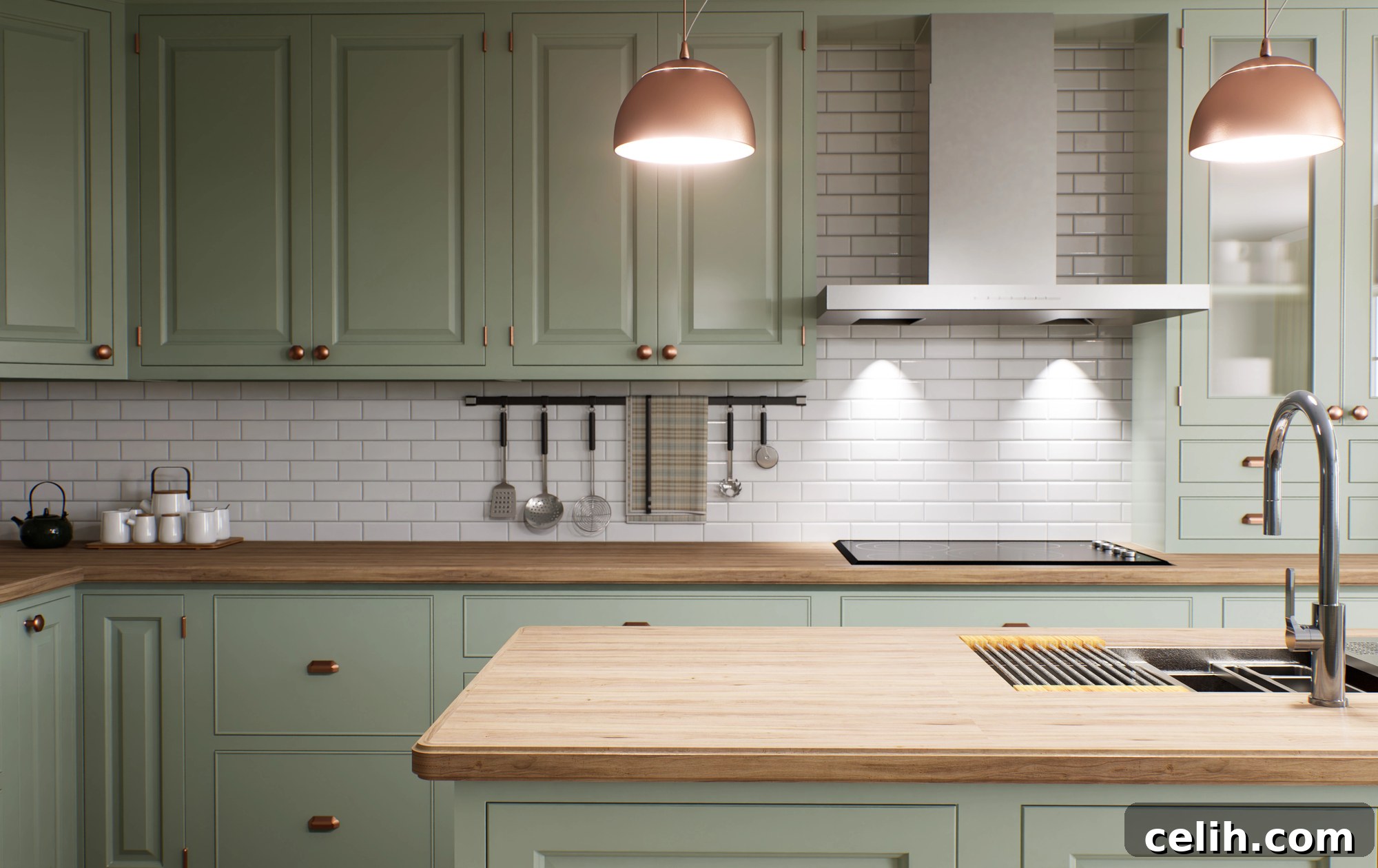
Choosing the perfect kitchen worktop is a significant decision, influencing both the aesthetics and functionality of your culinary space. While material and color often take center stage, there’s a subtle yet impactful detail that profoundly shapes your kitchen’s character: the countertop edge profile. This small but mighty design element is the line your eye naturally follows, the surface you touch daily, and the feature that defines whether your countertop feels sleek and modern, classically elegant, robust and traditional, or wonderfully soft and inviting.
Many homeowners overlook the importance of countertop edge types until they’re faced with the decision by their fabricator, often amidst a flurry of other kitchen design choices. However, understanding the diverse range of available edge profiles and their real-world implications can transform this potentially overwhelming choice into a surprisingly straightforward one.
This comprehensive guide will meticulously explore the most popular countertop edge styles, detailing their unique characteristics and offering expert advice on how to align them with your kitchen’s overall layout, chosen material, and your daily lifestyle. Whether you envision a hyper-modern, streamlined kitchen or a space brimming with timeless charm, you’ll gain invaluable insights into which edges are best suited for your vision and why these seemingly minor details hold far more significance than you might initially believe.
Why Your Countertop Edge Profile is Crucial
It’s tempting to perceive a countertop edge as merely a functional border. Yet, the vast array of kitchen countertop edge profiles available means your choice acts as a sophisticated frame for your worktops, dynamically interacts with how light dances across your surfaces, and injects either subtle elegance or bold character into your entire kitchen design. Consider it akin to a meticulously chosen picture frame: it might not be the central focus, but it’s instrumental in enhancing the artwork and tying the entire composition together.
A substantial, elaborately decorative edge can evoke a sense of grandeur and traditional opulence, perfect for a classic kitchen aesthetic. Conversely, a soft, gently rounded edge fosters a warm, inviting, and family-friendly atmosphere. For those who gravitate towards minimalist design, a crisp, clean square edge serves as the quintessential choice, delivering a sleek and contemporary vibe.
Therefore, while selecting an edge profile may appear to be a minor aesthetic detail, it is, in fact, a powerful design element that subtly yet significantly influences the look, feel, and daily experience of your kitchen.
Exploring Popular Countertop Edge Styles and Their Design Statements
Here’s an in-depth exploration of the most sought-after countertop edge profiles you’ll encounter during your kitchen planning journey. Each possesses distinctive characteristics and a unique aesthetic appeal, allowing you to tailor your surfaces to your personal style.
1. Square Edge (Eased Edge)
Often referred to as a straight edge or more accurately, an eased edge, this profile is engineered to project a clean, sharp, and unmistakably modern aesthetic. Despite its name, a true 90-degree corner is rarely left untouched; skilled fabricators subtly soften or “ease” the edges. This slight rounding is crucial, preventing unsightly chipping and making the surface much safer and more comfortable for everyday interaction.
- Features: Defined by its clean, linear lines with only minimal rounding on the very top and bottom edges.
- Aesthetic Impact: Delivers a sleek, contemporary appearance that seamlessly integrates into modern and minimalist kitchen designs. It allows the countertop material itself to be the focal point.
- Practicality: Exceptionally easy to clean due to the absence of grooves or intricate curves, preventing crumb and dirt accumulation.
- Material Compatibility: Highly versatile and compatible with virtually all countertop materials, including popular choices like quartz, granite, marble, laminate, and solid surface materials.
The eased edge stands as an excellent choice for homeowners seeking a simple, understated, and incredibly versatile look that endures changing trends.
Best for: Contemporary designs, modern, and minimalist kitchen aesthetics where clean lines and an uncluttered feel are paramount.
2. Bullnose Edge
A bullnose edge profile is characterized by its complete rounding from top to bottom, forming a smooth, perfect semi-circular shape. This classic and softest of countertop edges exudes a sense of traditional warmth and timeless appeal.
- Features: Entirely rounded along both the top and bottom edges, presenting a continuous, gentle curve with no flat surfaces.
- Aesthetic Impact: Imparts a soft, classic, and inviting look, making it a superb fit for traditional or bustling family-friendly kitchens.
- Safety & Comfort: Extremely comfortable to lean against and significantly safer in homes with children due to the complete absence of sharp corners, minimizing injury risk.
- Durability: Its fully rounded surface helps to reduce chipping, as impacts tend to glance off the curve rather than directly strike a vulnerable edge.
- Perception: Can sometimes make a countertop appear visually thinner than it actually is because of the rounded underside, which removes the visual weight of a flat edge.
This profile is a perennially popular choice for those who appreciate a gentle, flowing curve. A minor consideration is that spills might roll more freely off the fully rounded edge, potentially directing liquids underneath the countertop – a point worth noting for very busy kitchens.
Best for: Traditional, cozy, or family-oriented kitchen styles. Its smooth, inviting appearance and practical durability make it a beloved choice.
3. Half Bullnose Edge (Demi-Bullnose)
The half bullnose, or demi-bullnose, offers a beautiful compromise: only the top edge is rounded, while the bottom edge remains straight or minimally eased. This profile strikes a perfect balance, providing a softer aesthetic than a sharp square edge without the full curvature of a bullnose.
- Features: Showcases a smooth, elegantly curved top edge contrasted with a flat or gently eased bottom edge.
- Aesthetic Impact: Delivers a clean, classic look that possesses remarkable versatility, adapting beautifully to a wide array of kitchen styles, especially transitional designs.
- Practicality: Superior to the full bullnose in managing spills, as liquids are more likely to run off the top surface and drip directly down, rather than curling underneath.
- Comfort & Durability: Pleasant to the touch and effectively reduces chipping along the exposed top edge, a common wear point.
- Perception: Retains more visual weight and a thicker, more substantial appearance than a full bullnose, appealing to those who desire a robust look.
The half bullnose is an ideal middle-ground option: it offers enhanced safety and softness while maintaining a crisp, structured presence.
Best for: Transitional kitchens that gracefully blend elements of both classic and contemporary styles, offering adaptable elegance.
4. Bevelled Edge
A bevelled edge (also spelled beveled edge) is a distinctive countertop profile where the top edge is cut at a precise angle, typically 45 degrees. This creates a flat, slanted surface that connects the top of the countertop to its vertical face. This angled detail on the bevel edge introduces significant visual interest and a sophisticated touch, making it particularly well-suited for modern and elegant designs.
- Features: The top edge is meticulously cut at an angle, usually 45°, forming a crisp, distinct chamfer.
- Aesthetic Impact: Imparts a clean, geometric, and subtly decorative look, adding more definition than a simple square edge without being overly ornate. It plays beautifully with light, creating intriguing shadows and highlights.
- Style Versatility: Adaptable for both modern and transitional kitchens. The width of the bevel can be adjusted to lean more contemporary (narrower bevel) or more traditional (wider bevel).
- Durability: Helps to mitigate chipping along the top edge, as the angled surface disperses impact more effectively than a sharp corner.
- Maintenance: Easy to clean due to its smooth, angled surface, devoid of deep curves or elaborate grooves where dirt might accumulate.
Bevelled edges are an excellent choice when you desire a clean, stylish profile that captures and reflects light beautifully, adding understated yet impactful detail to your kitchen.
Best for: Modern kitchen styles with a hint of glamor, an industrial edge, or bold contemporary flair. It offers a refined architectural element.
5. Ogee Edge
The ogee edge is a distinguished, decorative countertop profile renowned for its elegant, flowing S-shaped curve. This is one of the most traditional and ornate edge styles, instantly associated with luxury, classic design, and a sense of bespoke craftsmanship.
- Features: Characterized by a distinctive S-curve, which typically involves a concave arc at the top gracefully transitioning into a convex arc below.
- Aesthetic Impact: Creates a rich, sophisticated, and highly detailed appearance, adding significant visual weight and historical elegance to the countertop.
- Style Suitability: Predominantly found in traditional, classical, colonial, or high-end kitchen designs where intricate detailing is desired.
- Material Requirements: To fully showcase its elaborate profile, the ogee edge is typically best applied to thicker countertop slabs.
- Material Compatibility: Works exceptionally well with dense, luxurious materials like granite, marble, and quartz, where precise shaping and intricate carving are achievable.
Ogee edges are ideal for achieving a premium, high-end finish. This intricate fabrication often incurs a slightly higher cost, but for those committed to a truly classic and luxurious look, it is a worthwhile investment. You might also encounter variations like the double ogee, offering even more dramatic profiling.
Best for: Achieving a dramatic, upscale, and timeless aesthetic in traditional designs, country or Shaker-style kitchens, and any space where elegance and grandeur are desired.
6. Waterfall Countertop Edge
A waterfall edge is a striking and contemporary countertop design where the material extends beyond the horizontal surface, flowing seamlessly down the sides of a cabinet or island to the floor. This creates the breathtaking appearance of a continuous, uninterrupted “sheet” of stone or surface material.
- Features: The countertop surface descends vertically at a crisp 90° angle, mimicking a flowing waterfall.
- Aesthetic Impact: Produces a bold, inherently modern, and sculptural look that dramatically highlights the inherent beauty and unique veining or pattern of the chosen material.
- Construction: Often achieved through meticulously executed mitered joints, ensuring that the grain or veining aligns perfectly for a truly seamless and high-end finish.
- Material Suitability: Especially effective with large slab materials such as quartz, marble, granite, and porcelain, which can showcase impressive continuous patterns.
- Functional Benefit: Beyond its aesthetic appeal, it offers practical protection to the sides of cabinets, islands, or seating areas, particularly in high-traffic kitchen zones.
A waterfall edge is perfect for contemporary kitchens, industrial-chic designs, or whenever you aim to make a powerful architectural statement and celebrate the raw beauty of your chosen stone.
Best for: High-impact, contemporary kitchen designs where the countertop itself becomes a prominent feature, adding significant visual appeal and a luxurious touch.
7. Pencil Edge (Pencil Round)
The pencil edge, also known as a pencil round, is a refined countertop edge profile distinguished by its subtle, gently rounded top edge. It closely resembles the soft curve of a pencil that has been lightly sanded, perfectly blending the crispness of a straight edge with a touch of comforting softness. This makes it both remarkably stylish and highly practical.
- Aesthetic & Safety: Delivers a clean, modern aesthetic without any harsh, sharp edges, making it a safer and more user-friendly option.
- Durability: The slight rounding along the top edge is highly effective in preventing chipping, extending the lifespan of the countertop.
- Comfort: Its gentle curve provides a comfortable surface to lean or work against, reducing arm fatigue during prolonged kitchen activities.
- Material Versatility: Works seamlessly with a broad spectrum of materials, including quartz, granite, and solid surface options.
- Ease of Cleaning: Its simple, smooth profile ensures effortless cleaning, as there are no deep grooves or intricate details where food particles or dirt can become trapped.
Best for: Family kitchens where safety and durability are key considerations, as the rounded edge is significantly safer and more resilient than sharp corners. It also suits modern and transitional spaces that value understated elegance.
8. DuPont Edge
The DuPont edge is a distinguished, decorative countertop edge profile celebrated for its elegant and traditional appearance. It features a characteristic steep, rounded cove at the top, which then gracefully transitions into a straight or gently eased lower edge. The resulting profile is a dramatic, sculptured shape that instantly conveys a sense of luxury, intricate craftsmanship, and timeless grandeur.
- Features: Defined by a distinctive “step” or a pronounced concave curve at the very top, which sets it apart from simpler, softer edges like the pencil round.
- Aesthetic Impact: Creates a bold, high-end appearance, frequently employed in classic, ornate, or very formal kitchen designs where an element of grandeur is desired.
- Material Requirements: To fully appreciate and execute its sculpted form, the DuPont edge typically requires and showcases best on thicker countertop slabs.
- Material Compatibility: Particularly effective with premium materials such as granite, marble, or quartz, where the precision of the carving can be exquisitely rendered.
Best for: When the primary goal is to introduce a significant traditional, elegant, or statement-making detail into the kitchen, often chosen for central kitchen islands or prominent perimeter countertops.
9. Mitered Edge
A mitered edge is a sophisticated countertop edge treatment achieved by joining two pieces of material at a precise 45-degree angle to create a seemingly seamless, continuous edge. This technique is predominantly utilized to give the illusion of a much thicker, more substantial, and luxurious slab of material, without the prohibitive cost or weight of using a solid, extra-thick piece throughout the entire countertop.
- Construction: Fabricated by cutting two pieces of the countertop material at 45° angles and then bonding them together, resulting in a clean, sharp, and virtually seamless corner.
- Visual Impact: Commonly employed to build up the edge thickness, making the countertop appear dramatically more robust and luxurious (e.g., giving a 2cm slab the appearance of a 5cm or 10cm edge).
- Design Versatility: An essential technique for creating sought-after waterfall edges, where the countertop material gracefully continues down the side of a cabinet or island.
- Material Compatibility: Works exceptionally well with large slab materials like quartz, granite, marble, and porcelain, allowing for consistent grain or veining matching.
- Cost Efficiency: Offers a sleek, modern, and high-end aesthetic while being more material-efficient and cost-effective than fabricating the entire countertop from a solid, extra-thick slab.
Best for: Achieving bold, sculptural, or statement-making countertop designs, especially when a dramatic, thick-edge appearance is desired without compromise.
How Countertop Materials Influence Your Edge Profile Choice
The choice of your countertop material plays a significant role in determining the most suitable and durable edge profile. It’s a blend of aesthetic harmony, the material’s inherent physical capabilities, and how well it will withstand the rigors of daily use. If you’ve already selected your countertop material, this homeowner-friendly guide will help you refine your edge trim decision.
Quartz Countertops
Quartz is an engineered stone known for its exceptional flexibility when it comes to edge profiling. Its consistent composition and inherent strength allow it to be shaped into both simple, modern lines and more intricate, decorative forms.
- Best Matched Edges: Square/Eased (ideal for modern kitchens), Pencil Round (softens the look while retaining contemporary appeal), Half Bullnose (beautifully highlights thickness), Ogee (excellent for classic kitchens desiring elegance).
- Why it Works: Quartz is remarkably resistant to chipping and allows fabricators precision in shaping, meaning almost any profile is a viable option, offering maximum design freedom.
Granite Countertops
Granite, a natural stone, also offers considerable versatility. However, due to its natural variations and potential for microscopic fissures, extremely delicate or highly intricate edges might not always be the most practical or durable choice.
- Best Matched Edges: Eased or Pencil Round (clean, safe, and showcases the stone’s natural beauty), Half Bullnose or Full Bullnose (timeless, forgiving, and excellent for busy family kitchens), Ogee (works well, especially on thicker slabs, for traditional kitchens).
- Why it Works: Rounded edges inherently provide greater protection against chipping, particularly in high-traffic or frequently touched areas, enhancing the longevity of the stone.
Marble Countertops
Marble is a softer, more porous natural stone, making it inherently more susceptible to chipping and scratching. Therefore, edge profiles that minimize sharp corners are generally highly recommended to protect its delicate nature.
- Best Matched Edges: Pencil Round (the safest and most popular choice for marble), Half Bullnose (softens edges, lending a classic look), Ogee (possible with caution; best reserved for thicker marble and requires highly skilled fabrication).
- Why it Works: Any profile that eliminates a sharp 90-degree corner significantly enhances marble’s resistance to wear, impact, and chipping over time, preserving its beauty.
Laminate Countertops
Laminate countertops have specific limitations concerning edge profiles because they consist of a decorative layer bonded to a core material. Certain complex edge types are simply not feasible or durable with this construction method.
- Best Matched Edges: Square (offers the cleanest and most modern look within laminate capabilities), Post-formed rounded edge (smooth, seamless, and excellent for durability), Small radius edges (help to minimize visible joins and create a cleaner finish).
- Why it Works: Laminate requires edges that can be either seamlessly wrapped or securely bonded without exposing the vulnerable substrate material.
Butcher Block / Wood Countertops
Wood, including butcher block, is highly versatile for shaping, but it also naturally expands and contracts and is more prone to dings and marks than stone. Consequently, softer, more forgiving edge profiles tend to hold up better over time.
- Best Matched Edges: Small Roundover (the quintessential, classic wood-friendly profile), Bullnose (soft, safe, and ideal for family use), Bevel (can lend a charming cottage or farmhouse feel and complements the inherent warmth of timber).
- Why it Works: Gentle curves actively prevent splintering and enhance the tactile quality of the surface, making it feel inviting and comfortable.
Solid Surface Countertops (e.g., Corian)
Solid surface materials, such as Corian, are incredibly workable and offer immense design flexibility. They can be seamlessly formed into complex decorative shapes or even layered to create impressive “built-up” edges that mimic much thicker slabs of natural stone.
- Best Matched Edges: Square/Eased (provides a clean, modern look), Bullnose/Demi Bullnose (extremely popular due to the material’s seamless aesthetic and smooth feel), Decorative profiles (possible, though less common in contemporary kitchen trends).
- Why it Works: Solid surface edges can be effortlessly sanded, repaired, and shaped with greater ease and fewer limitations than natural stone, allowing for exceptional customization.
Quick Matching Guide for Countertop Edges
| Material | Best Edges | Avoid (or Use with Caution) |
|---|---|---|
| Quartz | Square, Pencil Round, Half Bullnose, Ogee | None, highly versatile for most profiles |
| Granite | Pencil Round, Bullnose, Ogee | Very sharp square edges (can be chip-prone) |
| Marble | Pencil Round, Half Bullnose | Sharp square edges (high risk of chipping) |
| Laminate | Square, Post-formed Round | Deep Ogee or highly complex, intricate shapes |
| Butcher Block | Roundover, Bullnose, Bevel | Sharp corners (easily dinged or damaged) |
| Solid Surface | Square, Bullnose, Decorative | None, but overly ornate edges may appear dated |
Essential Questions Before Finalizing Your Countertop Edge Choice
The truth is, any countertop edge profile can look absolutely stunning, provided it harmonizes perfectly with your kitchen’s overarching style and your family’s daily routines. If you find yourself deliberating between several appealing options, it’s highly beneficial to pause and candidly ask yourself a few critical questions to guide your decision.
How will this kitchen space be used on a daily basis?
Reflect realistically on your true kitchen habits, rather than an idealized “Sunday morning chef” persona. If your kitchen is a high-traffic hub where pots and pans are frequently moved, or you regularly cook for a large family, a robust, simple edge like a square or eased profile will better withstand impacts and prevent snagging. Conversely, if your cooking style is more about reheating leftovers and occasional meal prep, you’ll have greater latitude to explore more decorative options.
Do I want the edge to seamlessly blend in or make a distinct character statement?
Some edge profiles are designed to subtly perform their function, allowing the main countertop surface to truly shine. Others are crafted to boldly assert their own personality and visual appeal. If your personal style leans towards clean, modern aesthetics, a straight or eased edge will maintain a crisp, uncluttered look. However, if you prefer a softer, more traditional or eclectic vibe, a gentle curve or an elegant ogee profile can inject that desired touch of extra charm and sophistication.
What is the overarching design aesthetic I aim to achieve for my kitchen?
Your chosen countertop edge should feel like an organic and integral part of the broader design narrative. Contemporary and minimalist kitchens thrive on sharp, uncomplicated lines that emphasize sleekness. In contrast, farmhouse, traditional, or classic kitchens beautifully accommodate more intricate and detailed edge profiles. If your style occupies the middle ground (as many do), seek an edge that subtly echoes and complements the other design elements throughout your kitchen.
What level of maintenance am I genuinely prepared to undertake?
More intricate and decorative edges, such as an ogee or DuPont, can inadvertently become small traps for crumbs, spills, and dust, necessitating more diligent cleaning with a cloth or brush. If your priority is a kitchen that is effortlessly easy to wipe down and maintain for daily life, a simpler, smoother edge will keep things refreshingly fuss-free and hygienic.
Could this chosen edge pose a safety hazard for young children?
For households with young children, or indeed anyone who might inadvertently bump into the kitchen counter, opting for a softened or generously rounded edge provides an invaluable layer of extra safety and enhanced peace of mind. Profiles like the full bullnose or pencil round significantly reduce the risk of injury from sharp corners.
Does my selected kitchen countertop material impose any limitations on my edge options?
While premium materials like granite and quartz offer a vast selection of edge profiles, other materials such as laminate or butcher block may have fewer available profiles due to their inherent properties or fabrication methods. It is crucial to verify the feasibility of your preferred edge with your fabricator before you become too attached to a particular look.
What is the current budget allocation for my kitchen renovation?
It’s important to note that more elaborate and intricate edge profiles typically require greater skill and time for fabrication, which consequently increases their cost. If you are aiming to keep your expenditure sensible and within budget, adhering to a clean, straightforward profile is both a stylish and financially prudent choice.
Will I continue to appreciate this edge profile in five or even ten years?
Kitchen countertops represent a significant and long-term investment; they are not elements we frequently update. If you find yourself uncertain about a trendy or highly specific edge, it is often wise to gravitate towards a more timeless and classic profile that will prevent your kitchen from looking dated in the foreseeable future.
By thoughtfully considering these questions, you can effectively navigate the myriad of options, remain true to your practical living needs, and ultimately select a countertop edge that truly resonates with the aesthetic and functional heart of your home.
Beyond The Kitchen: Versatile Applications of Edge Profiles
The thoughtful application of countertop edge profiles extends far beyond the confines of the kitchen. Once you become attuned to their presence, you’ll recognize how they subtly yet significantly shape the visual appeal and tactile experience of spaces wherever a solid surface is present. Here are some of the most common – and most advantageous – locations where these carefully crafted edges make a meaningful difference:
Bathroom Vanities
Bathroom countertops are frequently bumped, wiped down, and leaned upon. For these reasons, softer, more forgiving profiles typically emerge as the most practical and aesthetically pleasing choices.
- Best Edges: Pencil round, small radius, half bullnose.
- Why They Work: They offer a gentle feel underhand, substantially reduce the risk of chipping from daily use, and gracefully complement both modern and classic bathroom designs.
Utility and Laundry Rooms
Worktops in utility and laundry rooms are subjected to the demands of detergents, heavy laundry baskets, and constant activity. Here, clean, fuss-free lines are paramount for maintaining practicality and ease of use.
- Best Edges: Square, eased, pencil round.
- Why They Work: They are exceptionally easy to clean, straightforward to fabricate, and contribute to a crisp, purposeful, and efficient aesthetic within these functional spaces.
Home Bars (Indoor or Outdoor)
Home bars are inherently social spaces where comfort is a key consideration. Guests often lean against them, perch on stools, and occasionally clink glasses. Therefore, countertop edge styles that feature a slightly rounded or softened profile are ideal.
- Best Edges: Half bullnose, full bullnose, eased, or a small ogee for a more traditional, refined look.
- Why They Work: They skillfully balance comfort with style and are robust enough to endure high-traffic, high-touch usage typical of social entertaining areas.
Mudrooms and Boot Rooms
These entry points are typically busy, practical areas where surfaces must be exceptionally tough, durable, and family-friendly to withstand coats, muddy boots, and bags.
- Best Edges: Roundover, eased.
- Why They Work: These profiles not only visually soften the space but also offer a physical gentleness – a practical advantage when managing outerwear and active family life.
Home Office Desks
Built-in desks or bespoke work surfaces derive immense benefit from a comfortable edge, especially crucial if you spend extended hours working from home.
- Best Edges: Roundover, bevel, eased.
- Why They Work: They significantly prevent arm fatigue and impart a more refined, furniture-like finish to the desk, enhancing both ergonomics and aesthetics.
Dressing Tables and Bedroom Surfaces
A dressing table or an integrated vanity in a bedroom often calls for an edge profile that exudes a softer, more refined, and elegant aesthetic.
- Best Edges: Slim bevel, pencil round, or an ogee in more traditionally styled rooms.
- Why They Work: They add a gentle, decorative touch that complements the intimacy of a bedroom without visually overwhelming the space.
Outdoor Kitchens
Outdoor surfaces must be robust enough to withstand varying weather conditions, the use of barbecue tools, and frequent social gatherings and hosting.
- Best Edges: Eased edge countertop, half bullnose, full bullnose.
- Why They Work: Rounded profiles are highly effective in preventing chips and damage to stone surfaces that are exposed to the elements, and they provide a comfortable surface for leaning against during outdoor entertaining.
Window Ledges & Deep Window Seats
Stone or solid-surface ledges and window seats appear — and feel — much more thoughtfully designed and finished when they incorporate a shaped edge.
- Best Edges: Pencil round, small roundover.
- Why They Work: They effectively soften the linear profile of the ledge, making it more visually appealing and physically pleasant to perch upon.
Media Units & Sideboards with Stone Tops
Marble-topped consoles and sideboards achieve an especially polished and sophisticated look when enhanced with a carefully shaped edge.
- Best Edges: Pencil round, ogee, bevel.
- Why They Work: They instantly elevate simple furniture pieces and help to seamlessly integrate the item into the broader interior styling and finishes of the home.
Fireplace Hearths and Mantels
Stone hearths experience a surprisingly significant amount of contact, making a slightly softened edge a crucial detail that makes a considerable difference to both safety and aesthetics.
- Best Edges: Eased, pencil edge.
- Why They Work: They provide essential protection for the stone, prevent potential bumps, and ensure the hearth appears refined and thoughtfully finished rather than harsh or incomplete.
Freestanding Furniture with Stone Tops
From elegant console tables to practical small side tables, incorporating a shaped edge can instantaneously upgrade a piece of furniture, imparting a custom, high-end feel.
- Best Edges: Ogee countertop edge, bevel, pencil round.
- Why They Work: They infuse a bespoke, “designed” sensibility into the furniture and help it to blend harmoniously with the overall interior finishes and style of the home.
Final Thoughts on Countertop Edge Selection
While choosing a countertop edge profile may not strike you as the most glamorous or exciting aspect of designing your dream kitchen, it unequivocally deserves careful consideration. This seemingly minor detail is, in essence, the crucial finishing touch that expertly frames your culinary space and profoundly influences both the aesthetic appeal and the day-to-day functionality of your kitchen.
So, take a moment to breathe, trust your innate design instincts, and remember this fundamental principle: you don’t necessarily need the most elaborate or expensive option. What truly matters is selecting the countertop edge that genuinely makes your kitchen feel like an authentic and comfortable extension of your home.