
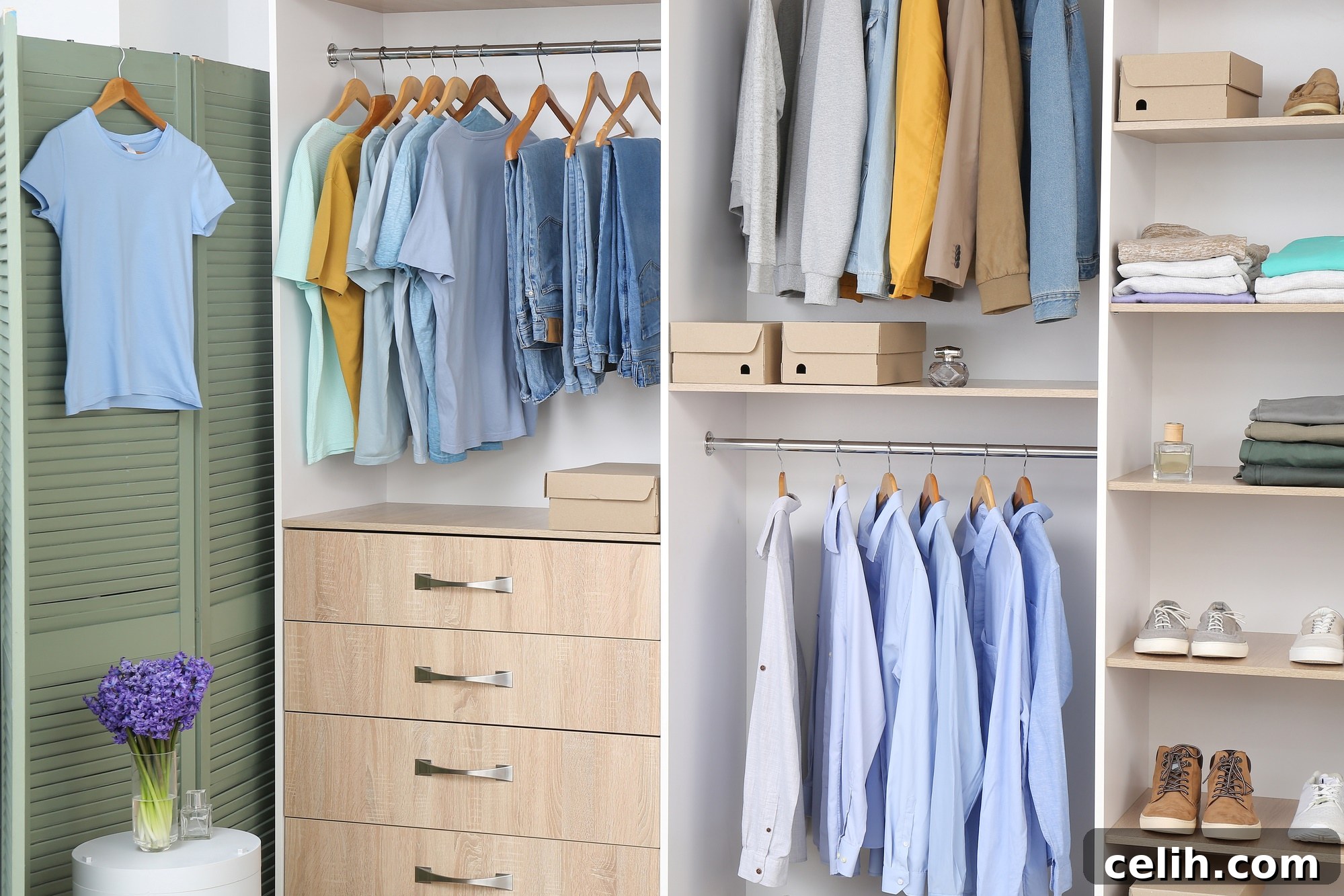
In our fast-paced lives, getting ready for the day should be a smooth and enjoyable process, not a frantic search through a chaotic closet. If you often find yourself battling a cluttered wardrobe, unable to locate what you need, it’s a clear sign that it’s time for a comprehensive closet reorganization. This article delves into practical, step-by-step strategies to transform your wardrobe from a source of daily stress into a sanctuary of style and efficiency. Discover effective methods to declutter, categorize, and maintain an organized closet, ensuring that every outfit choice is a breeze.
Reclaim Your Wardrobe: Starting Your Closet Reorganization Journey
The journey to a beautifully organized closet begins with a commitment to change. A well-structured bedroom closet doesn’t just look good; it fundamentally transforms your daily routine. Imagine effortlessly picking out your desired clothing, shoes, and accessories at a glance, without the frustration of sifting through piles of unworn items. Beyond saving precious time, decluttering your physical space often leads to a clearer, more organized mind, reducing decision fatigue and boosting overall well-being. This isn’t just about tidying up; it’s about investing in a more peaceful and productive daily life. For some, this might even involve considering a walk-in closet installation for ultimate customizability and space utilization.
Embarking on a full closet overhaul requires dedication. Depending on the size of your wardrobe and the number of items you own, this process can take several hours, or even a full day. We highly recommend setting aside dedicated time, free from distractions, to thoroughly work through your belongings and implement the following transformative steps.
The Grand Purge: Emptying Your Closet
The crucial first step in any effective organizationproject is to make space. This often means things look worse before they get better. Begin by taking every single item out of your wardrobe – and we mean everything. Place all your clothes, shoes, bags, and accessories onto your bed, floor, or any clear surface in your room. This “blank slate” approach is vital; it allows you to truly see the volume of items you own and prevents you from simply shuffling things around. As you remove items, you can begin a preliminary sort, or you can wait until your closet is completely empty to start the detailed categorization.
During this initial sorting phase, an honest and critical eye is your most valuable tool. As you hold each item, ask yourself a series of tough questions: Have I worn this in the last six months? Does it fit me comfortably and flatter my current style? Is it in good condition? Does it bring me joy when I wear it? If the answer to any of these questions is a definitive “no,” it’s likely time to let it go. Create separate piles for items you intend to keep, items to donate, items to sell, and items to discard (if they are beyond repair or use). This ruthless editing process is essential for freeing up much-needed space, which in turn makes the subsequent organization steps significantly easier and more effective.
The Ruthless Edit: Sorting Your Wardrobe Items
With your closet now empty and your belongings spread out, it’s time for the deep dive into sorting. This stage is where you truly decide what earns a coveted spot back in your streamlined wardrobe. We recommend categorizing your items into distinct piles, moving beyond just “keep” or “discard,” to gain a clearer perspective on your personal style and needs:
- Love It: These are your go-to pieces. You wear them regularly, they fit perfectly, and you feel fantastic whenever you put them on. These are non-negotiable staples that define your personal style.
- Like It: Items in this category are worn fairly often and play a key role in several of your outfits. They might not be your absolute favorites, but they are reliable, versatile, and serve a clear purpose in your wardrobe.
- Hate It: This pile is for items you never wear. Perhaps they don’t fit anymore, they’re uncomfortable, they’re damaged, or you simply don’t like how they look on you. Be honest – if it sits unworn, it’s taking up valuable space.
- Undecided: These are the tricky pieces. You might be holding onto them for sentimental reasons (a gift), because they were expensive, or because you think you “might” wear them someday. Give yourself a strict limit for this pile. If you can’t articulate a clear reason for keeping it and haven’t worn it recently, strongly consider letting it go. A useful trick for these items is the “reverse hanger” method: hang them with the hanger facing the wrong way; if it’s still reversed after six months, it’s time to part ways.
- Repair/Alter: Create a separate pile for items that you love but need a minor repair (a missing button, a small tear) or alteration (a hem that needs adjusting). Commit to taking these to a tailor or fixing them yourself within a set timeframe. If you don’t, these items should eventually move to the “donate” or “discard” pile.
Once you’ve meticulously sorted through everything, it’s time to act. Bag up all the items destined for donation and drop them off at a local charity. Dispose of anything that is truly beyond use or repair. Clearing these items out immediately is crucial; it not only creates more physical space but also provides a psychological boost, solidifying your commitment to a decluttered lifestyle. Now, with your “Love It,” “Like It,” and “Repair/Alter” piles remaining, you have a clear canvas to start building functional and aesthetic organization systems within your closet.
Designing Your Dream Closet: Effective Reorganization Methods
With your edited collection of clothes, the next exciting step is to meticulously arrange them back into your closet. This is your opportunity to leverage the blank slate and implement innovative organization techniques that will optimize your morning routine and make getting ready a joy. The goal is to create a system where everything has a designated home, making it effortlessly discoverable and beautifully displayed. Consider maximizing every inch of available space. If hanging space is limited, swapping out bulky, mismatched hangers for slimline, velvet-flocked versions can save considerably hanging space and give your closet a more cohesive, boutique-like feel. Investing in good quality, consistent hangers is a small change that yields big organizational dividends.
Before putting items back, take a moment to clean the inside of your empty closet. Wipe down shelves, vacuum the floor, and dust any rods or fixtures. This creates a fresh start for your newly organized wardrobe. Next, assess your closet’s physical structure. Do you have enough hanging rods? Are shelves adjustable? Could you add drawers, bins, or shoe racks to improve functionality? Thinking about these elements now will help you design a system that truly works for you.
Organize Your Wardrobe by Occasion
One highly effective method for streamlining your dressing process is to organize your wardrobe based on the types of clothes, shoes, and accessories required for different occasions. This approach creates dedicated sections within your closet, making it incredibly easy to pull together an appropriate outfit, no matter the event. By separating your pieces this way, you gain a clear overview of what you own for specific contexts, preventing over-purchasing and ensuring you always have something suitable to wear. This system is particularly beneficial for those with diverse lifestyles.
While specific occasioncategories will vary based on your personal life and career, common and highly practical divisions include:
- Work/Professional: Keep all your office wear, business casual attire, and professional accessories (blazers, dress shirts, skirts, trousers, work shoes) together. This ensures a polished look is always within reach for those busy weekday mornings.
- Weekend / Casual Wear: This section houses your comfortable, relaxed clothing perfect for errands, lounging, or casual outings. Think jeans, t-shirts, sweaters, hoodies, and casual sneakers or flats.
- Workout / Exercise Clothes: Dedicate a space for your activewear, including leggings, sports bras, athletic tops, and workout shoes. Having these separate makes it easier to grab and go for a gym session or outdoor activity.
- Formal / Evening Wear: Store special occasion garments like dresses, suits, tuxedos, formal jumpsuits, and evening shoes or clutch bags in a designated, often less-frequented, part of your closet. This protects them and keeps them ready for glamorous events.
Organize by Season: A Practical Rotation System
Organizing your closet by season is an exceptionally practical method that ensures your most relevant clothing is always easily accessible. The core idea is to hang or store clothes for the current season in prime, easy-to-reach spots within your closet, while moving off-season items to less accessible storage. As the seasons change, you simply rotate your wardrobe. This prevents your everyday view from being cluttered with heavy winter coats in summer or flimsy sundresses in winter.
For off-season storage, consider using vacuum-seal bags to compress bulky items like sweaters and heavy jackets, storing them in under-bed containers, high shelves, or dedicated storage bins. Clearly label these containers for quick identification. This seasonal rotation makes dressing for the weather effortless, eliminates the need to sift through unsuitable garments, and keeps your main closet focused and functional year-round. It also helps preserve your clothing by storing it correctly when not in use.
Organize by Colour: For Visual Harmony and Easy Coordination
For those who appreciate aesthetics and frequently coordinate their outfits, organizing garments by color can be a game-changer. Imagine opening your closet door to a beautiful gradient of hues, from whites and neutrals to vibrant reds, cool blues, and sophisticated blacks. This method not only creates a visually appealing and harmonious wardrobe but also significantly streamlines the outfit creation process. At a glance, you can immediately identify all your pieces in a particular color family, making it incredibly easy to pick out items that match or complement each other. This can be particularly useful when building monochromatic looks or selecting accent pieces. Combining this with organization by garment type (e.g., all white shirts together, then all blue shirts) can further enhance efficiency.
Organize by Type of Clothes: A Logical and Efficient Approach
Another highly effective and intuitive option for organizing your closet is to sort your items by the type of garment. This method is straightforward and ensures that all similar items are grouped together, making it incredibly easy to locate specific pieces when you’re getting dressed. You would typically hang all your tops together, followed by dresses, then trousers, and finally skirts. Within each category, you can further refine the organization, perhaps by sleeve length for tops (short-sleeve, long-sleeve) or by fabric for trousers (denim, dress pants).
This systematic grouping not only makes finding the pieces you want much faster but also creates a clean, streamlined, and highly functional look within your wardrobe. When you know exactly where to look for a pair of jeans or a specific blouse, your morning routine becomes significantly less stressful and more efficient. It also helps you assess your inventory of each garment type, preventing redundant purchases and encouraging thoughtful additions to your collection.
Optimizing Storage for Accessories
Once your main clothing items are organized, don’t forget your accessories, which often contribute to closet clutter.
- Shoes: Store shoes on shoe racks, clear bins, or individual cubbies. Keep everyday shoes easily accessible and special occasion shoes protected in boxes or dust bags.
- Bags: Hang bags on hooks or store them upright on shelves with purse shapers to maintain their structure.
- Jewelry: Utilize jewelry organizers, trays, or wall-mounted displays to keep necklaces untangled and earrings paired.
- Scarves & Belts: Use specialized hangers or drawer dividers to keep these items neat and easily visible.
Maintaining Your Organized Closet: Long-Term Success
The initial effort of reorganizing your closet is incredibly rewarding, but the key to lasting success lies in consistent maintenance. Implementing a few simple habits can prevent your wardrobe from reverting to its cluttered state.
- “One In, One Out” Rule: For every new item of clothing you purchase, commit to removing one existing item from your closet. This prevents accumulation and keeps your wardrobe at a manageable size.
- Daily Tidy-Up: At the end of each day, take a minute to put away any clothes you’ve tried on or worn. Don’t let items pile up on chairs or the floor.
- Regular Mini-Declutters: Every few months, quickly scan your closet. Are there any items that have snuck in and gone unworn? Is anything damaged? Address these small issues before they become overwhelming.
- Seasonal Refresh: When you rotate your clothes for the new season, take that opportunity to re-evaluate each item. Does it still fit? Do you still love it?
- Utilize Vertical Space: Don’t forget the power of vertical storage. Add extra shelves, hanging organizers, or stackable bins to make use of every inch from floor to ceiling.
Conclusion: Embrace the Serenity of an Organized Closet
Transforming your closet from a source of frustration to a well-organized haven is more than just a superficial task; it’s an investment in your daily peace of mind and personal efficiency. By systematically taking everything out, applying a ruthless edit, and implementing thoughtful organization strategies based on occasion, season, color, or garment type, you create a space that genuinely serves you. An organized wardrobe simplifies your mornings, inspires confidence in your style choices, and frees up mental energy for more important things. Remember, maintaining this order is an ongoing practice, but the benefits of a streamlined, beautiful closet are well worth the effort. Take the leap, embrace the process, and discover the serene satisfaction of a perfectly organized wardrobe.