
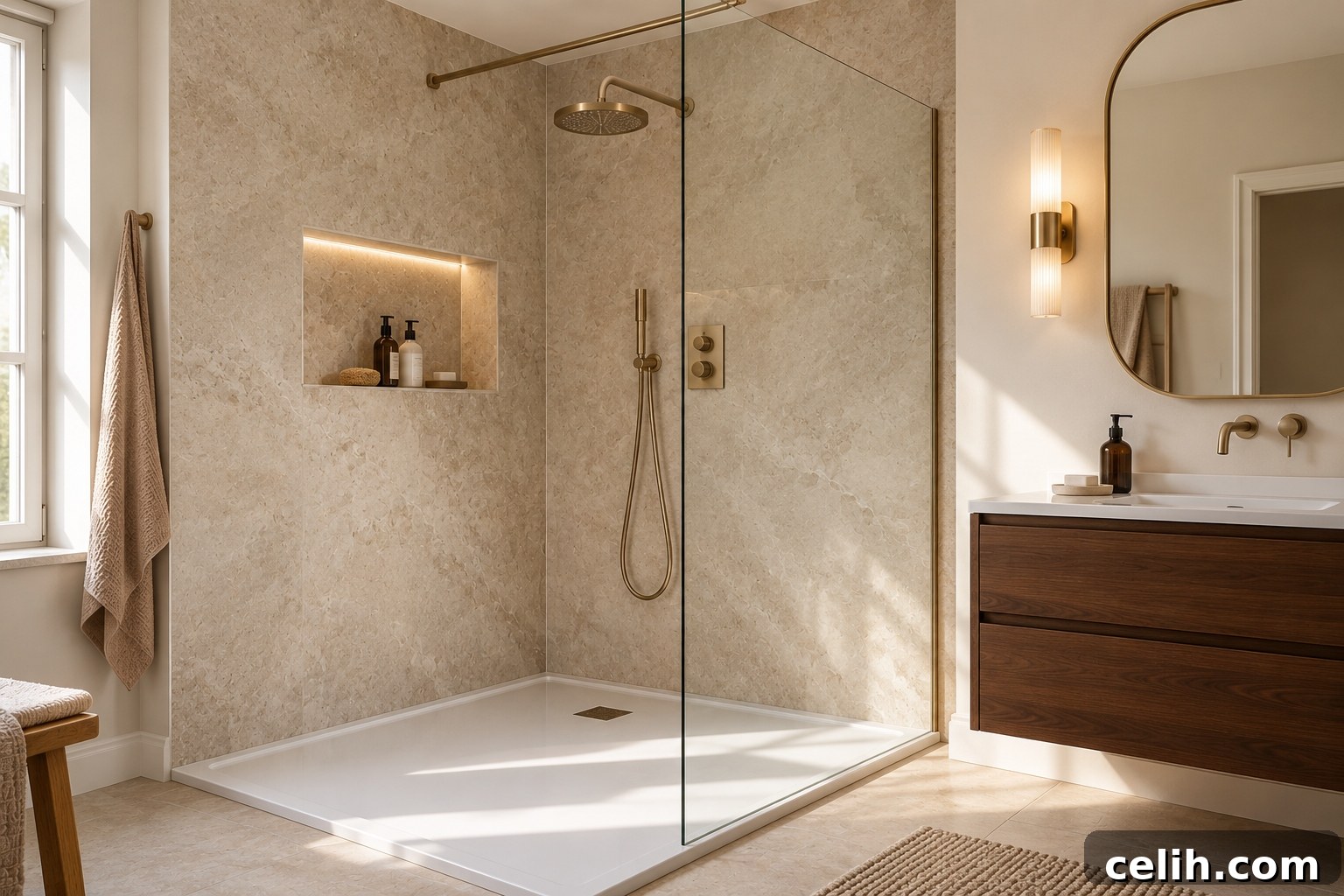
Wall panelling has moved from being a budget alternative to a mainstream finish in UK bathrooms. Marketing for panels often emphasises benefits while downplaying limitations. In reality, panels outperform tiles in some areas and underperform in others; understanding those differences will help you choose the right material for your project.
Table of Contents
Know what you’re buying
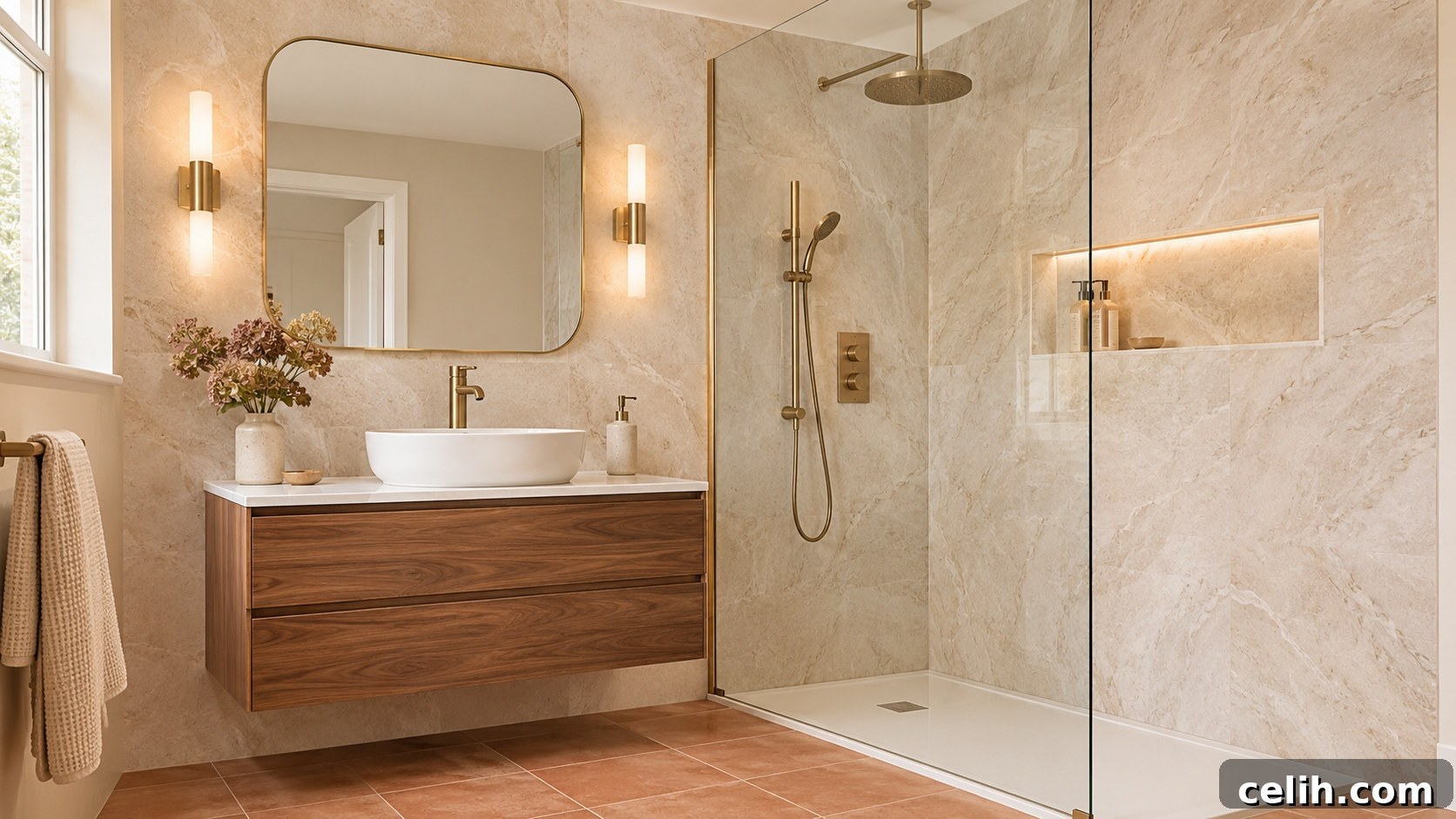
The phrase “waterproof panel” is used for at least three distinct products, and each behaves differently in a bathroom environment. PVC panels are fully waterproof, very light and usually the most affordable option, but they can feel plasticky to the touch and may lack the presence of higher-end finishes. SPC (stone-polymer composite) has a rigid, mineral-enhanced core that gives the panels more weight, stability and a more convincing finish under hand; it is generally more expensive than PVC. Moisture-resistant MDF or engineered board is often used for decorative styles — fluted, tongue-and-groove, or ribbed profiles. This material tolerates humidity and occasional splashes but is not designed for direct and continuous shower spray. Confusing these categories leads to the most common installation and performance issues.
Time
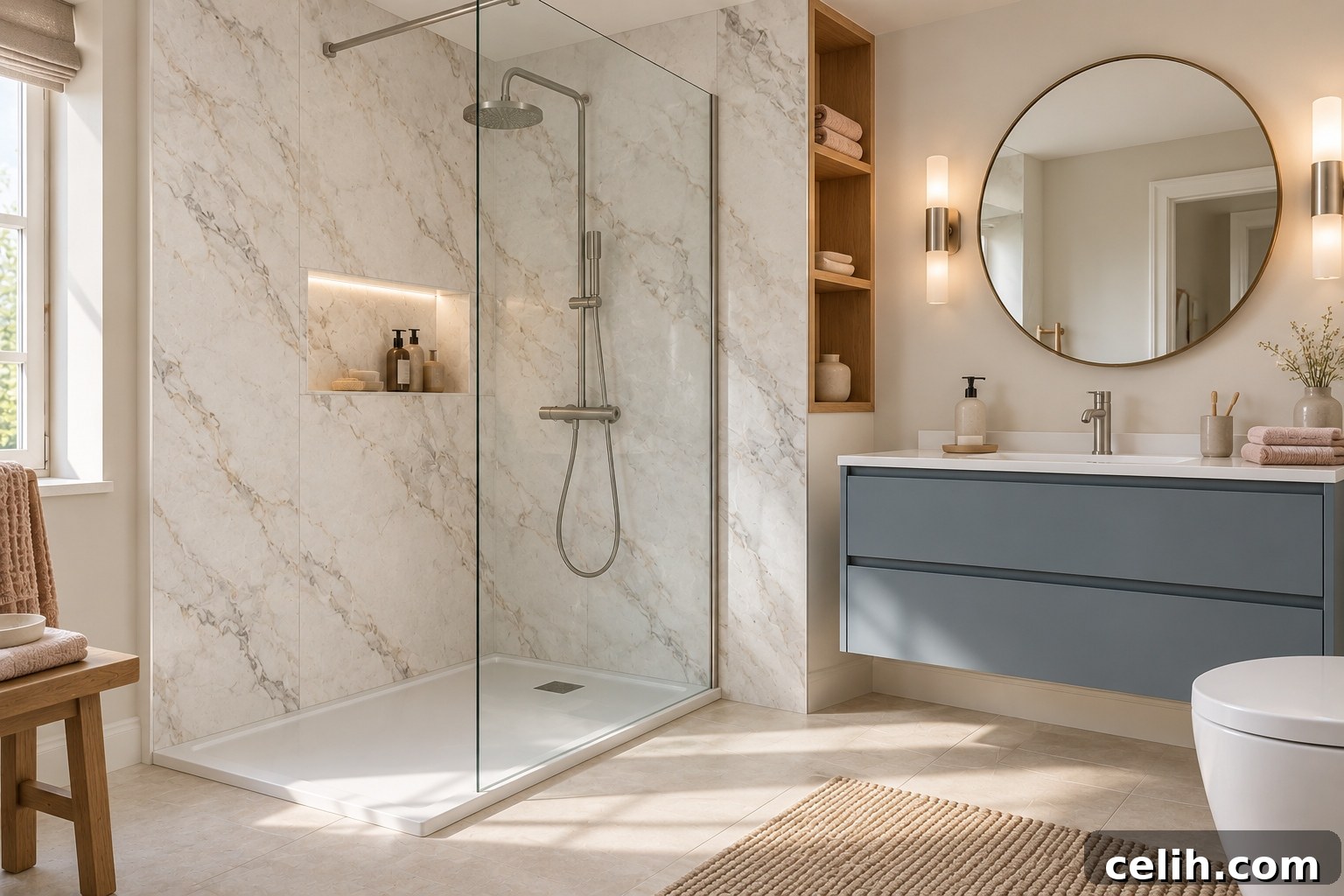
On time and disruption, panels have a clear advantage. Traditional tiling requires a sequence of preparation, tanking or waterproofing, adhesive application, setting out, cutting and fixing tiles, followed by curing, grouting, a second cure and then sealing — a process that commonly takes three to five days for a single bathroom, during which the room is effectively out of use. Panelling, when the wall substrate is suitable, is often completed in a single day. For households with only one bathroom, that speed and reduced disruption can be the decisive factor.
Cost
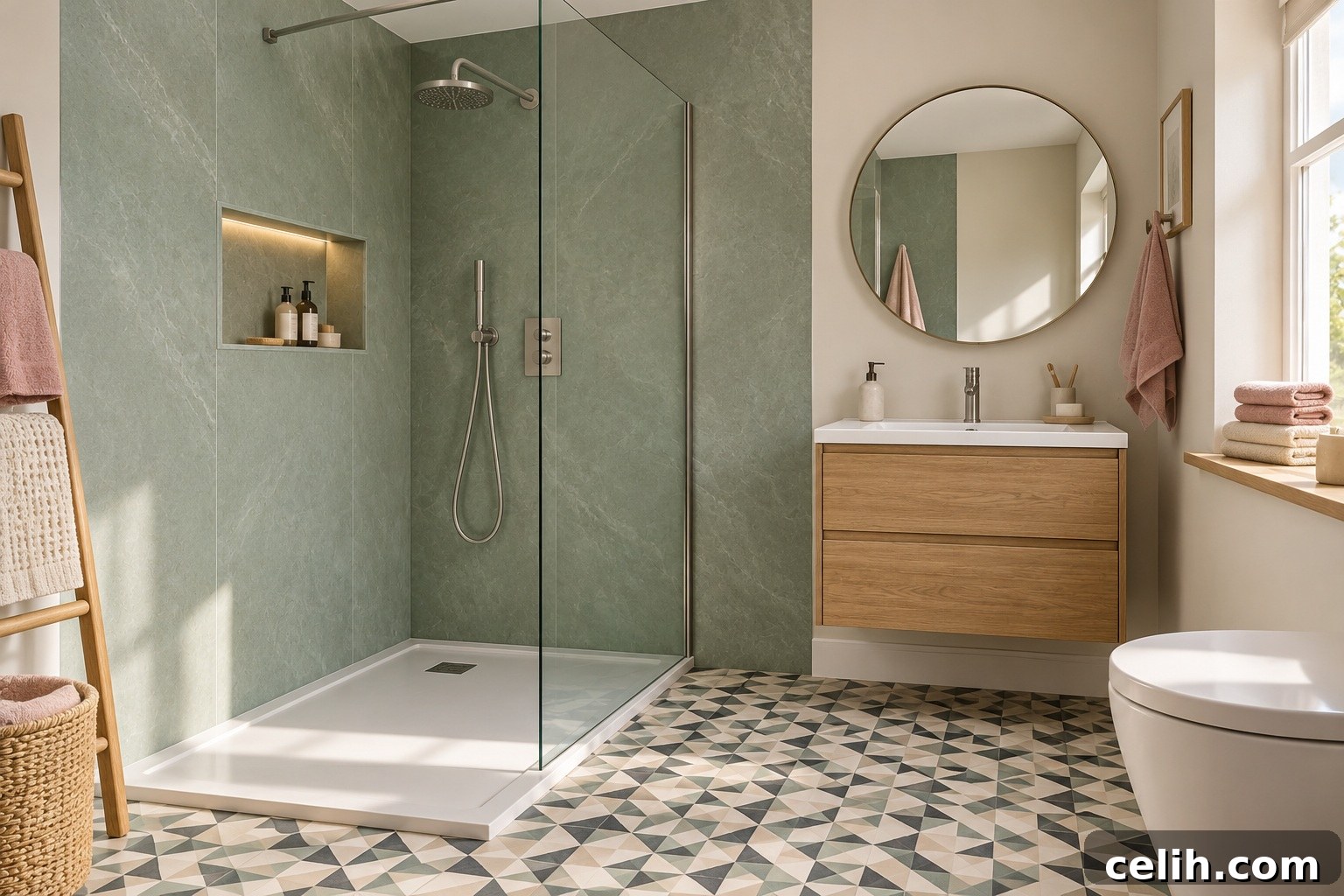
Material for quality panels can be more expensive per square metre than basic tiles, but installation costs are usually lower because panelling requires less labour and produces less waste. The overall value equation depends on room geometry: simple, square rooms maximise the savings and appearance benefits of panelling, while spaces with many corners, narrow alcoves or lots of cut-outs increase fitting time and reduce the labour advantage. Always compare total installed costs rather than material prices alone.
Where tiles still win
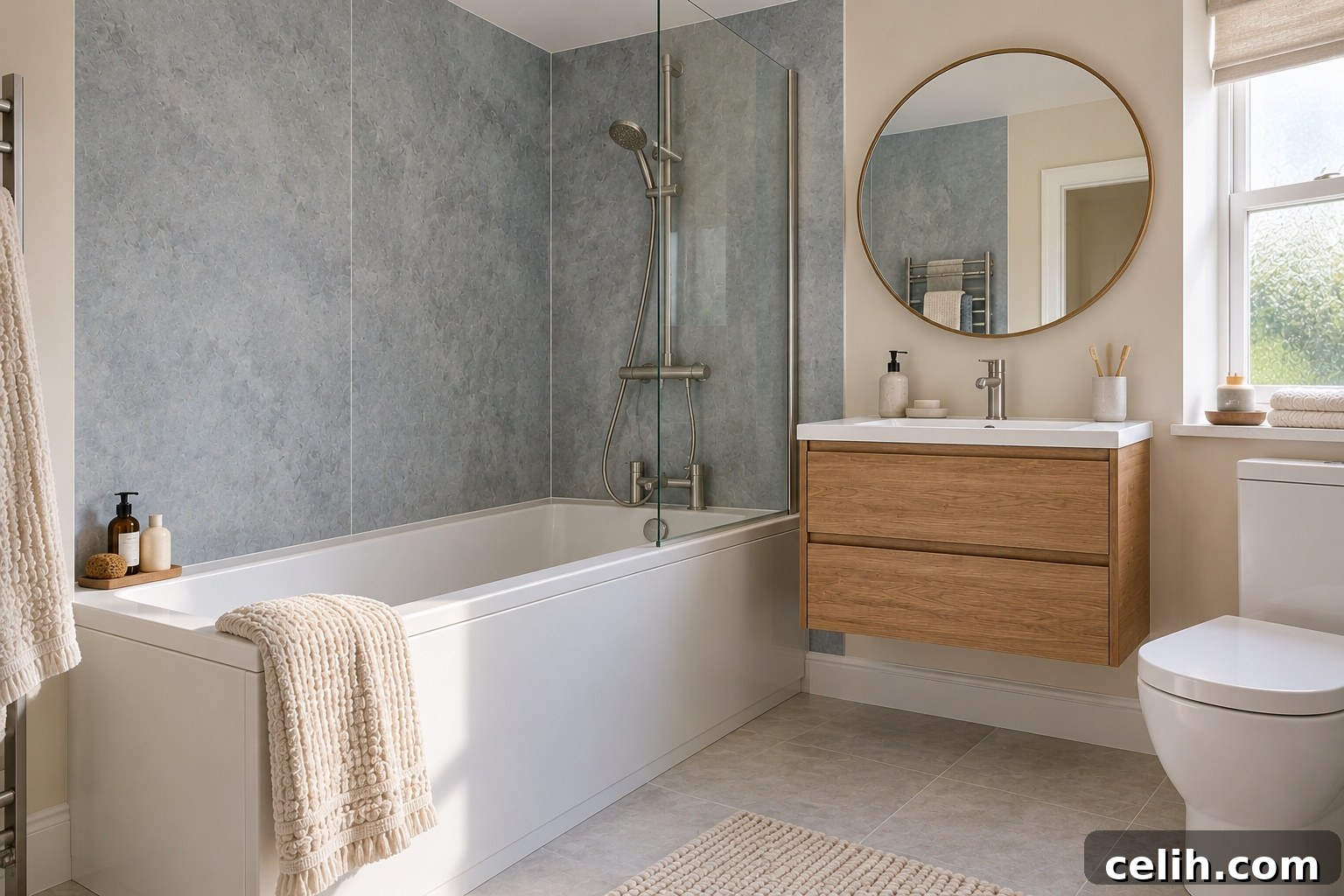
Tiled finishes retain clear strengths. If an individual tile is damaged, it can be replaced independently; with many panel systems you may need to replace several panels or a whole run to fix a local fault. High-quality porcelain and natural stone also have a longevity and timelessness that printed panel effects can struggle to match — a well-chosen tile is less likely to look dated over time than a patterned or faux-marble panel whose print technology or trend may age.
Where panels win
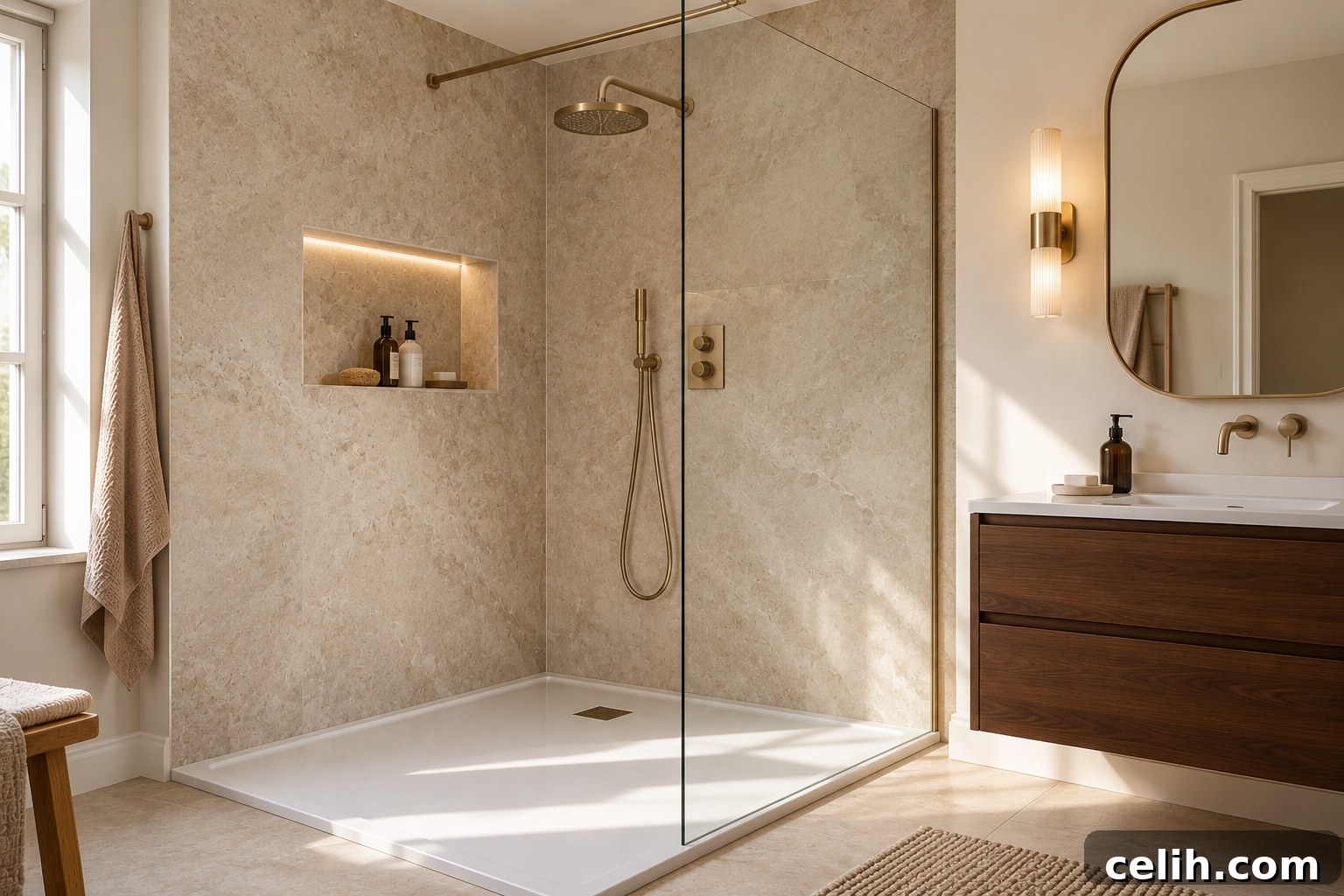
Panels eliminate grout lines, which means there is no grout to discolour, crack or harbour mould. A continuous, sealed surface is quick to wipe clean and is often more hygienic in wet zones. Another practical advantage is that panels installed on battens can be fixed over walls that are not perfectly flat, hiding irregularities and sometimes removing the need for re-plastering in older properties. This can reduce preparatory work and the cost and time associated with making a wall perfectly true before finishing.
Before you order
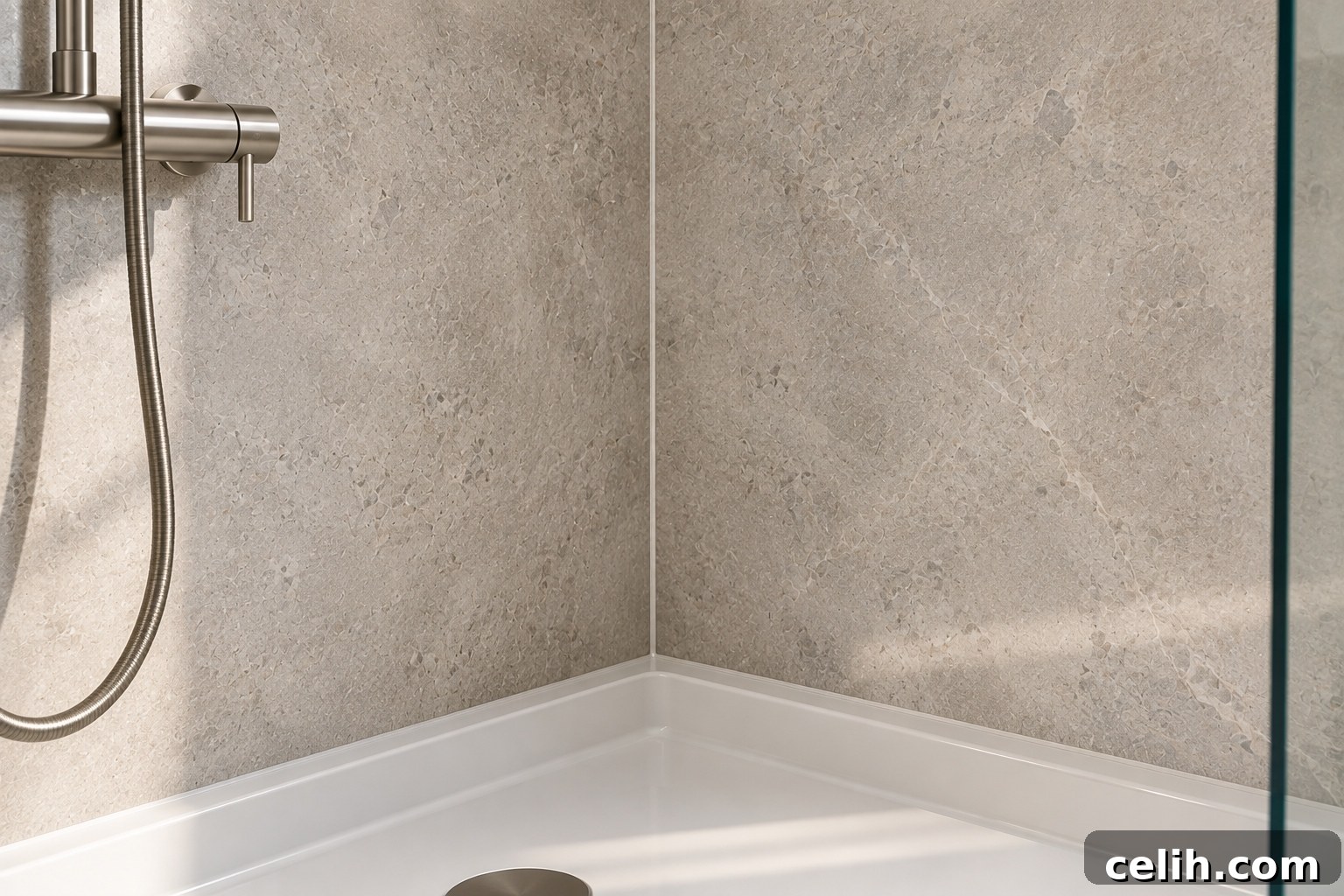
Ask whether the specific product is rated for use inside a shower enclosure; “water-resistant” and “waterproof” are not interchangeable. Confirm how boards join at vertical and horizontal seams and around corners, and check that fixings and trims are suitable for wet zones. Check the wall behind the new panels for existing damp before installation — panelling can trap moisture and conceal it rather than solve underlying problems. Always view a physical sample in the lighting of your own bathroom because showroom lighting can misrepresent colour, gloss and texture.
For many bathroom refreshes where the room is not being fully rebuilt, a combination approach often makes sense: use panels in wet zones and on walls where speed and easy maintenance matter, and choose tiles for floors, shower bases, or feature walls where tile durability and repairability are priorities. Define the functional zone first, then select the finish that best meets the performance requirements and visual outcome you want. Suppliers commonly publish guidance about zone suitability for each range; use that information to confirm whether a chosen panel system is appropriate before you buy.