
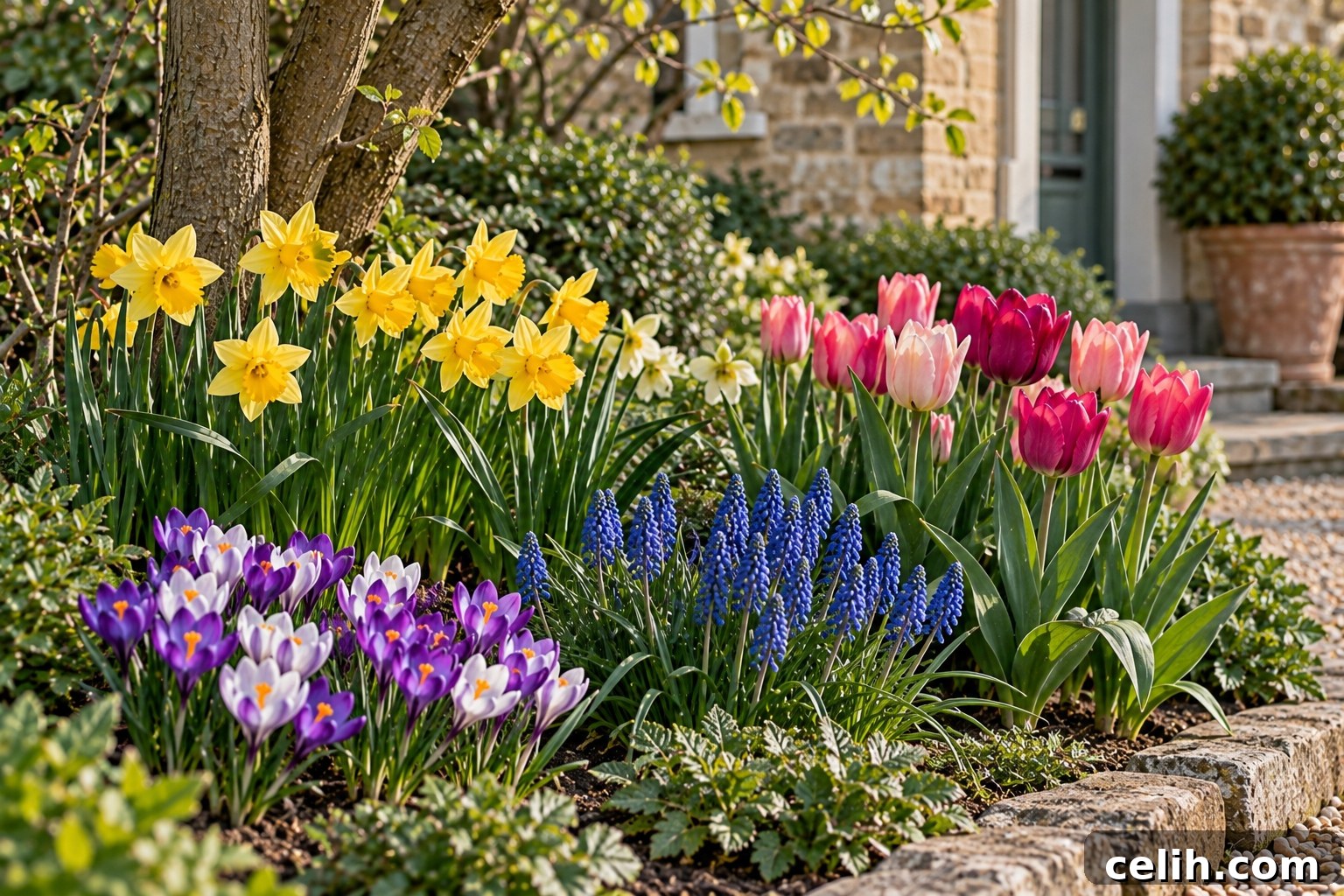
Planting spring bulbs in autumn feels like a small act of optimism. As the garden quiets and summer colours fade, placing bulbs in the soil sets you up for an early burst of flowers when the weather warms.
Tulips, daffodils, crocuses, hyacinths, alliums and many other spring-flowering bulbs are planted months before they bloom. Hidden through the winter, they develop roots and energy stores before pushing up leaves and flowers in late winter and spring.
The good news is that planting bulbs is one of the simplest autumn gardening tasks. You don’t need a large garden or specialist equipment. Bulbs can go in borders, lawns, raised beds and containers, so they suit almost any size of outdoor space.
If you’re wondering when to plant, how deep to place bulbs or which varieties to choose, this practical guide covers the essentials.
Table of Contents
Quick Answer: When Should You Plant Spring Bulbs?
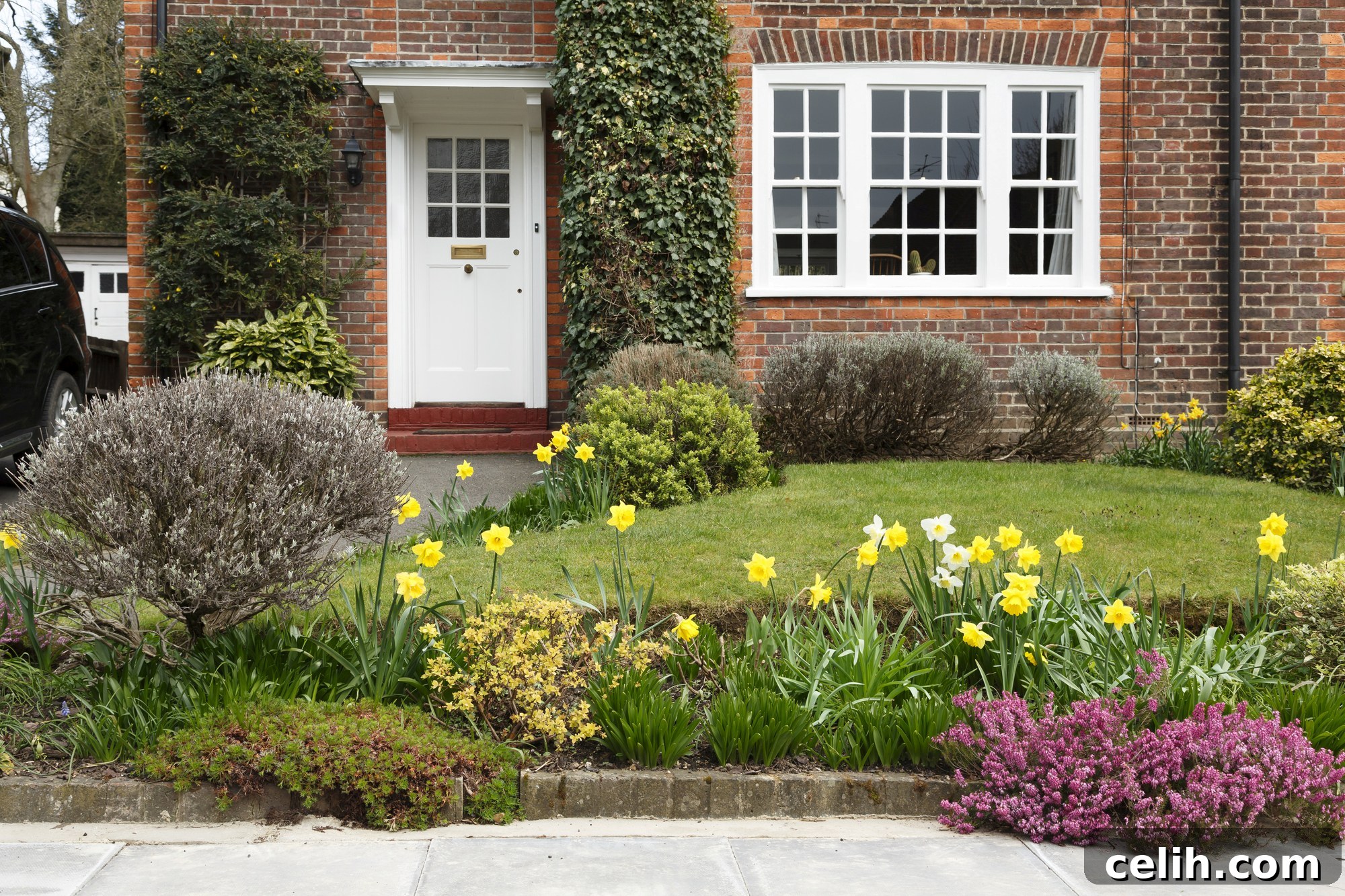
Most spring bulbs are planted in autumn, typically between September and November in the UK. Typical windows are:
- Daffodils and narcissi: September to October
- Crocuses: September to November
- Hyacinths: September to November
- Alliums: September to November
- Muscari (grape hyacinths): September to November
- Snowdrops: October to November for dry bulbs
- Tulips: October to November, with November often ideal
Exact timing isn’t critical. If you find bulbs late in the season, it’s usually better to plant them rather than leave them in the packet, provided the ground isn’t frozen or waterlogged.
Why Are Spring Bulbs Planted in Autumn?
Bulbs need a period of cold and a chance to form roots before they shoot. Autumn planting lets roots establish while the soil is still warm; the colder months then trigger the processes that lead to spring growth.
The bulb itself stores energy that will fuel the first leaves and flowers, which is why bulbs offer such a strong display with relatively little maintenance. Planting in autumn also fills areas that can look barren early in the year, providing colour before many perennials wake up.
When Is the Best Time to Plant Daffodils?
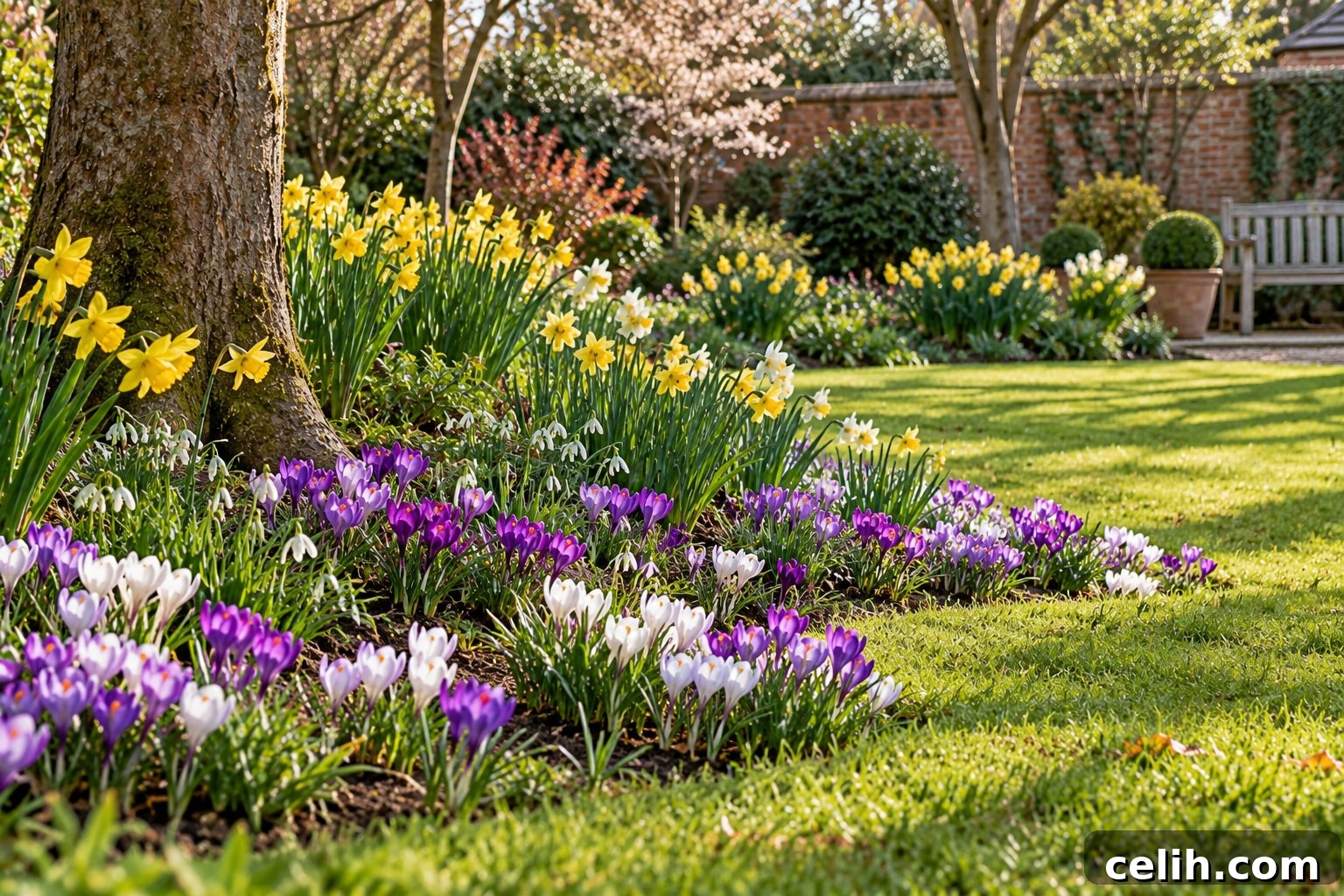
Daffodils are best planted in September or October to give roots time to develop before winter. If planting slips into November, they will usually still perform well. Daffodils naturalise readily, so planting them beneath deciduous trees, through lawns or at the front of borders gives attractive long-term results.
When Should You Plant Tulip Bulbs?
Tulips can be planted a little later than some bulbs. October and November are ideal, with November often preferred since slightly cooler soil can reduce some fungal issues. Tulips work well in containers for concentrated colour displays and in borders where later perennials will hide fading foliage.
Don’t Forget Smaller Spring Bulbs
Smaller bulbs like crocuses and muscari produce delicate, attractive displays. Crocuses bring splashes of purple, yellow and white, while grape hyacinths give compact blue clusters. Scillas, chionodoxas, iris reticulata and anemones are other charming options. These smaller species are ideal for the front of borders, gravel gardens, containers and beneath shrubs where they can naturalise over time.
How to Choose Healthy Bulbs
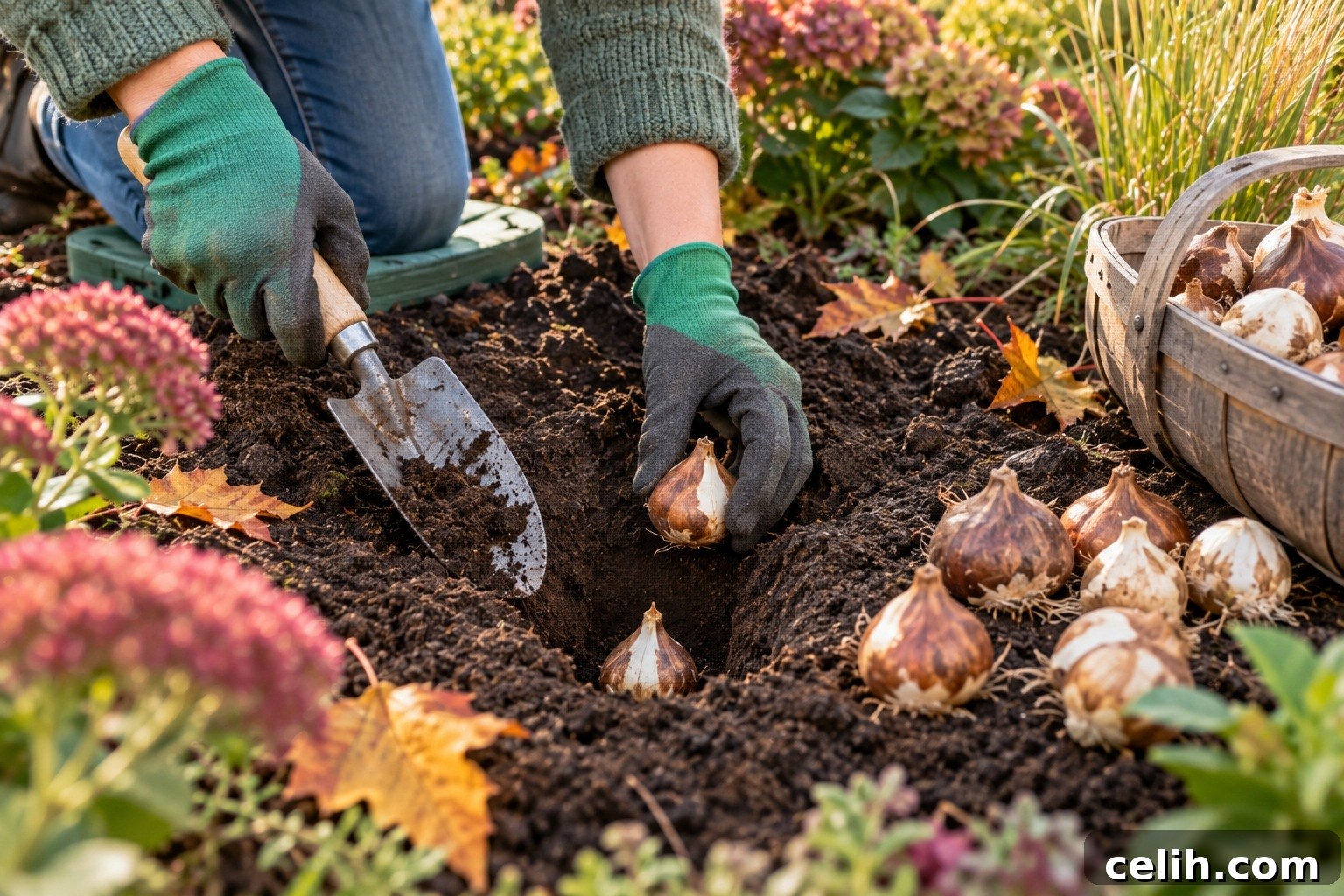
Choose bulbs that feel firm, plump and reasonably heavy for their size. Avoid bulbs that are soft, damaged or show obvious rot or mould. A dry, papery outer skin is normal. Larger bulbs often produce stronger initial displays, but size varies by species. Store bulbs in a cool, dry, well-ventilated place and plant them promptly for best results.
Where Should You Plant Spring Bulbs?
Good drainage is the main requirement. Bulbs left in persistently wet soil are prone to rot. Many bulbs prefer sunny sites but also do well beneath deciduous trees and shrubs, where they receive light before the canopy closes. Consider how the garden will look when bulbs are in flower rather than only at planting time.
How Deep Should You Plant Spring Bulbs?
A simple rule is to plant bulbs at a depth of two to three times their height. For example, a 5cm-high bulb should be planted about 10–15cm deep. Check variety-specific instructions when available. As a rough guide:
| Bulb | Approximate planting depth |
|---|---|
| Crocus | 5–10cm |
| Muscari | 8–10cm |
| Daffodil | 10–15cm |
| Tulip | 10–15cm |
| Hyacinth | 10–15cm |
| Allium | About three times the bulb’s height |
Large allium bulbs may need to go deeper than smaller types.
Which Way Up Should Bulbs Be Planted?
Most bulbs have a pointed end that should face up and a flatter basal plate that forms roots at the base. If you can’t tell which end is which, plant the bulb on its side — the shoot will usually orient itself upward.
How to Plant Bulbs in Garden Borders
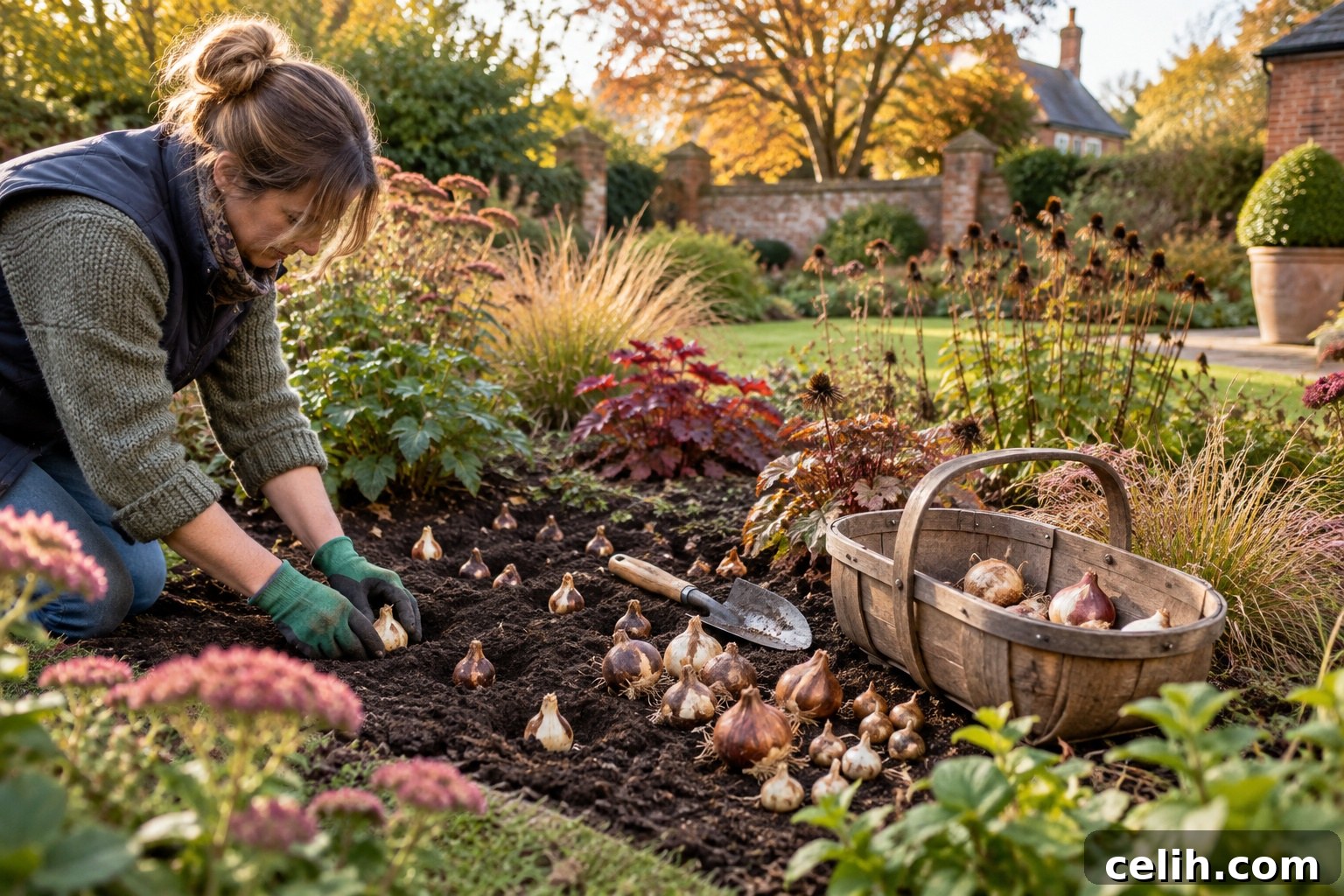
Decide where you want blooms to appear and aim for informal groups rather than straight lines. Lay bulbs on the soil first to tweak the arrangement, then use a trowel or bulb planter to make holes at the right depth. Place the bulbs, cover with soil and firm gently. Water only if the soil is very dry.
Planting bulbs among established perennials works well: bulbs provide early colour while later-emerging perennials hide the dying foliage.
How to Create a Natural-Looking Bulb Display
For a natural look, avoid precise spacing. Toss a handful of bulbs and plant each where it lands, creating irregular groupings. Plant generous clusters of the same variety for stronger impact and repeat varieties around the garden to link different areas visually.
How to Plant Spring Bulbs in Pots
Containers are perfect for small spaces. Use pots with drainage holes and a peat-free compost. Arrange bulbs close together without touching them; pots can often be planted more densely than borders. Water in after planting and site the container in a spot suited to the chosen varieties. Check pots over winter because compost can dry out or, conversely, become waterlogged — both conditions should be avoided.
Try a ‘Bulb Lasagne’ for Months of Colour
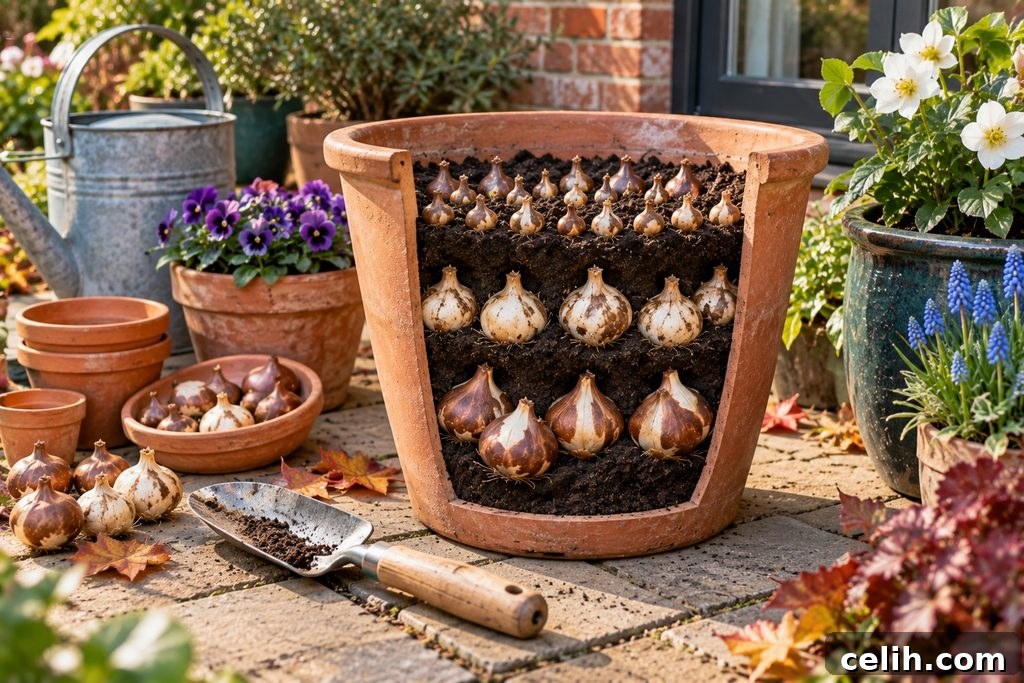
A bulb lasagne layers different bulbs in one container so flowers appear in succession. Put the largest, latest-flowering bulbs (tulips) at the bottom, then mid-season bulbs (daffodils or hyacinths) and smaller early bulbs (crocuses, muscari) near the top. Stagger positions so bulbs in upper layers are not directly above those below. With the right varieties, one pot can produce waves of colour from late winter into spring.
Planting Bulbs in a Lawn
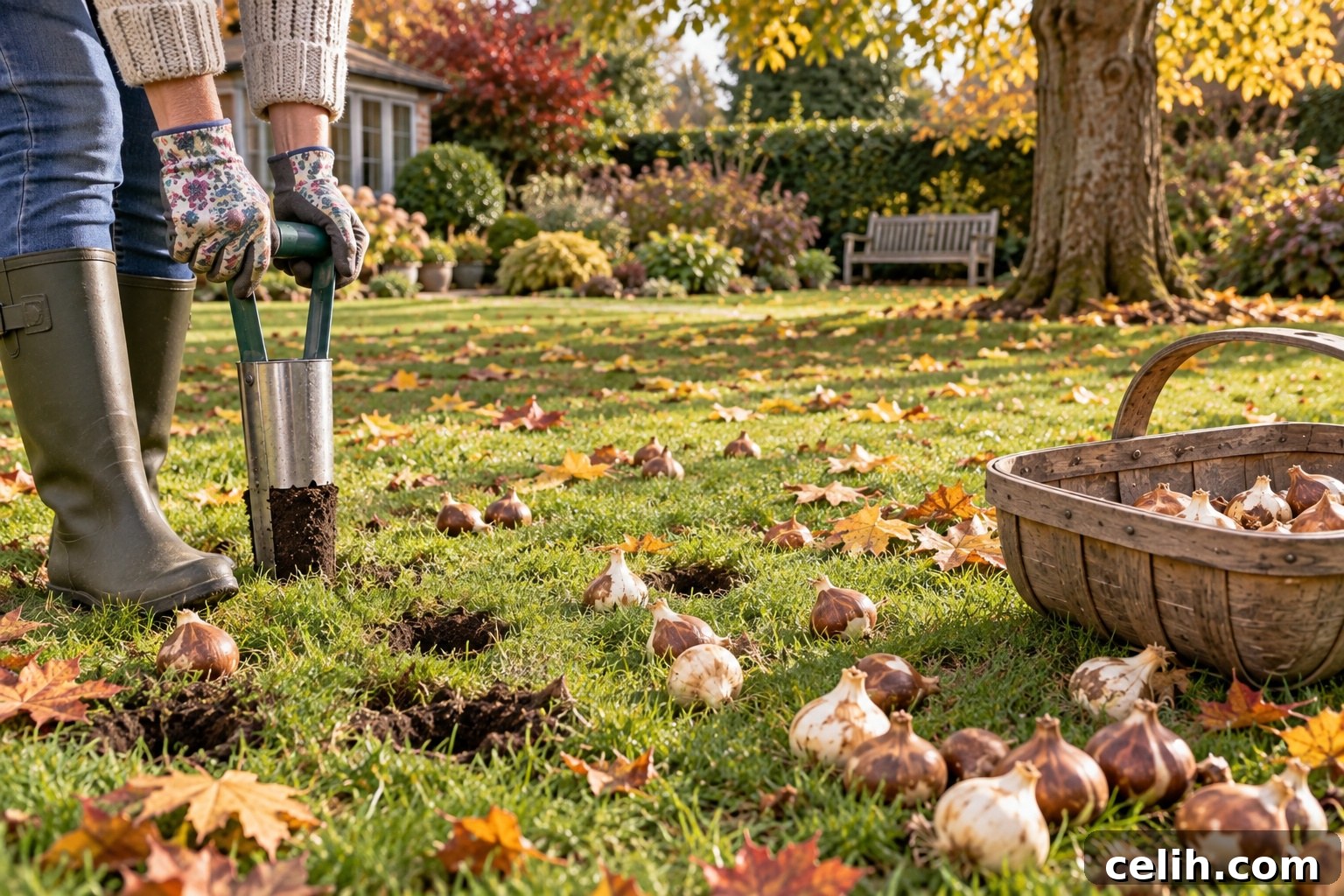
Bulbs in lawns, such as crocuses and daffodils, create attractive drifts. Use a bulb planter or lift small sections of turf for larger groups. After flowering, don’t mow until the foliage has yellowed and died back naturally, because the leaves replenish the bulb’s energy for the following year. Naturalised bulbs suit lawn areas where slightly longer grass is acceptable in spring.
What Type of Soil Do Spring Bulbs Need?
Most bulbs need free-draining soil. If you have heavy clay that stays wet in winter, improve the soil with organic matter or choose drier planting spots. Alternatively, grow sensitive bulbs in containers where drainage is easier to manage. Many common bulbs are adaptable and will perform well in a range of soils.
Should You Add Fertiliser When Planting Bulbs?
Bulbs contain stored nutrients, so initial fertiliser is not essential. Improving poor soil with well-rotted organic matter helps, and a bulb fertiliser can be applied as directed. Avoid placing concentrated fertiliser directly against bulbs. For bulbs you want to return year after year, feeding after flowering supports the build-up of reserves for the next season.
Should Spring Bulbs Be Watered After Planting?
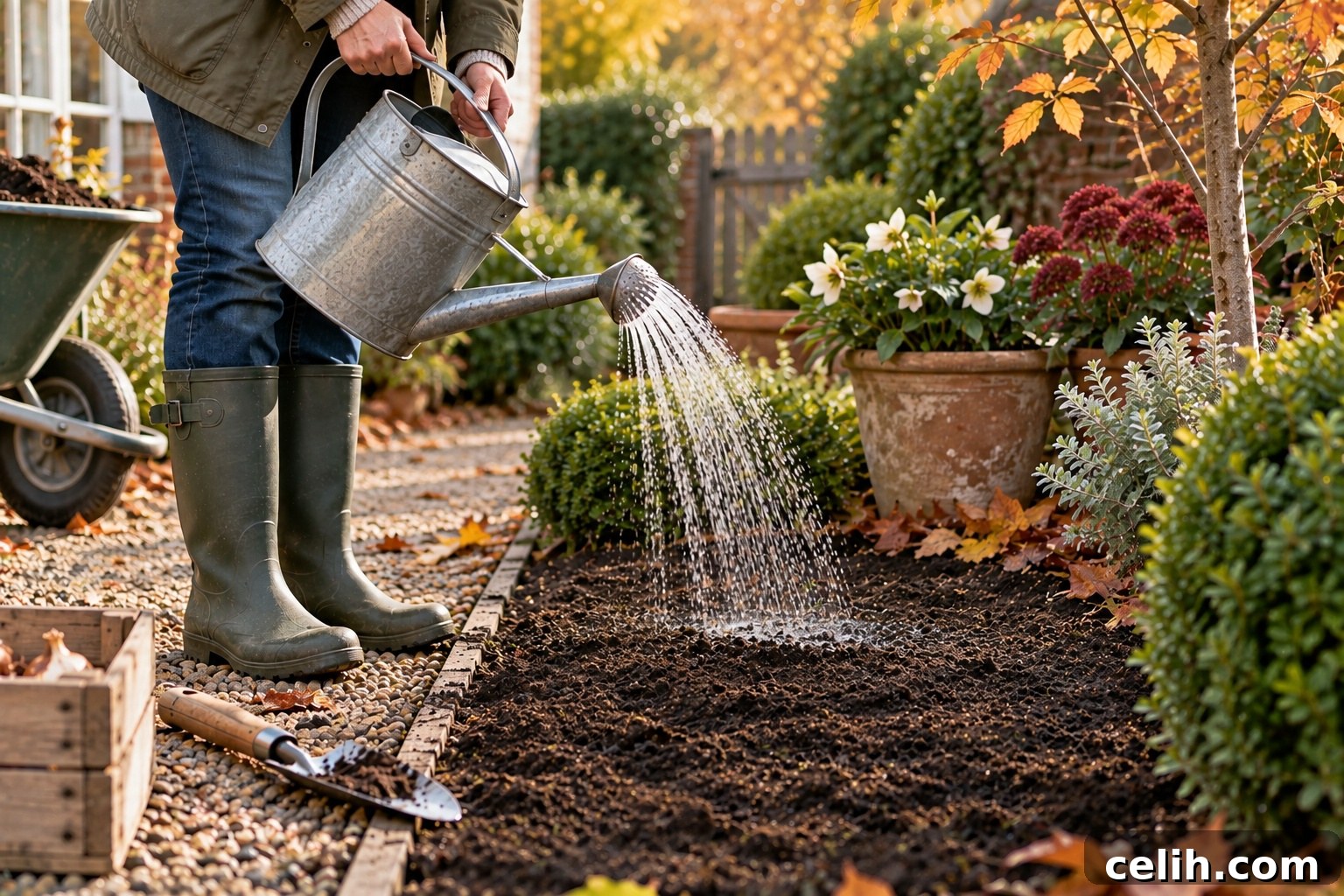
If soil is dry, water after planting to settle the soil. Otherwise, autumn and winter rainfall usually supply enough moisture. Containers need more attention because compost can dry out or become saturated; maintain even, well-drained moisture levels.
Can You Plant Spring Bulbs Too Late?
Missing the ideal planting window doesn’t always mean you’ve missed the season. If bulbs are still firm and healthy, plant them even in late autumn or early winter unless the ground is frozen or waterlogged. Late-planted bulbs may flower less vigorously the first year but are better in the ground than left in a packet.
How to Protect Bulbs from Squirrels and Other Wildlife
Squirrels and rodents can dig up newly planted bulbs, especially tulips and crocuses. Laying wire mesh over pots or newly planted areas deters digging; remove the mesh once shoots are established. Daffodils are generally less attractive to wildlife. Avoid harmful homemade deterrents that could endanger pets or other animals.
What Happens After Spring Bulbs Flower?
After flowering, leave the leaves intact while they remain green so the bulb can store energy for next year. You can deadhead spent blooms, but let foliage yellow and die back naturally. Planting bulbs among later-emerging perennials helps disguise the less attractive foliage stage.
Which Spring Bulbs Come Back Every Year?
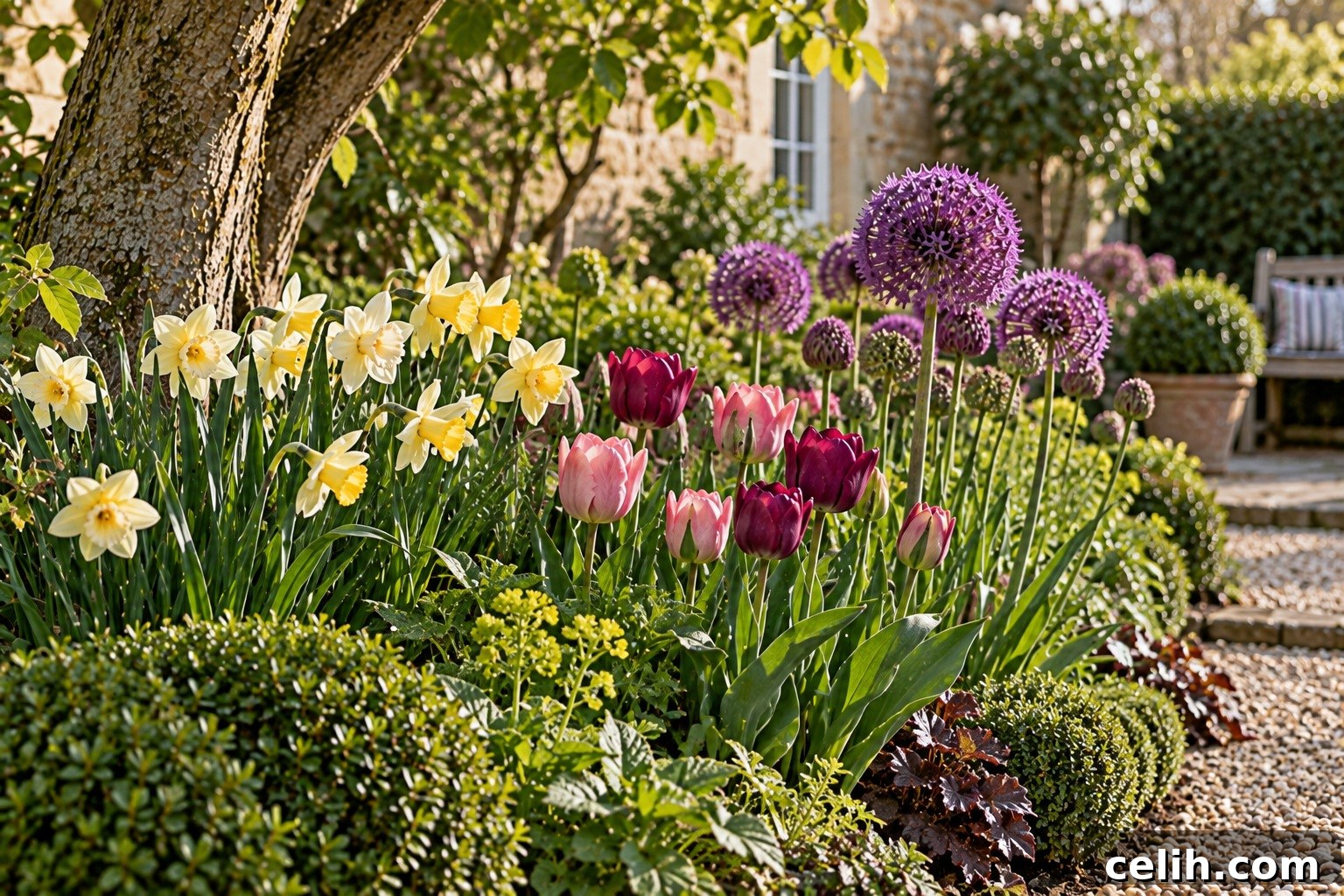
Daffodils are among the most reliable for returning and naturalising. Crocuses, muscari, snowdrops and many smaller species also spread when conditions suit them. Alliums perform well in well-drained sites. Tulips are more variable; many bred varieties shine in their first year but may decline unless you choose types recommended for perennialising.
Planning Bulbs for Continuous Spring Colour
Choose bulbs by flowering time as well as colour to extend the season. Start with snowdrops, crocuses and early irises in late winter, follow with daffodils and hyacinths, bring in tulips for mid-to-late spring and finish with ornamental alliums for late spring to early summer. Mixing early, mid-season and late varieties within a species also lengthens displays.
Easy Spring Bulbs for Beginners
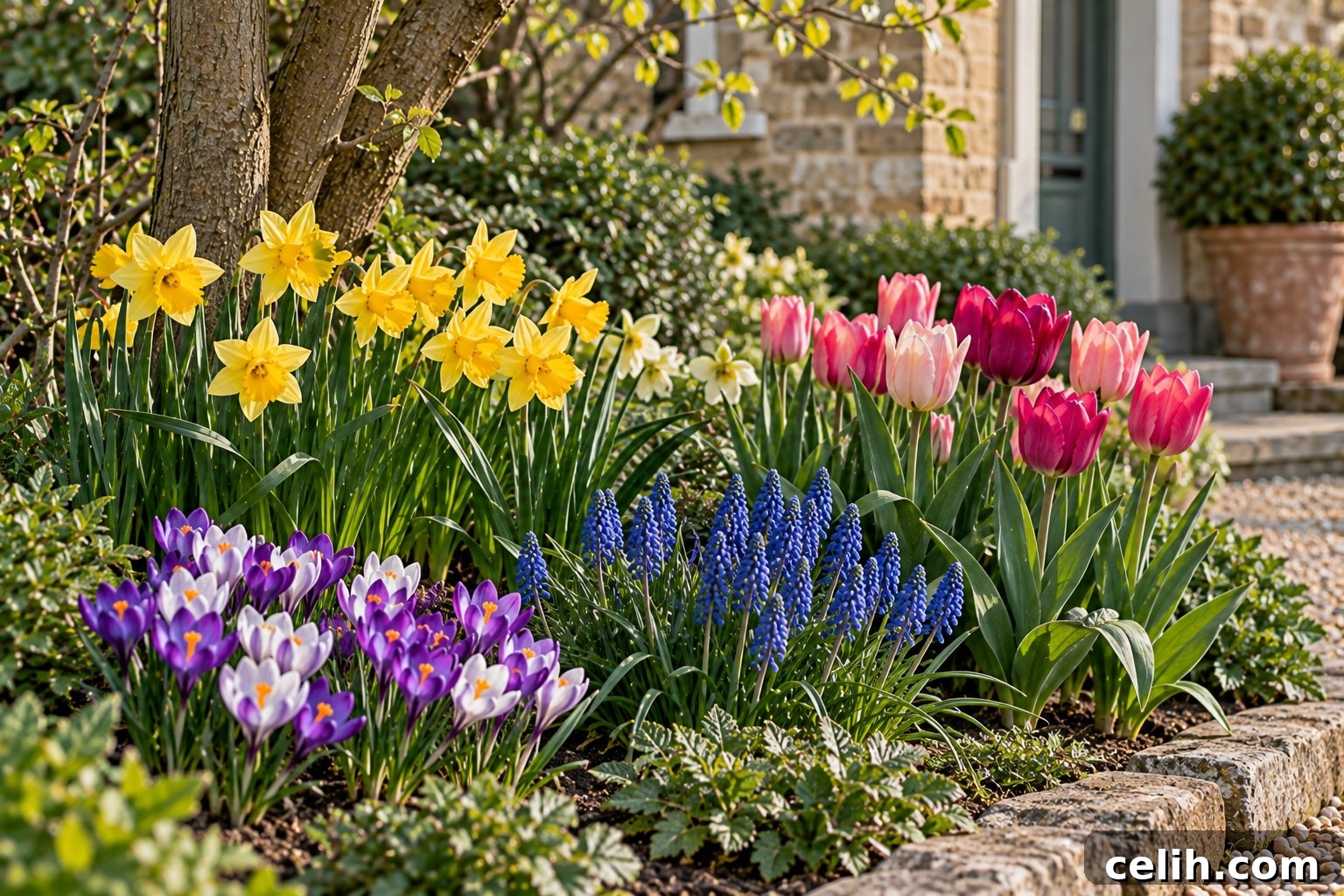
A simple starter palette might include daffodils, crocuses, muscari, tulips and alliums. Repeat varieties rather than using many single bulbs from different collections for a more cohesive, intentional look.
Common Bulb Planting Mistakes to Avoid
Common pitfalls include planting too shallowly, choosing waterlogged sites, spacing bulbs too thinly, cutting foliage too soon, ignoring flowering times and leaving bulbs in packets for too long. Avoid these mistakes for better results.
A Little Autumn Effort for a Colourful Spring
A few hours spent planting bulbs on a crisp autumn day can reward you with weeks of flowers when the garden most needs colour. You don’t need to overhaul a border — a pot of tulips on the doorstep, a cluster of daffodils under a tree or some crocuses in the lawn will all lift the spring mood. Then simply wait and enjoy the first green shoots that signal the next gardening season is on its way.