
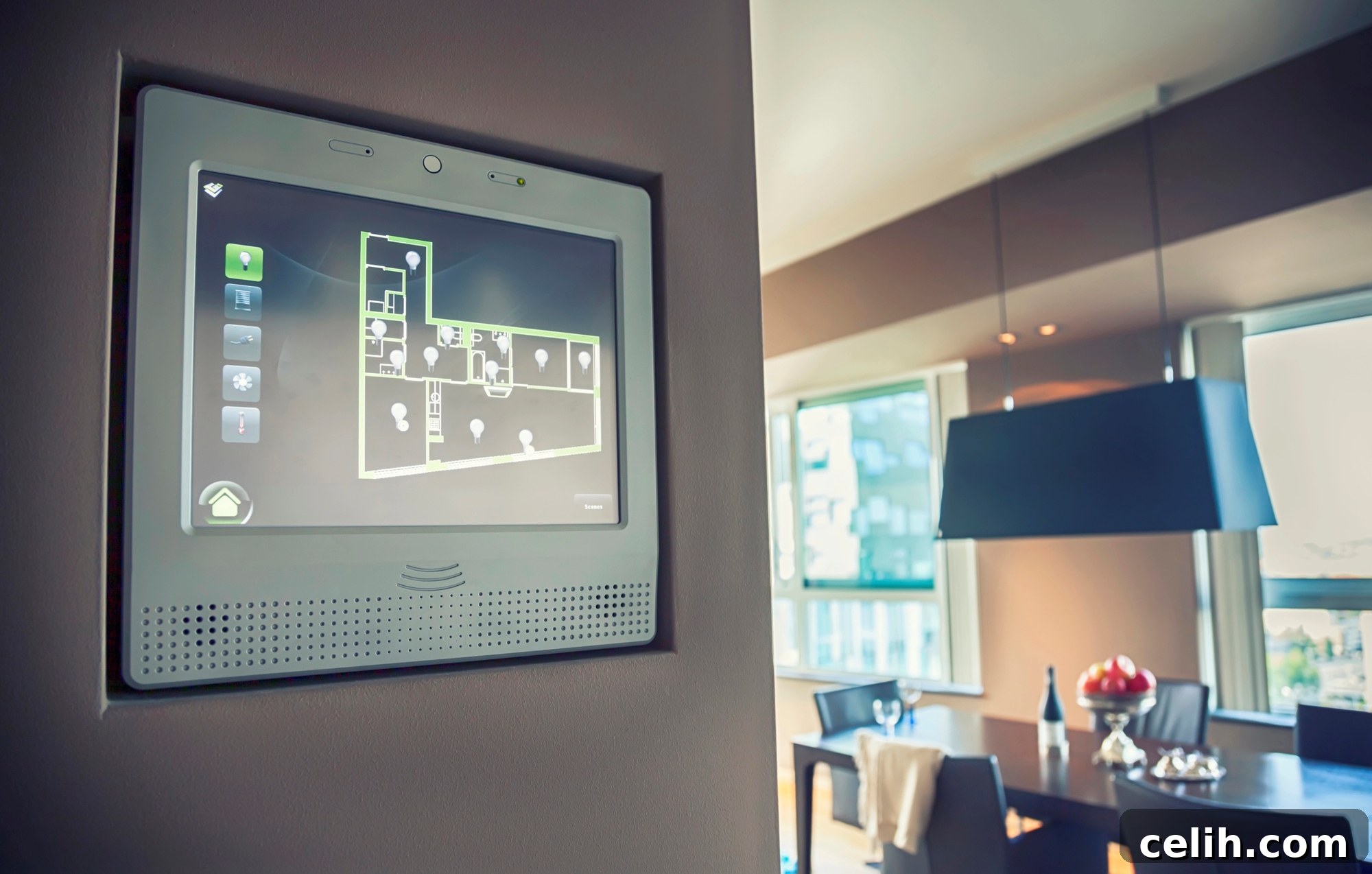
Once confined to the pages of science fiction, smart homes are rapidly evolving into a tangible reality, fundamentally transforming the way we live and interact with our living spaces. This remarkable shift is fueled by breathtaking advancements in technology, making intelligent living not just a luxury but an increasingly accessible and beneficial choice. Beyond the allure of convenience and the novelty of a futuristic dwelling, the true essence of the smart home revolution lies in its capacity to integrate sophisticated energy management systems. These systems empower homes to become not only smarter and more responsive to our needs but also significantly more sustainable and energy-efficient. In this comprehensive exploration, we delve deep into the exciting future awaiting smart homes and advanced energy management, uncovering the innovative technologies, pivotal trends, and transformative possibilities that will redefine our homes in the coming years. Prepare to discover how these intelligent ecosystems are poised to create more comfortable, secure, and environmentally responsible living environments for everyone.
The Interconnected Core: Integrating the Internet of Things (IoT) in Smart Homes
At the very heart of the contemporary and future smart home ecosystem beats the Internet of Things (IoT). This revolutionary concept represents a vast network of physical devices, vehicles, home appliances, and other items embedded with sensors, software, and other technologies that enable them to connect and exchange data over the internet. In a smart home context, IoT devices communicate and coordinate seamlessly, performing tasks and automating processes to enhance comfort, security, and efficiency. Imagine smart thermostats that not only learn your temperature preferences but also anticipate your arrival, or lighting systems that dynamically adjust brightness and color temperature based on the time of day, natural light levels, and even your mood. From smart locks that can be remotely controlled to intelligent refrigerators that track inventory, IoT is fundamentally revolutionizing how we interact with our homes, creating intuitive and highly responsive environments that adapt to our lifestyles.
The true power of IoT in smart homes lies in its ability to collect vast amounts of data from various sensors and devices. This data—on temperature, humidity, occupancy, energy consumption, and more—provides invaluable insights into how a home is being used and where optimizations can be made. Through centralized hubs and cloud-based platforms, homeowners gain unprecedented control and visibility, allowing them to manage their entire home environment from a single interface, whether they are at home or miles away. This interconnectedness not only offers unparalleled convenience but also lays the groundwork for more advanced automation and sophisticated energy management strategies, paving the way for truly intelligent living spaces.
Optimizing Home Energy: The Importance of Smart Energy Plan Selection
For homeowners striving to maximize efficiency and minimize utility costs, understanding and actively managing energy consumption is paramount. This is especially true in regions with dynamic and fluctuating energy markets, such as Houston. The advent of smart home technology significantly amplifies the impact of choosing the right energy plan. By exploring various Houston electricity plans, residents can gain crucial insights into options that offer variable rates, fixed rates, or even plans tied to renewable energy sources. A smart home, equipped with intelligent energy management systems, can then leverage these plans to its fullest potential.
For instance, smart devices can be programmed to run energy-intensive tasks during off-peak hours when electricity rates are lower, or to automatically adjust settings based on real-time energy prices. This proactive approach to energy consumption, guided by informed plan selection, contributes directly to significant personal savings on utility bills. Beyond individual financial benefits, optimizing energy usage through smart home integration and strategic energy plan choices plays a vital role in environmental sustainability. By reducing overall demand during peak hours and promoting efficient consumption, smart homes help alleviate strain on the power grid, decrease reliance on less sustainable energy sources, and ultimately reduce the carbon footprint associated with residential energy use.
Next-Generation Automation: Beyond Simple Convenience to Predictive Living
The journey towards fully autonomous and intuitively responsive homes is being profoundly accelerated by breakthroughs in automation technologies. While current smart homes already offer the convenience of voice-controlled appliances, automated lighting, and robotic cleaning systems, the next generation aims for something far more sophisticated: adaptive learning and predictive capabilities. These advanced smart home systems are designed to move beyond simple pre-programmed actions, instead understanding and anticipating the homeowner’s needs and preferences through continuous observation and data analysis.
Imagine a home that learns your daily routines, your preferred climate settings at different times, and even your entertainment habits. It could automatically prepare your home for your arrival by adjusting the thermostat, turning on specific lights, and playing your favorite music, all without a single command. This level of automation relies on sophisticated algorithms that process data from sensors, user interactions, and external factors like weather forecasts. The goal is to create a living environment that is not just convenient but truly proactive, seamlessly integrating into your life and responding to unspoken needs. This predictive intelligence elevates home automation from a series of individual smart devices to a cohesive, intelligent ecosystem that enhances comfort, streamlines daily tasks, and optimizes resource usage with remarkable efficiency.
Energy Management: The Foundational Pillar of Sustainable Smart Living
At the very core of the smart home evolution lies a profound commitment to sustainable living, with advanced energy management systems serving as its indispensable pillar. These intelligent systems play a transformative role, enabling homeowners to monitor, analyze, and control their energy consumption with unprecedented precision and insight. Unlike traditional homes, smart homes with integrated energy management capabilities provide real-time data on electricity, gas, and water usage, breaking it down by appliance, zone, or even individual device. This granular understanding empowers residents to make informed decisions about their energy habits, identify inefficiencies, and proactively implement strategies to reduce waste.
The benefits extend far beyond mere convenience. By actively managing energy usage, homeowners can realize substantial cost savings on their utility bills each month, contributing to greater financial stability. More importantly, this transition towards optimized energy consumption significantly contributes to a more sustainable planet. By minimizing energy waste and promoting efficient operation of appliances, smart homes play a critical role in reducing overall demand for energy from conventional sources. This, in turn, leads to a tangible decrease in carbon footprints and other greenhouse gas emissions, helping combat climate change. Furthermore, advanced energy management systems facilitate the seamless integration of renewable energy sources like solar panels, allowing homes to become more self-sufficient and contribute to a cleaner, greener energy grid. They represent a fundamental shift towards a future where environmental responsibility and personal comfort go hand-in-hand.
The Transformative Role of Artificial Intelligence (AI) in Smart Homes
Artificial Intelligence (AI) is not merely an enhancement for the smart home experience; it is poised to redefine it entirely, elevating homes from simply “smart” to truly “intelligent.” AI’s capacity to analyze vast amounts of data, learn patterns, and make autonomous decisions is revolutionizing how energy management and automation function within the home ecosystem. Unlike rule-based automation, which follows predefined commands, AI-driven systems are capable of continuous learning and adaptation, making them incredibly powerful.
Consider AI’s application in energy management: it can process data from smart meters, weather forecasts, occupancy sensors, and even local energy prices to predict future energy needs and optimize appliance usage accordingly. For instance, an AI might learn that you prefer a cooler temperature for sleeping but a warmer one for waking up, and it will adjust your thermostat predictive, even considering the outside temperature and your home’s insulation. Beyond climate control, AI can manage charging schedules for electric vehicles, orchestrate the operation of smart appliances to take advantage of off-peak electricity rates, and even detect unusual energy consumption patterns that might indicate a faulty appliance or leak. In automation, AI enables predictive maintenance by analyzing the performance of devices and alerting homeowners to potential issues before they become critical failures. It facilitates personalized experiences by adapting entertainment systems, lighting, and security based on individual preferences and routines. Ultimately, AI transforms the smart home into a sophisticated, self-optimizing entity that anticipates needs, minimizes waste, and maximizes comfort with unparalleled precision and efficiency.
Navigating the Future: Challenges and Opportunities in Smart Home Adoption
Despite the incredibly promising outlook for smart homes and advanced energy management systems, the path to widespread adoption is not without its complexities and hurdles. Several significant challenges must be addressed to ensure these technologies become accessible, secure, and beneficial for all. A primary concern revolves around data privacy and security. As smart homes collect vast amounts of personal data—from daily routines and energy consumption to voice commands and security footage—the potential for unauthorized access, data breaches, and misuse becomes a serious consideration. Ensuring robust encryption, secure data storage, and transparent privacy policies is paramount to building homeowner trust.
Another challenge is the digital divide. The cost of advanced smart home technologies can be prohibitive for many households, exacerbating existing inequalities and creating a barrier to entry for lower-income communities. Additionally, interoperability remains an issue, with a multitude of manufacturers and platforms often leading to compatibility problems and fragmentation within the smart home ecosystem. However, these challenges also represent immense opportunities for innovation, collaboration, and policy development. Opportunities exist for developing more affordable and user-friendly devices, creating industry-wide standards for interoperability, and implementing regulations that protect consumer data and privacy. Furthermore, addressing the digital divide through government subsidies, community programs, and innovative business models can make smart home benefits accessible to a broader population. Overcoming these obstacles will not only accelerate adoption but also ensure that the smart home revolution truly serves the interests of all homeowners.
Advancements in Natural Language Processing (NLP) for Seamless Smart Home Interfaces
As smart homes continue to evolve into more sophisticated and intelligent environments, the interfaces through which we interact with them must also advance. A significant leap forward in this area is being driven by remarkable advancements in Natural Language Processing (NLP). NLP, a branch of artificial intelligence, focuses on enabling computers to understand, interpret, and generate human language in a valuable way. This has profound implications for smart homes, making it possible for devices to understand and process human language with unprecedented accuracy, nuance, and contextual awareness.
Gone are the days of rigid, command-specific voice interactions. Modern NLP allows smart home devices and virtual assistants to comprehend complex sentences, infer intent, and even engage in more natural, conversational dialogue. For example, instead of saying “Turn on the living room light to 50 percent,” a homeowner might simply say, “It’s a bit dim in here, could you brighten things up?” and the system intelligently responds. This leap forward in AI-driven communication enables more intuitive, personalized, and seamless interactions between homeowners and their smart devices. It eliminates the learning curve often associated with new technology, fostering a more natural and effortless experience that truly integrates technology into daily life, making smart homes feel less like machines and more like responsive companions.
Emerging Trends in Home Energy Storage: Powering Resilience and Independence
One of the most pivotal and exciting developments for future energy management systems in smart homes is the increasing integration of advanced home energy storage solutions. These innovative systems are designed to capture and store excess energy, typically generated from renewable sources, for later use, fundamentally altering a home’s relationship with the traditional power grid. The primary components include high-capacity battery banks, often similar to those used in electric vehicles, which can store electricity generated by rooftop solar panel installations or even drawn from the grid during off-peak hours when prices are lower.
By efficiently storing energy, smart homes can significantly reduce their reliance on grid power, particularly during peak demand times when electricity is most expensive and often generated by less sustainable methods. This not only leads to substantial cost savings but also dramatically enhances the sustainability of smart homes by maximizing the utilization of clean, self-generated energy. Beyond cost and environmental benefits, home energy storage greatly increases a home’s independence and resilience. In the event of power outages, these systems can seamlessly provide backup electricity, ensuring essential appliances and services remain operational. This independence from grid fluctuations and vulnerabilities offers homeowners greater peace of mind and control over their energy supply, marking a significant step towards energy autonomy and a more robust, decentralized energy future.
The Impact of Blockchain Technology on Smart Home Security and Privacy
As smart homes become increasingly interconnected and reliant on data exchange, the issues of security and data privacy become paramount. The implementation of blockchain technology in smart home security offers a promising and revolutionary avenue for enhancing the integrity and privacy of sensitive home data. Blockchain, renowned for its decentralized, immutable, and transparent ledger system, can address many of the vulnerabilities inherent in centralized smart home architectures.
By decentralizing the storage and management of data, blockchain creates a robust layer of security against cyber-attacks and unauthorized access. Instead of data residing on a single server vulnerable to hacking, it is distributed across multiple nodes, making it incredibly difficult to tamper with. Each transaction or data entry is encrypted and linked to the previous one, forming an unbreakable chain, ensuring that once data is recorded, it cannot be altered or deleted. This immutability guarantees the integrity of data related to energy consumption, security logs, access permissions, and more. Furthermore, blockchain can facilitate secure, peer-to-peer communication between smart devices without the need for a central intermediary, reducing potential points of failure and data interception. This novel approach to security stands to revolutionize how personal data is protected and managed within the interconnected ecosystem of smart home systems, fostering greater homeowner privacy, trust, and control over their digital lives.
Conclusion: Embracing the Dawn of a New Era in Intelligent Home Living
As we stand at the precipice of this transformative era, it is abundantly clear that the future of smart homes and advanced energy management systems is brimming with boundless possibilities. These pioneering technologies are not merely promising enhanced convenience and unparalleled comfort; they herald a revolutionary way of living that is inherently more sustainable, remarkably efficient, and profoundly in harmony with both our personal needs and the natural world. The integration of IoT, AI, NLP, home energy storage, and even blockchain technology is weaving a complex yet intuitive tapestry that redefines the very concept of a home.
The journey ahead is undoubtedly complex and will present its share of challenges, including navigating privacy concerns, ensuring equitable access, and establishing robust interoperability standards. However, with unwavering commitment to continuous innovation, collaborative efforts across industries, and thoughtful policy development, the grand vision of a truly intelligent, seamlessly connected, and deeply energy-efficient home is not just an aspiration but a tangible reality within our grasp. This new era of home living promises to deliver not only a smarter environment but also a greener, more secure, and ultimately more fulfilling existence for generations to come.