
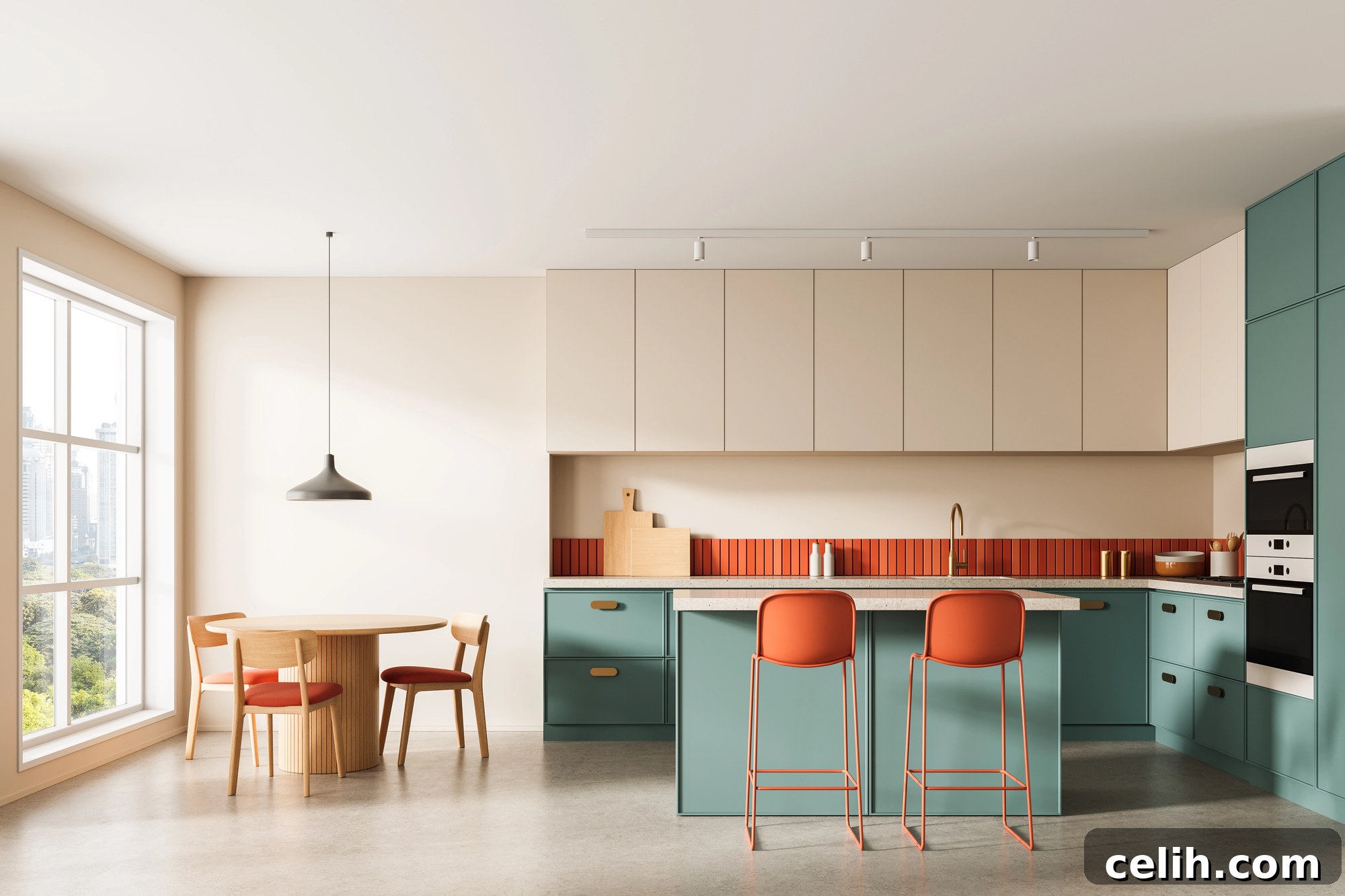
Having dedicated years to designing and building countless kitchens, I’ve observed a fundamental truth: the most successful kitchen remodels are those that transcend mere aesthetic upgrades. They don’t just look better; they fundamentally improve the way you live and work in your kitchen. True kitchen transformation occurs when homeowners approach the design process with an equal commitment to both function and aesthetics, understanding that these two pillars are inextricably linked in the heart of the home. A beautiful kitchen that doesn’t flow or meet your needs is as frustrating as a functional one lacking soul.
This comprehensive guide is crafted to explore kitchen remodel ideas that genuinely enhance your daily life and elevate your culinary experience. Far from being a fleeting list of current finishes, this article delves into the critical decisions that yield lasting satisfaction, ensuring your investment results in a space that is both stunning and supremely practical.
Begin with Your Unique Kitchen Habits: Designing for Real Life
Before you even begin to gather inspiration images or browse material samples, take a thoughtful pause. Sit down and honestly assess how your household truly utilizes the kitchen space. This crucial introspection forms the bedrock of a successful design. Do you regularly orchestrate elaborate multi-course meals, or is your kitchen primarily a hub for quick weeknight dinners, meal prepping, and relaxed weekend breakfasts? Is entertaining a frequent occurrence, with guests naturally gravitating towards the kitchen island or peninsula for social interaction? Do children use the kitchen counter for homework or snacks while meals are being prepared, necessitating a dedicated, durable zone?
These aren’t hypothetical inquiries; they are the practical drivers behind fundamental design choices. Your answers will dictate whether a spacious kitchen island or a more compact peninsula is appropriate, whether you truly need a double oven or if a single, high-performance unit suffices. They will inform if a deep farmhouse sink aligns with your actual dishwashing habits or if a more standard undermount style is better. Furthermore, your lifestyle will determine if open shelving will be a beloved design feature showcasing curated items, or if it will quickly become a constant source of dusting and regret within a few months, exposing clutter rather than charm.
In my extensive experience, the homeowners who express the deepest satisfaction with their newly renovated kitchens are those who courageously designed for their authentic life, not an idealized or aspirational version of it. It’s imperative to design a kitchen that serves who you are today, adapting to your established routines and preferences, rather than a kitchen built for a lifestyle you merely wish to have.
Strategic Layout: The Cornerstone of an Efficient Kitchen Design
Optimizing the kitchen layout yields unparalleled functional returns, often more so than any other design decision. While the timeless “work triangle” — the strategic arrangement of the refrigerator, sink, and range — remains a valid planning principle, modern kitchen design has evolved this concept into sophisticated “work zones.” These zones typically include a prep zone, a cooking zone, a cleaning zone, and a storage zone, each meticulously positioned to minimize unnecessary movement and maximize efficiency during culinary tasks. Thinking in terms of these zones ensures that frequently used items and appliances are within easy reach, streamlining your workflow.
One of the most transformative structural changes in contemporary kitchen remodeling is opening a wall to foster a seamless connection between the kitchen and adjacent living or dining areas. I’ve implemented this in dozens of projects, and the consistent outcome is a palpable sense of gaining significantly more usable space, even when the actual square footage remains unchanged. This architectural shift transforms the kitchen from a secluded utility room into an integral part of the home’s social fabric, fostering interaction and connectivity, and bathing the space in more natural light. It allows the cook to remain engaged with family and guests, making the kitchen a true gathering hub.
Adding a thoughtfully designed kitchen island consistently ranks as the most requested feature in the kitchen remodels I manage. When executed correctly, an island serves as a versatile multi-tool: it expands valuable prep surface area, provides casual seating for family and guests, offers additional storage solutions, and acts as a natural social gathering point. The keys to a successful island installation include ensuring ample clearance of at least 42 inches on all working sides (48 inches is even better for high-traffic kitchens), designing the island’s storage specifically for what you genuinely need to store (e.g., dedicated drawers for pots and pans, a microwave drawer), and crucially, integrating electrical outlets for small appliances and device charging. These details transform an island from a simple counter into a powerhouse of utility and style.
Cabinetry: Elevating Both Style and Practicality in Your Kitchen
Kitchen cabinets are arguably the single most impactful element in defining a kitchen’s visual character, dictating its overall aesthetic from classic to contemporary. Beyond their stylistic importance, they represent one of the most critical functional decisions. The efficiency and accessibility of how you store your kitchen tools, cookware, pantry staples, and small appliances directly influence the kitchen’s daily performance and your overall cooking experience. Investing in well-designed, high-quality cabinetry is an investment in your kitchen’s enduring beauty and functionality.
Floor-to-ceiling cabinetry is one of my strongest and most consistent functional recommendations. Many kitchens unfortunately waste the valuable vertical space between the top of traditional upper cabinets and the ceiling. This often-overlooked zone is perfectly usable for storing less frequently accessed items like seasonal entertaining pieces, holiday serveware, or bulk pantry goods. Extending cabinets all the way to the ceiling not only eliminates those notorious dust-collecting cabinet tops but also dramatically increases meaningful storage capacity, creating a clean, integrated look that adds a sense of height and sophistication to the space. Consider integrating specialized pull-down shelving for easier access to higher items.
Implementing pull-out drawers within base cabinets is a functional upgrade that delivers an immediate and noticeable difference in how a kitchen operates. Traditional base cabinets with fixed shelves often force you to dig past front-row items, stoop, and strain to access anything stored at the back, leading to frustration and underutilized space. Full-extension pull-out drawers, on the other hand, provide instant, unhindered access to every item within the cabinet, maximizing storage and minimizing effort. I routinely retrofit these into virtually every kitchen I renovate, and homeowners consistently report appreciating the difference from the very first day, especially for heavy pots and pans or small appliances.
Regarding cabinet hardware—knobs, pulls, and hinges—I consistently advocate for investing in quality, investment-grade products. This is because kitchen hardware endures far more daily wear and tear than most people anticipate. In my recent projects, I’ve frequently sourced through reputable suppliers like HanoDecor for both decorative pulls and essential hinges. Their quality has consistently met the rigorous standards required for kitchens that will experience heavy, daily use. Furthermore, consistent finish matching across a full run of cabinetry, though seemingly a minor detail, is crucial for a polished look. You truly notice its importance when you encounter a kitchen where the finishes vary, detracting from the overall design coherence.
Countertop Choices: The Art of Balancing Beauty with Enduring Durability
Quartz countertops currently dominate the mid-range to high-end kitchen remodel market, and their popularity is well-earned. Engineered quartz offers the remarkable aesthetic versatility of natural stone—mimicking everything from marble to concrete—but with significantly superior durability and practical advantages. It is non-porous, making it highly resistant to stains and bacteria, inherently scratch-resistant under normal use, and crucially, requires absolutely no sealing or special maintenance. For bustling household kitchens, especially those with children or frequent cooking, quartz stands as my unwavering standard recommendation for its ideal blend of beauty and resilience. With an expansive array of patterns and colors, it can seamlessly integrate into any design scheme.
Marble, with its timeless elegance and unparalleled natural beauty, has enjoyed a sustained design moment and shows no signs of fading from favor. The sheer aesthetic appeal of marble is genuinely unmatched — the intricate movement, the delicate or dramatic veining, and the way it photographs are simply captivating. However, the candid conversation I have with every client considering marble revolves around its specific maintenance requirements. Marble is a porous natural stone, making it susceptible to etching from acidic substances like lemon juice, tomato sauce, vinegar, and certain cleaning products. It will also inevitably show wear, patina, and minor imperfections over time, which some find adds character while others find it frustrating. If you are deeply enamored with its look, appreciate its natural characteristics, and are willing to manage it with meticulous care and periodic professional sealing, marble can be an extraordinary and luxurious choice. Conversely, if your kitchen is a high-traffic zone with kids, frequent spills, and a need for a surface that can withstand significant abuse without constant vigilance, it’s prudent to select a more forgiving material.
Butcher block countertops deserve far more consideration than they typically receive in higher-end renovations. While not suitable for every application, incorporating an island or a dedicated prep section in butcher block, perhaps paired with quartz or natural stone on the perimeter counters, introduces a unique warmth and organic texture. This combination makes a kitchen feel genuinely lived-in, inviting, and wonderfully personal. Butcher block does require regular oiling maintenance to protect the wood and maintain its luster, and it should ideally be kept away from high-splash sink areas to prevent prolonged water exposure. However, as a strategic design element, its ability to inject character and rustic charm into a modern space is genuinely hard to surpass, offering a softer, more tactile counterpoint to harder stone surfaces.
Backsplash: The Design Element that Anchors Your Kitchen’s Aesthetic
The backsplash stands as one of the most design-expressive elements in a kitchen, often serving as a focal point that ties the entire room together. Paradoxically, it’s also an area where I frequently observe the most indecision among homeowners. My consistent approach is to make the backsplash decision in harmony with the countertop choice, rather than before it. The countertop is the dominant horizontal surface; it establishes the foundational tone and material palette of the kitchen. The backsplash, in turn, acts as a complementary vertical element, supporting and framing the countertop while adding a layer of visual interest and personality.
A full-height slab backsplash, where the same material used for the countertop extends seamlessly from the counter surface up to the bottom of the upper cabinets, creates a remarkably clean, monolithic, and luxurious look. This approach works particularly well with materials like quartz and marble. The uninterrupted surface is visually expansive, simple to maintain, and exudes a sophisticated, high-end contemporary appeal, minimizing grout lines and maximizing impact.
Zellige tile—authentic, handmade Moroccan ceramic tiles characterized by their irregular surfaces, subtle color variations, and beautiful light-catching texture—has become one of my absolute favorite backsplash recommendations. It’s an ideal choice for kitchens where the homeowner desires a unique personality, artisanal warmth, and a tactile quality that mass-produced tiles cannot replicate. The inherent irregularity of each tile is not a flaw but an intentional charming feature; no two zellige tiles are precisely alike, resulting in a backsplash that feels organic, rich, and truly one-of-a-kind.
Classic subway tile endures as a favorite for excellent reasons. Its timeless appeal is rooted in its incredible versatility; it harmonizes effortlessly with nearly every cabinet style, from traditional to ultra-modern. It’s generally straightforward to install and maintain, making it a practical choice. However, to elevate it beyond “generic,” consider innovative approaches: pairing it with an interesting grout color that either contrasts or subtly complements the tile, experimenting with alternative layouts like a herringbone pattern, or opting for oversized or hand-glazed subway tiles. These thoughtful variations can transform a classic into a statement piece, adding depth and character.
Kitchen Lighting: The Critical Detail That Magnifies Every Other Element
Kitchen lighting is, in my professional opinion, the element most consistently underinvested in during a remodel, yet it holds the unparalleled power to transform a merely beautiful kitchen into an absolutely breathtaking one when executed correctly. Effective kitchen lighting is not a luxury; it’s a strategic necessity. My standard design approach for every project involves layered lighting, combining ambient, task, and accent sources to create a versatile and inviting atmosphere that adapts to various needs throughout the day and evening.
Under-cabinet lighting is, for me, non-negotiable. It is not an optional upgrade; it is a fundamental functional necessity in any working kitchen. The countertop serves as the primary workspace for prep and cooking, and it absolutely requires uniform, shadow-free illumination. Hardwired LED strip lighting installed discreetly under every upper cabinet makes a dramatic and immediate difference in both how efficiently the kitchen functions and how aesthetically pleasing it appears, particularly in photographs. It brightens the workspace, enhances visibility, and adds a warm glow to the backsplash.
Pendant lighting strategically positioned over a kitchen island fulfills both functional and decorative roles. A well-chosen pendant fixture not only provides essential task lighting for the island surface but also marks the island as an intentional zone within the larger space, contributing meaningfully to the overall ambient light level. Scale is paramount here: the size and number of pendants must be proportional to the dimensions of the island. A common design misstep is selecting pendants that are too small, which can make them appear accidental or insignificant rather than a cohesive and intentional design feature. Consider their style, material, and how they integrate with the overall kitchen aesthetic.
The specification of dimmer switches on every single lighting circuit is a detail I insist upon for every kitchen project. The ability to precisely control and lower the ambient light level during evening meals, for entertaining, or simply for creating a relaxed mood, while simultaneously retaining the option for full-bright task lighting when cooking, is a significant quality-of-life improvement. Homeowners consistently express their appreciation for this flexibility, finding it invaluable for adapting the kitchen’s ambiance to any occasion or time of day.
Bringing It All Together: Crafting Your Ideal Kitchen Experience
The kitchens that fill me with the greatest professional pride are those where style and function achieve a complete and harmonious balance. These are spaces where every design choice meticulously serves the individuals who use it, where the selected materials not only look exquisite but also gracefully withstand the rigors of daily life, and most importantly, where the thoughtfully optimized layout transforms the experience of cooking and gathering into something genuinely enjoyable and effortless. A truly successful kitchen feels like an extension of its users.
For securing high-quality kitchen accessories and those crucial finishing touches that tie a design together, HanoDecor has proven to be an invaluable and reliable resource that I consistently return to across various projects. Their commitment to consistent quality, a robust selection of finishes, and products that perform as impeccably as they look is precisely what a significant kitchen renovation demands and deserves. These details, though seemingly small, collectively contribute to the longevity and overall polished feel of the space.
To summarize, embark on your kitchen remodel by prioritizing the foundational layout. Subsequently, commit to investing in the superior quality of your cabinetry and countertops, as these are the workhorses of your kitchen. Implement a comprehensive layered lighting scheme to enhance both functionality and ambiance. Finally, select all materials based not on fleeting trends, but on how they will genuinely integrate into and withstand your actual daily life. By diligently adhering to these core principles, the desired aesthetic style will naturally emerge, and your meticulously designed kitchen will serve you and your household beautifully, functionally, and joyfully for many decades to come.
About the Author: My name is Dana Castellano. I am a licensed general contractor and a dedicated residential renovation specialist with 14 years of invaluable experience. My expertise lies in designing and building kitchens across an expansive spectrum of styles, budgets, and home types. My portfolio ranges from efficiently transforming compact galley kitchens in bustling urban condos to crafting sprawling, open-plan culinary havens in bespoke new construction custom homes. My approach is uniquely holistic, seamlessly blending deep practical construction knowledge with a refined design sensibility. I firmly believe that a kitchen that looks stunning but fails to function intuitively is just as much a design failure as one that operates flawlessly but feels cold and uninviting, akin to a mere utility room. My goal is always to create kitchens that are as beautiful as they are livable.