
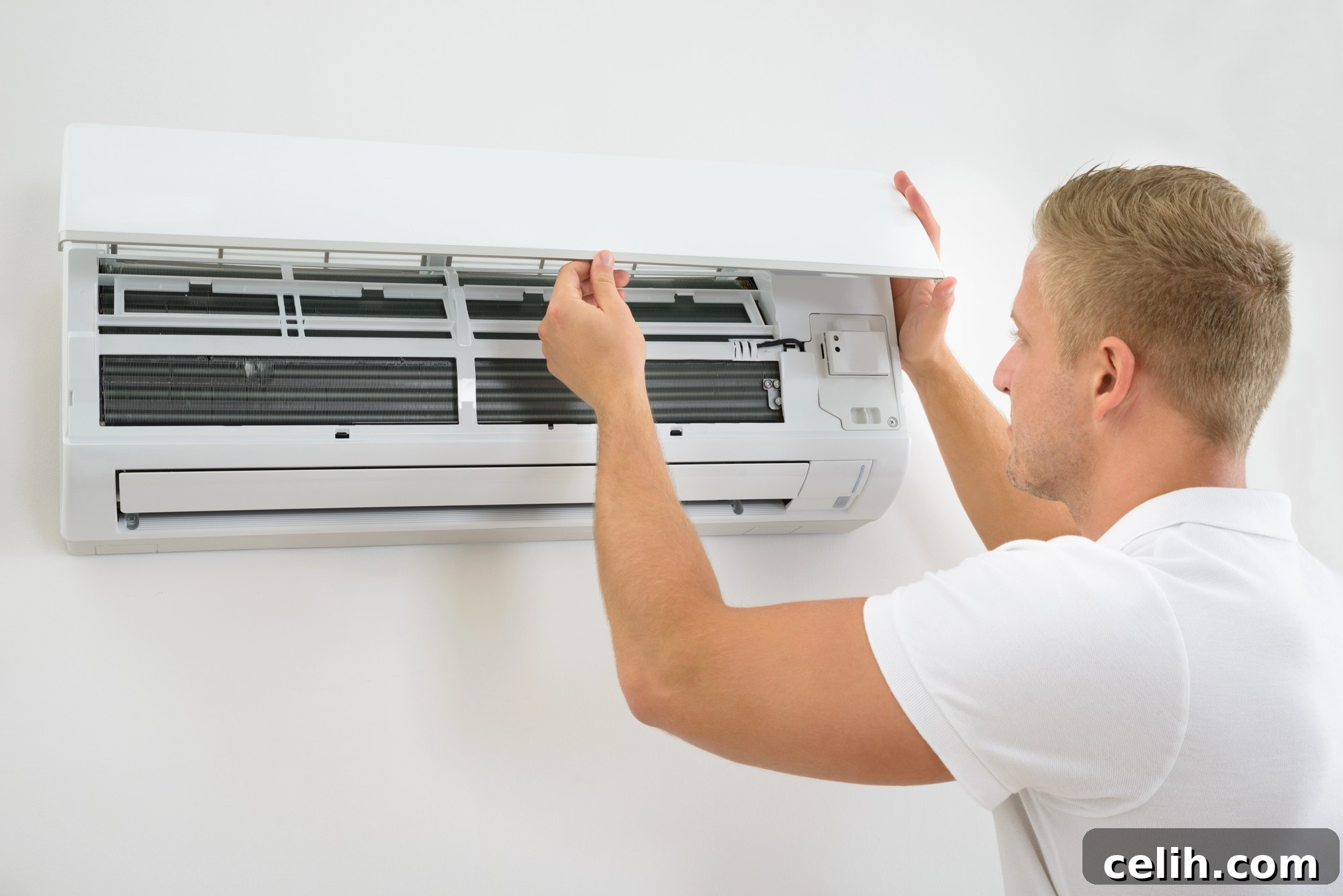
There’s nothing quite as refreshing as stepping into a perfectly cool and comfortable home, especially when the relentless Arizona heat is baking everything outside. That serene comfort, however, can quickly turn to frustration when your air conditioning system starts showing signs of distress. Perhaps it’s emitting strange, unsettling noises, struggling to maintain the desired temperature, or running almost continuously without truly cooling your space effectively. These are often the tell-tale signals that your home’s most crucial appliance is in trouble.
At this point, many homeowners find themselves at a critical crossroads, pondering a universal question: Is it wiser to continue pouring money into ongoing air conditioner repair, or has the time finally come to invest in a brand-new, more reliable system? This dilemma isn’t just about immediate costs; it’s about long-term comfort, energy efficiency, and peace of mind.
The stark reality is that air conditioning units, much like any other mechanical system, have a finite lifespan. Even with diligent maintenance and the best care, there will inevitably come a day when repairs cease to be the most practical or cost-effective solution. Replacing your AC system represents a significant financial investment, certainly. However, it’s also a forward-thinking decision that can dramatically enhance your indoor comfort, substantially reduce your monthly energy expenditures, and alleviate the stress that accompanies every approaching heat wave. Recognizing the early indicators of a failing system can save you from unexpected breakdowns during peak summer temperatures and prevent costly, reactive repairs.
This comprehensive guide is designed to provide you with a straightforward comfort checklist. By walking through these key indicators, you’ll be empowered to determine whether your current air conditioner is still performing its vital duty effectively, or if it’s time to seriously consider upgrading to a modern, more efficient system that promises superior performance and lasting relief.
1. How Old Is Your AC Unit? The Age Factor and Its Impact
The typical lifespan of most central air conditioning systems ranges between 10 and 15 years. If your home’s AC unit has surpassed the decade mark, it’s imperative to pay closer attention to its operational performance and efficiency. While some units might soldier on beyond this average, their effectiveness and reliability often diminish considerably. Over the last decade, HVAC technology has undergone remarkable advancements. Newer systems are engineered with significantly improved efficiency ratings, innovative features, and superior cooling capabilities, which can translate into substantial savings on your energy bills month after month.
Consider the long-term perspective: if your AC unit is well past its prime and you find yourself incurring increasingly frequent and expensive repair costs each cooling season, investing in an upgrade might prove to be more economical in the long run. A new, energy-efficient system not only cools your home more consistently and effectively but also achieves this feat using considerably less energy. This reduction in energy consumption is not only beneficial for your wallet but also for the environment, making a modern AC unit a smart, sustainable choice for any homeowner.
2. Are You Scheduling Frequent Repairs? When Repair Bills Become a Burden
Occasional, minor repairs are a normal part of owning any complex mechanical system like an air conditioner. A routine tune-up or the replacement of a small worn part is usually expected. However, when you find yourself repeatedly calling a technician multiple times within a single year, or even within a single cooling season, those escalating repair bills can quickly become a significant financial drain. Worse still, the replaced components may only provide a temporary fix, buying you a limited amount of time before another part of the aging system inevitably fails.
This recurring cycle often leaves homeowners feeling trapped in a difficult decision: should they continue to patch up their old system, or take the leap and invest in a complete replacement? A widely accepted guideline to help navigate this dilemma is the “50 percent rule.” This rule suggests that if the cumulative cost of ongoing repairs approaches or exceeds 50 percent of the cost of purchasing a brand-new system, it is financially prudent to give serious consideration to replacement. Beyond the monetary aspect, the constant inconvenience and stress associated with frequent breakdowns can severely impact your quality of life, especially during Arizona’s sweltering summers.
3. Are Your Energy Bills Climbing? The Hidden Cost of Inefficiency
One of the most immediate and tangible signs that your air conditioner is struggling is a noticeable spike in your monthly utility bills. When an AC unit has to exert more effort to achieve and maintain your desired indoor temperature, it consumes a significantly higher amount of electricity. Older systems, particularly those that haven’t received consistent maintenance, gradually lose their operational efficiency as internal components wear down, refrigerant levels deplete, and coils become dirty. This inefficiency forces the unit to run longer cycles and work harder, directly translating into higher energy consumption and inflated bills.
If you’ve observed that your energy costs this summer are significantly higher compared to previous years, even with similar usage patterns, it’s a strong indicator that your air conditioner could be the primary culprit. Modern high-efficiency models, often identified by their higher SEER (Seasonal Energy Efficiency Ratio) ratings, are specifically designed to deliver superior cooling performance with substantially less energy input. The initial investment in such a system is often quickly offset by the considerable yearly savings on your utility bills, making the upgrade a financially sound decision that pays for itself over time.
4. Is Your Home Unevenly Cooled? The Frustration of Hot and Cold Spots
Few things are as frustrating as walking through your home and encountering drastically different temperatures from one room to another. Uneven cooling, characterized by certain areas feeling perfectly comfortable while others remain stubbornly warm and muggy, is a common and irritating symptom of an aging or underperforming AC system. This issue could stem from various factors, including problems with your home’s ductwork, inadequate insulation, or even refrigerant leaks. However, it very often points to the more fundamental problem that your air conditioner simply no longer possesses the capacity or capability to adequately meet your home’s total cooling demands.
If you find yourself frequently resorting to supplemental cooling methods—such as strategically placed portable fans, individual window units, or even closing off entire rooms just to achieve a semblance of comfort—these are clear signals that your existing system is struggling. A new, properly sized, and efficiently installed air conditioning unit can dramatically improve airflow and temperature distribution throughout your entire home, eliminating those frustrating hot and cold spots and ensuring consistent comfort in every living space.
5. Are Strange Noises or Smells Becoming Common? Decoding Your AC’s Alarms
A healthy air conditioner should operate with a relatively quiet hum, receding into the background of your daily life. It should certainly not groan, rattle, grind, hiss, or squeal every time it kicks into action. Odd or unusually loud sounds are almost always indicators of underlying mechanical problems within the system. These noises can signal issues such as worn-out belts, failing motor bearings, loose components, or even obstructions within the fan. Similarly, foul or musty odors emanating from your vents are cause for concern. A musty smell often suggests mold or mildew growth within the evaporator coil or ductwork, while a burning odor could indicate an electrical problem or overheating motor, which can pose significant safety risks.
While some of these issues, particularly minor ones, can be addressed with targeted repairs, recurring noises and unpleasant smells are typically symptomatic of a system that is fundamentally deteriorating. These persistent warning signs often point to major components nearing the end of their operational life, making a full system replacement a more sensible and long-lasting solution than chasing down endless repairs.
6. Do You Want More Control Over Comfort? Embracing Modern Technology
Today’s air conditioning systems offer a level of control and customization that was unimaginable just a few years ago. Features such as smart thermostats, advanced zoning systems, and variable-speed compressor technology are becoming standard in many modern AC units. If your current system is rudimentary, offering only basic “on” or “off” functionality, you are missing out on incredible opportunities to fine-tune your home’s comfort and drastically reduce energy waste.
Upgrading to a new unit unlocks access to these cutting-edge features. Smart thermostats allow for remote control, learning your preferences, and optimizing schedules to save energy. Zoning systems enable you to cool specific areas of your home independently, preventing energy waste in unused rooms. Variable-speed technology adjusts cooling output precisely to demand, leading to quieter operation, superior humidity control, and unmatched efficiency. A new system empowers you with better control over your indoor environment, making your home not just cooler, but also smarter and more energy-efficient.
7. Are Repairs Still Giving You Peace of Mind? The Value of Reliability
Ultimately, the intangible benefit of peace of mind is paramount when it comes to home comfort. If you find yourself constantly preoccupied with the thought that your aging AC unit might suddenly fail in the middle of a scorching Arizona heat wave, then true comfort is elusive, regardless of how cool the air might feel at the moment. The underlying anxiety about potential breakdowns, unexpected repair costs, and the disruption to your daily life can be a significant burden.
A new air conditioning system offers more than just enhanced efficiency or potential energy savings; it provides the invaluable assurance that your home will remain a safe, comfortable, and livable sanctuary, regardless of the extreme weather conditions outside. Modern units come with robust warranties, guaranteeing performance and offering protection against unforeseen issues. This reliability means you can stop worrying about your AC and start enjoying your home again, knowing that consistent, dependable cooling is always at your fingertips.
Putting It All Together: Your Comprehensive AC Comfort Checklist
To help you solidify your decision regarding an AC upgrade, here’s a concise yet comprehensive way to evaluate your current system:
- Age: Is your AC unit over 10 years old and visibly struggling? This is a strong indicator that it’s time to start actively planning for a replacement rather than reactive repairs.
- Repairs: Are you experiencing frequent breakdowns, requiring multiple service calls within a short period? Carefully tally the cumulative costs of these repairs and compare them against the investment in a new, reliable system.
- Bills: Have your monthly energy costs been steadily climbing without a change in usage habits? Declining efficiency is likely the root cause, and a new unit can significantly lower these bills.
- Comfort: Are you experiencing inconsistent or uneven cooling throughout your home, or does the system simply seem unable to keep up with the demands of the heat? Your current AC may no longer possess the capacity for effective whole-home cooling.
- Noise/Smells: Are recurring strange noises (grinding, rattling, hissing) or foul odors (musty, burning) becoming a regular occurrence? These often point to deeper, systemic problems that are costly to fix piecemeal.
- Features: Do you desire superior control over your home’s climate, including smart thermostat integration, zoning capabilities, or improved air quality? Only new systems offer these advanced features.
- Peace of Mind: If you’re constantly worrying about your AC unit failing, especially during critical times, that pervasive anxiety is itself a significant sign that it’s time for a more dependable solution.
On A Final Note: Making the Right Decision for Your Arizona Home
Deciding to upgrade your air conditioning system is undoubtedly a significant decision, and it’s not one that any homeowner takes lightly. However, it’s a choice that holds the power to fundamentally transform the comfort, efficiency, and overall livability of your home, especially in the demanding climate of Arizona. Instead of being caught in a perpetual cycle of juggling ongoing repair costs, enduring unpredictable breakdowns, and constantly wondering when the next major issue will strike, a new system offers unwavering confidence, unparalleled reliability, and the welcome benefit of consistently lower monthly energy bills.
If you’ve been grappling with the repair-versus-replace dilemma, this comprehensive checklist serves as an invaluable tool, enabling you to weigh your options with clarity and informed perspective. And when you’re ready to discuss which solution makes the most sense for your unique home and budget, the expert team at Tailored Mechanical is readily available to assist you. We are committed to guiding you through all your available choices, explaining every detail in clear, understandable terms, and ensuring that your investment in a new AC system is the absolute right one for your long-term comfort and satisfaction.
Because in the intense Arizona heat, you don’t merely need an air conditioner; you need a powerful, efficient, and utterly reliable system that performs flawlessly every single time you switch it on.