
Transform Your Kitchen: A Comprehensive Guide to Choosing Essential Fixtures and Fittings
Embarking on a kitchen renovation project often involves significant decisions about layout, cabinetry, and worktops. While these structural elements form the backbone of your design, it’s the smaller, yet equally crucial, details that truly define the functionality, aesthetics, and overall feel of your culinary space. Overlooking the importance of kitchen fixtures and fittings can be a costly mistake; these elements are not mere afterthoughts but integral components that can elevate a good kitchen to a truly exceptional one.
From the gleaming finish of your sink to the subtle glow of your under-cabinet lighting, every fixture and fitting contributes to the harmonious balance of your kitchen. They impact daily tasks, influence the room’s atmosphere, and reflect your personal style. This comprehensive guide will walk you through the essential considerations for selecting everything from sinks and taps to cupboard handles and innovative lighting solutions, ensuring every choice you make brings you closer to your dream kitchen.
The Foundation of Function and Style: Kitchen Sinks
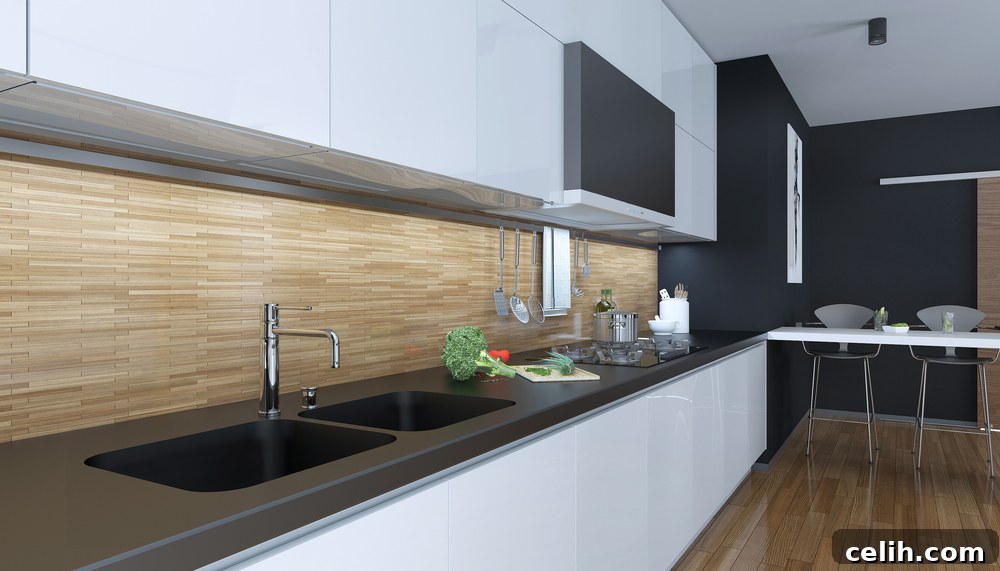
The kitchen sink is arguably one of the most hardworking elements in any kitchen. It’s a focal point for food preparation, washing, and cleaning, making its selection critical for both practicality and design cohesion. Modern kitchen sinks come in an astounding array of shapes, sizes, designs, and materials, catering to every imaginable kitchen style and functional requirement.
Choosing the Right Sink Style and Configuration
- Single Bowl Sinks: Ideal for smaller kitchens or those who prefer a minimalist aesthetic. They offer ample space for larger pots and pans.
- Double Bowl Sinks: Perfect for multitasking, allowing you to wash dishes in one bowl while rinsing in another, or dedicating one side for food prep.
- 1.5 Bowl Sinks: A popular compromise, featuring a main large bowl and a smaller secondary bowl, great for rinsing or waste disposal units.
- Sinks with Draining Boards: Essential for air-drying dishes or preparing food, they can be integrated into the sink unit or be a separate counter component.
- Undermount Sinks: Mounted beneath the countertop, these create a seamless, sleek look, making cleanup easier as crumbs can be swept directly into the sink. They are excellent for contemporary designs.
- Top-Mount (Drop-In) Sinks: Dropped into a cutout in the countertop, their rim rests on the counter surface. They are easier to install and often more budget-friendly.
- Farmhouse or Apron-Front Sinks: Characterized by an exposed front, these deep, generous sinks evoke a rustic charm and are perfect for traditional or country-style kitchens.
Exploring Sink Materials and Finishes
The material of your kitchen sink significantly impacts its durability, maintenance, and visual appeal:
- Stainless Steel: The most popular choice, renowned for its durability, heat resistance, and easy maintenance. Available in polished, brushed, or satin finishes, it complements a wide range of kitchen styles, from ultra-modern to industrial.
- Ceramic/Fireclay: A classic choice, offering a smooth, glossy, and hard-wearing surface. Ceramic sinks are highly resistant to heat, scratches, and stains, making them perfect for traditional or country kitchens, like the timeless Butler or Belfast styles.
- Composite Granite: Made from a blend of granite stone and acrylic resins, these sinks are incredibly tough, scratch-resistant, and come in various colors, offering a premium look without the premium price of solid granite.
- Cast Iron: Coated with a durable enamel finish, cast iron sinks offer a vintage look and exceptional longevity. They are heavy and require sturdy cabinetry.
When making your selection, always consider the overall style and design of your kitchen. A minimalist, under-counter basin might be ideal for a contemporary setting, while a classic Butler sink could be the perfect finishing touch for a rustic kitchen. Crucially, ensure your chosen sink fits seamlessly with your worktop material and available space, creating a harmonious and functional workspace.
Elevating Your Water Experience: Kitchen Taps
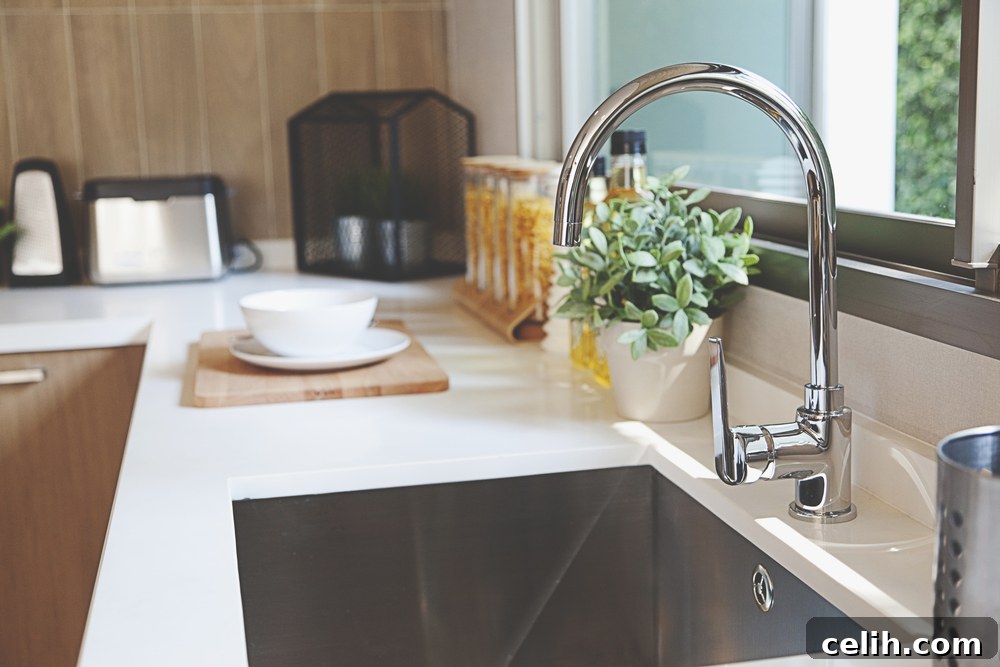
Kitchen taps, much like sinks, are central to the kitchen’s functionality and aesthetic appeal. Beyond merely dispensing hot and cold water, modern taps offer a plethora of features and designs that can significantly enhance convenience and workflow. When choosing your taps, consider both their practical utility and how well they integrate with your kitchen’s overall design.
Types of Kitchen Taps and Their Features
- Mixer Taps: The most common type, these combine hot and cold water streams through a single spout, controlled by one or two levers. Single-lever mixers are particularly popular for their sleek look and ease of use, allowing for precise temperature and flow control with one hand.
- Pull-Out and Pull-Down Sprays: A highly sought-after feature, these taps include a hose and spray head that can be pulled out or down from the main spout. They offer extended reach, making it easier to rinse large pots, clean the sink, or even fill containers on the countertop. Leading brands like Grohe offer models with various spray patterns for added versatility.
- Boiling Water Taps: One of the hottest kitchen must-haves, boiling water taps provide instant hot water, eliminating the need for a kettle. They save counter space, time, and energy, transforming the way you access hot water for drinks and cooking.
- Filtered Water Taps: These taps provide filtered drinking water directly from the tap, often alongside regular hot and cold water, offering a convenient and eco-friendly alternative to bottled water.
- Sensor Taps: For ultimate hygiene and modern appeal, sensor taps activate water flow when hands are detected, reducing germ transmission and water waste.
Finishes and Ergonomics
The finish of your tap should complement your sink and other kitchen hardware. Popular options include polished chrome for a timeless shine, brushed nickel for a softer, matte look, elegant black for a contemporary edge, or brass for a classic, luxurious feel. Beyond aesthetics, consider the tap’s ergonomics. Handles should be comfortable to grip and easy to operate, especially if you have limited dexterity. A well-chosen tap not only looks great but also makes daily kitchen tasks more enjoyable and efficient.
The Finishing Touch: Kitchen Cabinet Handles and Knobs
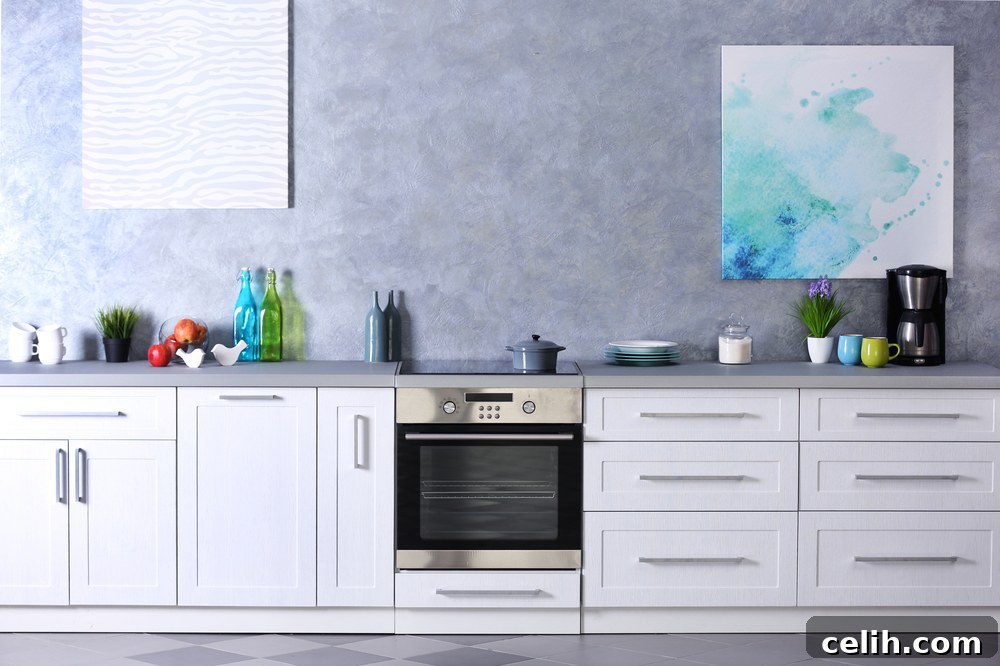
While often considered small details, kitchen cupboard and drawer handles or knobs play a monumental role in defining the overall style and personality of your kitchen. They are the tactile elements that interact with every day, making their selection a blend of visual appeal, comfort, and durability. The sheer variety available can be overwhelming, but getting this decision right can truly be the finishing touch that elevates your kitchen design.
Styles and Materials: A World of Choice
- Modern Kitchens: For a contemporary aesthetic, sleek, long, and slim bar handles or discreet finger pulls are often preferred. Integrated handles, where a groove is cut into the cabinet door itself, offer the ultimate minimalist look, creating a handle-less design that is both clean and sophisticated. Finishes like brushed stainless steel, matte black, or polished chrome are popular.
- Traditional Kitchens: Ornate knobs, cup handles, or classic D-pulls in materials like ceramic, brass, antique bronze, or pewter can beautifully complement a more traditional or rustic kitchen design. These options add character and warmth.
- Transitional Kitchens: These kitchens blend modern and traditional elements, allowing for greater flexibility. Simple bar pulls with a classic finish or a mix of knobs and pulls can work wonderfully.
Beyond Aesthetics: Functionality and Durability
Beyond their visual appeal, consider the functionality and sturdiness of the handles. If you have large, heavily laden pull-out pan drawers, robust, well-made handles are essential to withstand frequent use and ensure longevity. Test how they feel in your hand – they should be comfortable to grip and easy to operate, particularly for areas of high traffic. Think about accessibility; some handle styles are easier for individuals with limited hand mobility.
Another trend in modern kitchen design is the absence of handles on some cabinets, achieved through push-to-open mechanisms or integrated handle designs. This creates an incredibly streamlined and uncluttered appearance, reinforcing a minimalist ethos. Carefully consider where handles are truly necessary and where a handle-less solution might enhance the design.
Illuminating Your Culinary Space: Kitchen Lighting Solutions
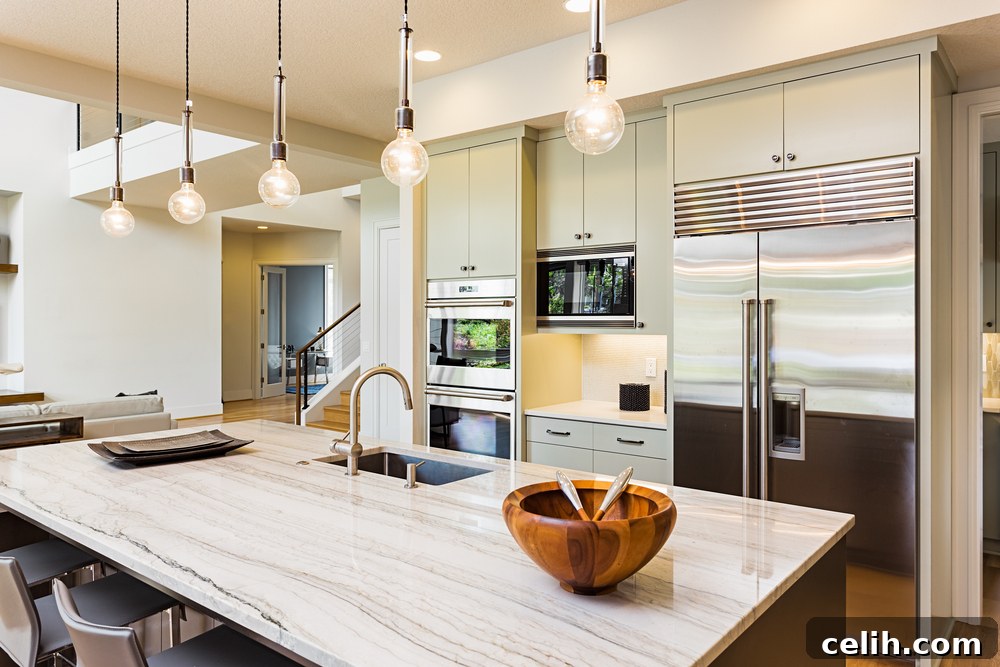
Effective kitchen lighting is not just about brightness; it’s about creating a versatile, functional, and inviting atmosphere. Gone are the days of harsh, single-source overhead lighting. Modern kitchen design embraces a layered lighting approach, combining ambient, task, and accent lighting to cater to various needs and moods.
The Three Layers of Kitchen Lighting
- Ambient Lighting: This provides general illumination for the entire room. Recessed spotlight-style lights in the ceiling are a popular choice, offering uniform brightness. Consider installing a dimmer switch to adjust the light intensity, allowing you to transition from bright task lighting to a softer, more relaxed ambiance for dining or entertaining.
- Task Lighting: Crucial for specific work areas, task lighting ensures you have ample illumination where you need it most. Under-cabinet lights are a game-changer for food preparation, illuminating countertops without casting shadows. LED strip lighting is an energy-efficient and discreet option. Pendant lights suspended over a kitchen island or breakfast bar not only provide focused light for cooking or dining but also serve as stunning decorative features, making a statement with their design.
- Accent Lighting: This layer is all about highlighting specific features and adding decorative flair. In-cabinet lighting can showcase beautiful dinnerware or glassware, while plinth lighting (at the base of cabinets) creates a soft, ethereal glow, making the kitchen appear larger and more inviting.
Harmonizing Lighting with Design
When selecting your lighting fixtures, consider their finish and style to ensure they complement your chosen kitchen theme. If you’ve opted for shiny chrome taps and handles, carrying this metallic finish through to your pendant lights or recessed light bezels will create a cohesive and polished look. Conversely, a matte black finish on your fixtures could be echoed in minimalist track lighting or sleek pendant shades for a contemporary industrial feel. Thoughtful lighting design not only enhances the functionality of your kitchen but also significantly elevates its aesthetic appeal, creating a space that is both practical and beautiful.
Beyond Aesthetics: Essential Considerations for Your Kitchen Fixtures and Fittings
While style and design are paramount, a truly successful kitchen renovation hinges on making practical and informed decisions about every fixture and fitting. Here’s an expanded checklist of key points to consider, ensuring your choices stand the test of time and meet your lifestyle needs:
- Style & Design Cohesion: Does each item seamlessly integrate with the overall aesthetic of your intended kitchen? From modern minimalism to rustic charm, every piece should contribute to a unified vision.
- Quality & Durability: Invest in high-quality materials and construction. Fixtures and fittings endure daily wear and tear; well-made items will function flawlessly and retain their appearance for years, offering better value in the long run.
- Material & Finish Consistency: Pay attention to the materials and finishes. Do your tap finishes match your cabinet handles? Does your sink material complement your worktops? A consistent palette of materials and finishes creates a sophisticated and orderly feel.
- Usability & Ergonomics: Will the item be practical and easy to use for everyone in your household? Consider comfort, accessibility, and ease of operation for daily tasks. Think about flow and how you interact with each component.
- Maintenance & Cleaning: Research the cleaning requirements for each material and finish. Some materials require more delicate care than others. Choose items that align with your willingness to maintain them.
- Availability & Future Replacements: Is the design readily available now? More importantly, is it likely to still be manufactured if you need replacements or additional items in the future? This is crucial for long-term consistency.
- Budget Alignment: Always consider how each item fits within your overall kitchen spending budget. Prioritize areas where quality is non-negotiable (like taps and sinks) and look for value in others.
- Installation Requirements: Understand the installation complexities. Some fixtures, like boiling water taps or undermount sinks, may require professional installation, adding to the overall cost.
- Sustainability: Where possible, consider eco-friendly options. Water-saving taps, energy-efficient LED lighting, and sustainably sourced materials can contribute to a greener home.
By carefully evaluating these points, you can ensure that every fixture and fitting you choose not only looks fantastic but also performs exceptionally, contributing to a kitchen that is truly a joy to use and behold.