
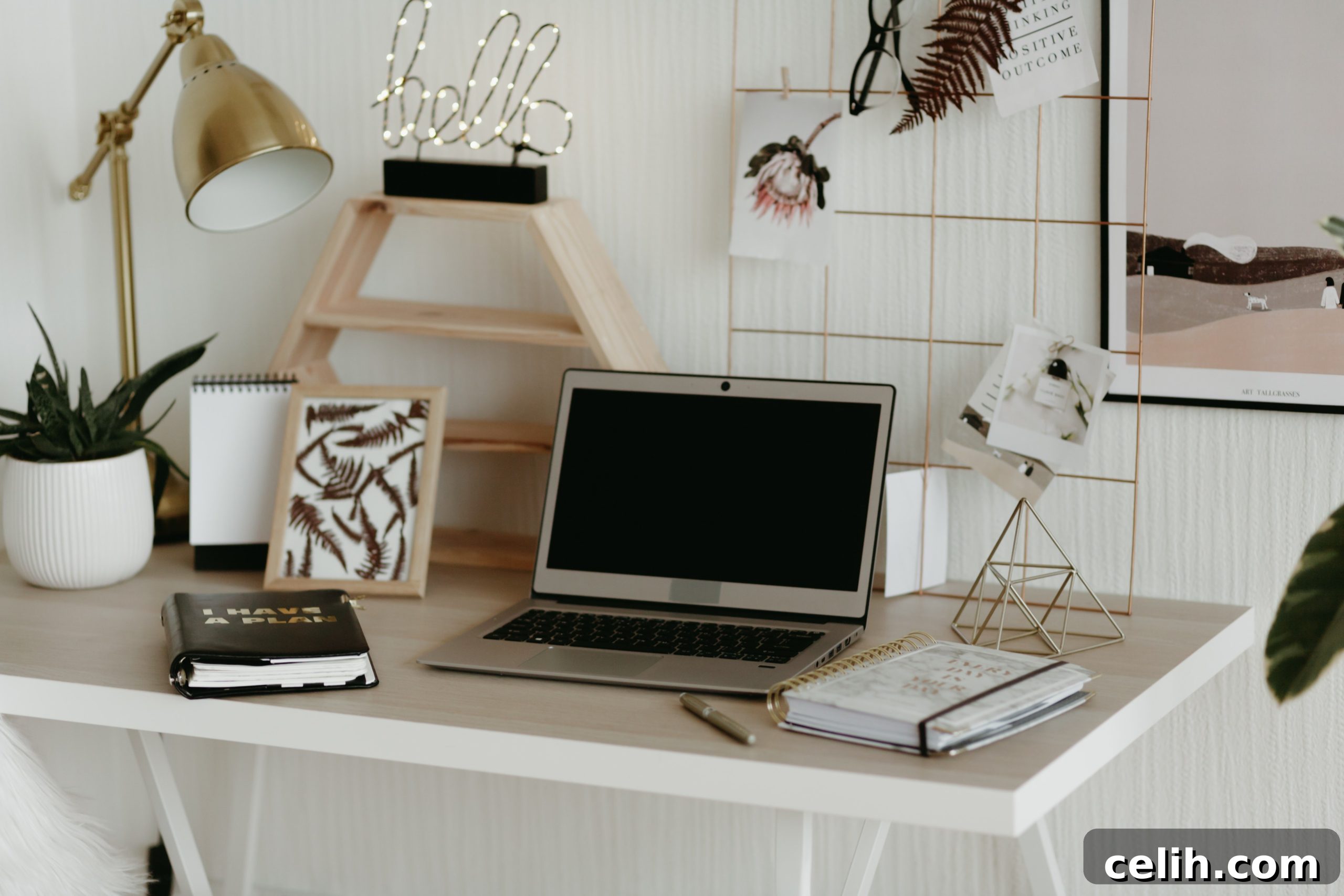
In today’s rapidly evolving professional landscape, the concept of a home office has transitioned from a luxury to a necessity for many. A well-designed home office provides a designated, distraction-free environment crucial for productivity and maintaining a healthy work-life balance. It’s more than just a place to set up your laptop; it’s a sanctuary for focus, creativity, and professional growth. However, a common challenge arises for many aspiring remote workers: what if you don’t have a convenient spare room to convert into a traditional office? This article serves as your comprehensive guide, exploring innovative and practical solutions to carve out a productive workspace, regardless of your home’s size or layout. We’ll delve into various strategies, from repurposing overlooked areas to ingenious space-saving designs, ensuring that every professional can establish an efficient home office tailored to their needs.
The Undeniable Benefits of Establishing a Home Office
The shift towards remote work has presented numerous advantages, not just for employees but also for businesses. For companies, embracing a work-from-home model significantly reduces overhead costs associated with renting and maintaining physical office spaces, utility bills, and even some administrative expenses. Modern technology has bridged geographical gaps, making remote collaboration seamless. Tools like Zoom and Google Meet facilitate face-to-face client meetings and team discussions, while cloud-based platforms enable real-time project collaboration and secure document sharing. Services like Physical Address even offer virtual business addresses, allowing companies to maintain a professional front without the burden of a physical office lease. This robust infrastructure leaves very few compelling reasons for many businesses to continue investing heavily in traditional office rentals.
Beyond the corporate benefits, establishing a dedicated workspace at home offers profound advantages for individual productivity and mental well-being. For many, the lines between work and personal life can easily blur when working from the couch or dining table. This lack of physical separation can lead to reduced focus, increased distractions from household activities, and difficulty disengaging after hours. A designated home office, even a small one, creates a vital psychological boundary. It signals to your brain that it’s time to “switch on” for work and “switch off” when you leave that space. This intentional separation helps in staying motivated, minimizing interruptions, fostering a professional mindset, and ultimately improving your overall work-life balance. It also allows you to customize your environment for optimal comfort and ergonomics, leading to better posture and reduced strain during long working hours. Creating this specific zone for work is crucial for maintaining both mental clarity and high performance in a remote setting.
Creative Solutions for a Home Office Without a Spare Room
The dream of a dedicated home office doesn’t have to be limited by the absence of a spare room. Many homeowners assume that without an extra bedroom, a productive workspace is out of reach. However, with a little creativity and strategic planning, virtually any home can accommodate a functional and inspiring office environment. The key lies in identifying underutilized spaces and rethinking their potential. From converting neglected nooks to integrating discreet workstations within existing rooms, the possibilities are extensive. This section will explore various ingenious ways to set up a productive home office, proving that space constraints are merely opportunities for innovative design. You might be surprised by the hidden potential within your own four walls.
Transforming Unused Spaces into Functional Offices
Many homes feature spaces that, while not typically considered “liveable rooms,” possess immense potential for conversion into a dedicated home office. These overlooked areas often offer the advantage of seclusion and quiet, making them ideal for focused work. With some strategic planning and renovation, these dormant spaces can be reimagined as vibrant, productive environments. Consider the following options:
- Attic: An attic, often relegated to storage, can make an incredibly serene and secluded home office. Its elevated position often provides peace and quiet, distancing you from the hustle and bustle of daily household life. However, converting an attic typically requires significant renovation to ensure it’s a comfortable and safe workspace. Key considerations include conducting a structural assessment to ensure the floor can support the weight of furniture and occupants, installing proper flooring, adding robust insulation for temperature regulation, enhancing natural light with skylights or dormer windows, and ensuring adequate ventilation. Furthermore, you’ll need to install sufficient lighting, numerous electrical sockets for all your devices, and a reliable heating and cooling system. Don’t forget proper, safe access – often requiring a fixed staircase. This guide at Houzz offers excellent tips for transforming a loft into a functional and inspiring office space, ensuring you maximize its unique potential.
- Garage: A garage, often used for parking cars or storing tools, can also be transformed into a surprisingly spacious and accessible home office. Unlike attics, garages are usually on the ground floor, offering easier access and potentially more generous ceiling heights. The renovation process for a garage office shares some similarities with an attic conversion but also presents its own unique challenges and opportunities. You’ll likely need to weatherproof the space thoroughly, insulate walls and ceilings for comfort, and ensure proper flooring is laid down – options range from durable epoxy coatings to comfortable carpet tiles. Essential utilities include installing dedicated electrical circuits for computers and lighting, and setting up an efficient heating and cooling system. Depending on your needs, you might also consider adding soundproofing to minimize external noise. Clearing out clutter and organizing storage will be the first crucial step in making this large space suitable for a focused work environment.
- Shed/Garden Office: For those seeking ultimate separation from home life, converting a garden shed or constructing a dedicated garden office provides an ideal solution. This outdoor workspace allows you to physically and psychologically distance yourself from household distractions, creating a true escape for work. The renovation for a shed office involves similar considerations to an attic or garage: ensuring a solid foundation, comprehensive weatherproofing, effective insulation for year-round comfort, and upgrading the flooring. A critical aspect will be extending electrical wiring safely from your main property to the shed, which will require a qualified electrician and potentially higher costs due to trenching and specialized cabling. Internet connectivity will also need planning, whether through Wi-Fi extenders, powerline adapters, or even a direct Ethernet cable. Beyond the practicalities, a garden office offers the unique benefit of being surrounded by nature, which can boost creativity and reduce stress. Remember to check local planning permissions before embarking on any significant outdoor structure changes.
Crafting an Efficient Office Corner in an Existing Room
When your home is too small for a separate office room, the solution often lies in clever space utilization within existing living areas. Creating a dedicated “office corner” is a highly effective way to establish a workspace without sacrificing an entire room. This strategy involves carving out a specific zone within a larger room, such as a living room, bedroom, or even a spacious hallway. The key is to find an underutilized nook or wall space that can accommodate a desk and essential office equipment.
When designing an office corner, consider the following:
- Strategic Placement: Look for awkward corners, alcoves, or even the space under a staircase (as pictured) that can be repurposed. These areas often provide a natural sense of enclosure, helping to define your workspace.
- Desk Selection: Opt for desks specifically designed for compact spaces. Corner desks are excellent for maximizing utility in tight angles. Floating desks or wall-mounted desks can free up floor space, giving the illusion of a larger room. Consider bespoke desks if you have a particularly unusual space, as they can be custom-fitted for maximum efficiency.
- Ergonomics: Even in a small corner, an ergonomic chair is paramount for comfort and health during long working hours. Choose a chair that supports good posture but doesn’t visually dominate the room.
- Vertical Storage: Utilize the vertical space above your desk with floating shelves or wall-mounted organizers. This keeps your workspace tidy and essential items within reach without cluttering your desk surface.
- Lighting: Ensure your office corner has adequate lighting. Natural light is ideal, but a good quality task lamp is essential to prevent eye strain, especially during evening work.
- Define the Zone: While it’s part of a larger room, try to make your office corner feel distinct. This can be achieved through subtle visual cues like a different paint color on the wall behind the desk, a small rug, or even a decorative screen that can be pulled across when not in use.
Crucially, aim to use this designated corner purely for work activities. This mental discipline reinforces the boundary between work and leisure, even within the same room. If you share your home, try to position your office in a room that is least regularly used during your working hours. For example, a living room might not always be the best option if it’s a high-traffic area, whereas a quiet corner of a bedroom or a less-frequented guest room could be more conducive to concentration.
Embracing the Versatility of a Fold-Away Office
For homes with extremely tight space constraints, where even a dedicated corner seems challenging, a fold-away office emerges as an ingenious and highly practical solution. This concept is all about maximizing multi-functional rooms, allowing you to transform a space from leisure mode to work mode and back again with minimal effort. It embodies the principle of “now you see it, now you don’t,” providing a clear physical demarcation between work and personal life without requiring a permanent footprint.
A fold-away office can take various forms:
- Collapsible Desks: The most straightforward option, a collapsible desk can be easily unfolded and set up when you need to work, then neatly folded and stored away in a closet or against a wall when your workday is done. These are perfect for dining rooms or living rooms that serve multiple purposes.
- Wall-Mounted Desks: These desks are fixed to the wall and typically fold up flush against it when not in use, resembling a small cabinet or shelf. When opened, they reveal a compact workspace, sometimes with built-in shelves for small items. This design is excellent for narrow hallways or small bedrooms.
- Cabinet Desks (Murphy Desks): More elaborate fold-away solutions include desks that are integrated into larger pieces of furniture, like a cabinet or armoire. When closed, they blend seamlessly with your decor, often looking like a regular piece of living room or bedroom furniture. When opened, they reveal a full workstation, complete with shelves and storage.
- Mobile Work Carts: While not strictly “fold-away,” a compact, wheeled desk or cart that can be moved to a specific location for work and then rolled out of sight (perhaps into a closet or corner) can serve a similar purpose in highly dynamic spaces.
The primary benefit of a fold-away office is its ability to facilitate a strong work-life boundary. By physically putting your work tools away, you mentally signal the end of the workday, preventing the “always-on” feeling that can plague remote workers. This simple act of transformation from leisure mode to work mode (and vice versa) can significantly aid in getting into the right mindset for productivity and then fully relaxing when your tasks are complete. When choosing a fold-away solution, prioritize stability, ease of setup and takedown, and sufficient surface area for your essential equipment.
Essential Elements for Any Productive Home Office (Regardless of Size)
No matter how much space you have, certain foundational elements are critical for any productive home office setup. Prioritizing these aspects will ensure your workspace is not only functional but also supports your long-term health and efficiency.
- Ergonomic Setup: Your health is paramount. Invest in a comfortable, ergonomic chair that provides good lumbar support. Ensure your monitor is at eye level, and your keyboard and mouse are positioned so your wrists remain straight. Proper ergonomics prevent discomfort, reduce the risk of repetitive strain injuries, and allow you to work longer and more comfortably.
- Optimal Lighting: Natural light is best, so try to position your desk near a window if possible. Supplement with good artificial lighting to prevent eye strain. A task lamp provides direct light for your workspace, while ambient lighting keeps the room from feeling too dim. Avoid working in dimly lit spaces or with harsh overhead lights.
- Reliable Connectivity: A stable and fast internet connection is non-negotiable for remote work. Ensure your Wi-Fi signal is strong in your chosen workspace, or consider a wired Ethernet connection for maximum reliability. Ample power outlets are also essential to power all your devices without relying on cumbersome extension cords.
- Effective Organization: A cluttered workspace can lead to a cluttered mind. Implement smart storage solutions to keep your desk clear and organized. Vertical shelving, drawer units, file holders, and cable management solutions are crucial for maintaining order. Even in a small space, a well-organized area enhances focus and reduces visual distractions.
- Personalization & Aesthetics: While functionality is key, don’t underestimate the power of an aesthetically pleasing environment. Add personal touches that inspire you, such as a plant, a favorite piece of art, or photos. A space that feels comfortable and visually appealing can significantly boost your mood and motivation, making your workday more enjoyable.
- Noise Management: Depending on your home environment, noise can be a significant distraction. Consider noise-canceling headphones, or if possible, strategically place your office in the quietest part of your home. For more permanent setups, acoustic panels can help dampen sound.
By integrating these essential elements, even the most compact home office can become a powerhouse of productivity and a sanctuary for focused work.
Conclusion: Your Ideal Home Office Awaits
The journey to creating a highly functional and inspiring home office doesn’t require a sprawling mansion or an abundance of spare rooms. As we’ve explored, innovative design, strategic planning, and a little creativity can transform even the most overlooked nooks and crannies into powerful productivity hubs. Whether you decide to embark on a significant renovation of an attic or garage, cleverly carve out a dedicated corner within an existing living space, or embrace the flexibility of a fold-away desk, the possibilities are vast. The core message remains clear: establishing a distinct boundary between your personal life and professional responsibilities is crucial for maintaining focus, boosting motivation, and achieving a healthy work-life balance in the age of remote work. By considering your individual needs, exploring the unique potential of your home, and incorporating essential ergonomic and organizational elements, you can design a home office that not only supports your career goals but also enhances your overall well-being. Don’t let space constraints deter you; your ideal, productive home office is within reach.
Featured image credit: Photo by Polina Kovaleva from Pexels