
After a long, demanding day, few things are as universally appealing as the prospect of a soothing, warm shower or, even better, a luxurious bath. A bathtub isn’t just a fixture; it’s an invitation to unwind, a centerpiece that defines comfort and elegance in your bathroom. However, navigating the myriad of options to find the perfect bathtub size can be an unexpectedly challenging task. Many homeowners find themselves wrestling with the dilemma of choosing a tub that is either too small, leading to an uncomfortable and cramped bathing experience, or too large, overwhelming the space and disrupting the bathroom’s functionality.
Unlike spacious living rooms or bedrooms, bathrooms typically feature a more constrained footprint, making every square inch count. This inherent limitation elevates the importance of selecting the correct bathtub dimensions. An ill-suited tub can transform your sanctuary into a cluttered, impractical area. If you’re currently embarking on a bathroom renovation or simply contemplating the addition of a new bathtub and feeling daunted by the sizing decisions, you’ve come to the right place. This comprehensive guide is designed to empower you with the knowledge and insights needed to confidently select a bathtub that perfectly complements both your personal comfort and your bathroom’s unique layout.
In this in-depth article, we will delve into the critical factors, practical measurements, and common bathtub types to help you make an informed decision. Prepare to discover the secrets to choosing an ideal bathtub size that promises years of blissful relaxation and enhances your home’s aesthetic appeal. Let’s dive in!
Why Bathtub Size Matters: Beyond Mere Aesthetics
The size of your bathtub transcends simple aesthetics; it profoundly impacts your bathing comfort, the overall functionality of your bathroom, and even your home’s long-term value. A bathtub is a significant investment, both in terms of cost and the space it occupies. Therefore, making an informed decision about its dimensions is paramount.
- Personal Comfort and Ergonomics: The primary reason for a bathtub is relaxation. A tub that is too short for your height or too shallow for a proper soak diminishes the experience, leaving you feeling cramped and unsatisfied. Conversely, a tub that’s appropriately sized allows you to recline fully, submerge yourself comfortably, and enjoy the therapeutic benefits of a warm bath.
- Bathroom Flow and Functionality: Bathrooms are activity hubs, and a poorly sized tub can disrupt the traffic flow, block access to other fixtures like the toilet or vanity, or make the room feel overwhelmingly small. Optimal sizing ensures that there’s adequate clearance around the tub for movement, cleaning, and access to storage or windows, creating a harmonious and practical space.
- Aesthetic Harmony and Design Impact: The right-sized tub contributes significantly to the visual balance and aesthetic appeal of your bathroom. A large bathroom might feel empty with a tiny tub, while a small bathroom would be dwarfed by an oversized one. Matching the tub’s scale to the room’s proportions is key to achieving a cohesive and appealing design.
- Resale Value and Long-Term Satisfaction: A thoughtfully chosen bathtub enhances your daily life and can also add value to your home. Potential buyers often appreciate a well-designed bathroom with a functional and comfortable bathing solution. Investing time now to get the size right will ensure satisfaction for years to come.
The Indispensable First Step: Meticulously Measuring Your Bathroom Space
Before you even begin to browse bathtub models, the absolute critical first step is to accurately assess the space available in your bathroom. This foundational measurement process will dictate your options and prevent costly mistakes. Here’s a detailed guide on how to take precise measurements:
Strategic Placement and Plumbing Considerations
- Identify the Ideal Location: Whether you’re installing a bathtub for the first time or replacing an existing one, pinpointing the exact spot for your new tub is paramount. Consider existing plumbing lines if you’re replacing a tub, as relocating them can significantly increase installation costs and complexity. If it’s a new installation, think about the room’s layout, windows, and other fixtures to find a spot that offers both privacy and practicality.
- Account for Plumbing Access: Once you’ve chosen a desired location, visualize how the plumbing will connect to the tub. Ensure there’s sufficient access for installation and future maintenance. For freestanding tubs, plumbing often comes up from the floor, while alcove or drop-in tubs usually connect to wall-mounted plumbing.
Detailed Dimensional Measurements
With your desired tub placement decided, it’s time to measure the physical dimensions of that area. This will give you the maximum allowable length, width, and height for your chosen tub.
- Measure the Length: Begin by measuring the length of the back wall where the tub will reside. If it’s an alcove or corner installation, measure wall-to-wall. For freestanding tubs, measure the open floor space you’ve allocated for its length. Always measure from one fixed point to another (e.g., wall to wall, or wall to vanity edge).
- Determine the Width/Depth: Next, measure the width of the available space, which will correspond to the tub’s width. For alcove tubs, this is typically the distance from the back wall to the front edge of where the tub will extend. For freestanding tubs, it’s the depth of the space from front to back. Envision how wide your chosen tub will be and ensure it doesn’t impede pathways or other bathroom elements.
- Assess the Height: Finally, measure the maximum height you can accommodate for the tub. This is crucial to ensure the tub doesn’t block windows, existing wall-mounted fixtures (like showerheads or decorative elements), or encroach upon desired sightlines. While the typical height of a standard bathtub is around 14-20 inches, taller individuals might seek deeper soaking tubs, which can reach up to 24 inches or more. Always leave sufficient clearance above the tub rim for faucet installation and comfortable access.
Crucial Clearances and Bathroom Flow
- Space for Other Fixtures and Movement: It’s not just about fitting the tub; it’s about making the entire bathroom functional. Ensure there’s enough clearance around the tub for a basin (vanity/sink), toilet, and shower if applicable. A general guideline is to maintain at least 30 inches of clear space in front of all fixtures, including the tub, for comfortable use and movement. For a vanity, leaving a clear area of approximately 30″ x 60″ might be needed, but this depends heavily on the specific bathroom layout.
- Door Swing: Crucially, verify that the bathtub, once installed, will not interfere with the bathroom door’s swing. Open and close the door fully in your measurements to confirm unrestricted access. If space is tight, consider a pocket door or a door that swings outwards.
- Access for Installation: Don’t forget to measure doorways and hallways leading to the bathroom. A beautiful tub is useless if it can’t physically fit through the entrance! Ensure there’s a clear path for delivery and installation.
Measuring the Bathtub’s Internal Dimensions for Comfort
Once you understand your bathroom’s limitations, you’ll need to consider the tub’s internal dimensions, which are key to your personal comfort.
- Soaking Depth: This refers to the distance from the tub’s overflow drain to the bottom of the tub. For truly comfortable soaking, especially for tall individuals, a deeper soaking depth is desirable. Standard tubs might offer around 12-14 inches, while deep soaking tubs can range from 18 to over 24 inches, allowing for full shoulder immersion.
- Internal Length and Width (Basin Dimensions): These measurements determine how much room you have inside the tub to stretch out. Measure the basin length from the widest point of the tub (often from left to right along the bottom) and the width from front to back at the midpoint of the tub’s length. Taller individuals will need a tub with a greater internal length to avoid having their knees bent uncomfortably or feet hitting the end. The internal width is important for ample elbow room.
Common Bathtub Sizes and Types: Finding Your Perfect Match
Understanding the standard sizes and typical characteristics of different bathtub types is crucial for making an informed decision. While custom sizes exist, most bathtubs fall into common dimension ranges designed to fit various bathroom layouts. Below is a comprehensive chart detailing the general dimensions you’ll encounter, followed by a deeper dive into each type.
| Type of Bathtub | Typical Length Range | Typical Width Range | Typical Height Range |
| Alcove Tub | 54”-72” | 30”-36” | 14”-20” |
| Freestanding Tub | 35”-80” | 20”-59” | 14”-25” |
| Whirlpool/Jetted Tub | 60”-72” | 32”-48” | 18”-26” |
| Drop-in Tub | 45”-72” | 30”-42” | 14”-22” |
| Soaking Tub | 40”-60” | 30”-36” | 20”-34” |
| Undermount Tub | 45”-72” | 30”-42” | 14”-22” |
| Corner Tub | 48”-72” (side length) | 48”-72” (side length) | 18”-24” |
| Walk-in Tub | 48”-60” | 28”-36” | 30”-40” |
| Oval Tub | 55”-72” | 30”-45” | 18”-24” |
| Hammock Tub | 8.5-9.8 feet (102-118”) | 39”-50” | 25”-30” |
Alcove Bathtub: The Space-Saving Workhorse
If you’re seeking a highly practical and space-efficient bathtub solution, especially for a smaller or average-sized bathroom, alcove-shaped bathtubs are an excellent choice. These tubs are designed to fit into a three-wall recess, with one finished side (apron) visible. They typically range from 45 to 72 inches in length, with 60 inches being the most common standard size. Widths usually fall between 30 and 36 inches, and heights from 14 to 20 inches. While they are often associated with maximizing space, many models offer generous internal dimensions suitable for comfortable bathing, even for taller individuals, particularly the 66-inch and 72-inch lengths. It’s often suggested to leave at least seven feet of floor space (lengthwise) to comfortably accommodate the tub and allow for entry/exit.
Freestanding Bathtub: The Epitome of Luxury and Style
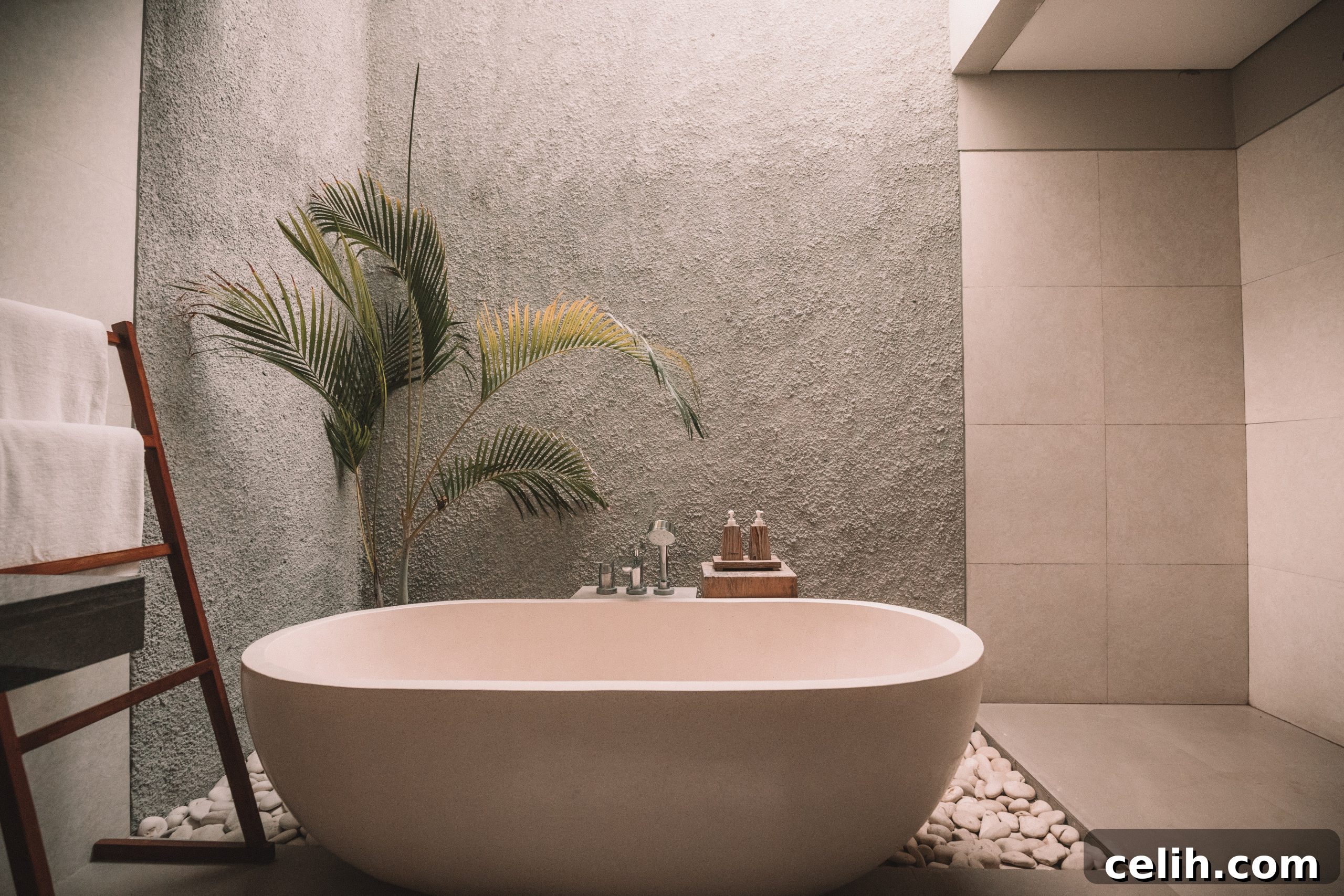
For bathrooms that boast ample square footage, a freestanding bathtub can serve as a breathtaking focal point, radiating sophistication and modern elegance. These tubs, celebrated for their sculptural beauty, are not bound by walls and can be placed anywhere in the bathroom where plumbing allows. Common lengths for freestanding tubs span a wide range, from compact 35-inch models to expansive 80-inch designs. Typical depths hover around 20-24 inches, and widths between 30-36 inches, though larger models can reach up to 59 inches wide. Their generous dimensions and deep soaking capabilities often make them a superb option for taller individuals seeking full immersion. However, it’s crucial to remember that freestanding tubs require significant clearance around all sides to truly shine and allow for easy cleaning, making them best suited for larger master bathrooms.
Drop-in Bathtub: Integrated Elegance
Similar to freestanding tubs in their space requirements, drop-in bathtubs demand considerable room due to their installation method. These tubs are designed to be “dropped into” a custom-built frame or deck, which then integrates seamlessly into your bathroom’s design. This construction often makes them appear as part of a larger structure, providing a very clean and integrated look. Standard drop-in tubs are typically around 60 inches in length, 14 to 20 inches in depth, and 30 to 32 inches wide. The key difference here is the additional deck or surround that houses the tub. This requires substantial space—often an extra 6 inches or more on all sides of the tub’s shell for the decking material. Therefore, only consider these extra-large bathtubs if your bathroom offers truly spacious dimensions to accommodate both the tub and its surrounding structure.
Whirlpool and Jetted Bathtubs: The Home Spa Experience
If your bathroom is generously proportioned and you desire a spa-like experience, a whirlpool or jetted bathtub might be the ultimate indulgence. These tubs are equipped with jets that circulate water or air, providing therapeutic massage benefits. Their shapes and sizes vary considerably, from standard rectangular models to more elaborate corner or even walk-in designs. Typically, whirlpool tubs are around 60 to 72 inches long, 18 to 26 inches high (with deep soaking options available), and 32 to 48 inches wide. Made frequently from durable acrylic, they offer a luxurious finish and are excellent for those seeking hydrotherapy. An added advantage of jetted tubs is their ability to maintain water temperature for extended periods, allowing for a more prolonged and relaxing bath experience, often exceeding an hour.
Soaking Tubs: Deeper Immersion, Often Smaller Footprint
While the table lists “Soaking Tub” with relatively compact dimensions (e.g., 40″ length, 32″ width), the defining characteristic of a true soaking tub is its depth. These tubs are designed for complete immersion, often allowing bathers to sit upright or in a reclined position with water covering their shoulders. They prioritize vertical depth over horizontal length, making them a fantastic option for those who want a deep, relaxing soak but might not have space for a sprawling tub. Soaking depths can easily reach 20-24 inches, and some even go up to 30-34 inches. This emphasis on depth means they can often fit into smaller footprints than a standard length tub while still delivering an exceptional bathing experience.
Undermount Bathtubs: Seamless Integration
Undermount tubs are conceptually similar to drop-in tubs but offer an even more streamlined aesthetic. Instead of dropping into an opening with the rim visible above the deck, undermount tubs are installed *beneath* a finished surface (like stone or tile), creating a seamless transition from the deck to the tub’s interior. This design choice often results in a very modern and clean look. Dimensions are generally comparable to drop-in tubs, ranging from 45-72 inches in length and 30-42 inches in width, with heights from 14-22 inches. They also require the construction of a custom deck or surround, meaning they need significant bathroom space, not just for the tub itself but for the extensive built-in structure.
Corner Tubs: Utilizing Awkward Spaces
Corner bathtubs are specifically designed to fit into a bathroom corner, making efficient use of what might otherwise be an underutilized or awkward space. These tubs are often larger and provide a spacious interior, sometimes even accommodating two people. They typically have equal side lengths that range from 48 to 72 inches, and heights from 18 to 24 inches. While they are space-efficient in terms of corner placement, their overall footprint can be quite substantial, so ensure your bathroom has enough open space for their unique shape.
Walk-in Tubs: Accessibility and Safety
Walk-in tubs are a specialized category, primarily designed for individuals with mobility challenges, the elderly, or those who simply prefer safer, easier access to bathing. They feature a watertight door that allows the bather to step in and out without lifting their legs over a high rim. These tubs are usually deeper than standard bathtubs to allow for a full body soak and often include features like grab bars, built-in seats, and hydrotherapy jets. Common dimensions are 48-60 inches in length, 28-36 inches in width, and a notable height of 30-40 inches. Their design prioritizes safety and accessibility over aesthetic flexibility, but many modern designs are quite stylish.
Oval and Hammock Tubs: Design-Forward Choices
Oval tubs are essentially a stylistic variation, often found in freestanding or drop-in configurations, offering softer lines and a more organic feel than their rectangular counterparts. Their dimensions vary widely, with common lengths around 55-72 inches, widths 30-45 inches, and heights 18-24 inches. Hammock tubs, on the other hand, are a niche, high-design product. Suspended from walls, they offer a truly unique, gravity-defying aesthetic. As bespoke pieces, their dimensions can vary significantly but are typically very long (8.5-9.8 feet) and wider than average (39-50 inches), demanding a grand, spacious bathroom for their installation.
Beyond Dimensions: Additional Factors for Your Bathtub Choice
While size is undoubtedly a primary concern, several other crucial factors should influence your final bathtub selection to ensure it meets all your needs and integrates seamlessly into your home.
- Bathtub Material: The material of your tub affects its durability, weight, heat retention, and price. Common options include:
- Acrylic: Lightweight, versatile in shape/color, good heat retention, prone to scratches.
- Cast Iron: Extremely durable, excellent heat retention, very heavy (may require floor reinforcement), expensive.
- Fiberglass: Lightweight, inexpensive, but less durable and poorer heat retention than acrylic.
- Stone Resin/Solid Surface: Luxurious, sleek, good heat retention, heavy, expensive.
- Copper/Stainless Steel: Niche, high-end options offering unique aesthetics and good heat conductivity.
- Style and Aesthetics: Your bathtub should complement the overall design theme of your bathroom. Modern, traditional, minimalist, or rustic – ensure the tub’s shape, color, and finish align with your desired aesthetic.
- Installation Requirements: Different tub types have varying installation complexities and costs. Freestanding tubs, while visually striking, may require floor-mounted plumbing. Drop-in and undermount tubs necessitate custom framing and decking. Walk-in tubs often need specialized plumbing and electrical connections. Consider whether professional installation is required and factor this into your budget.
- Floor Reinforcement: Heavy tubs, such as those made from cast iron or solid surface materials, especially when filled with water and a bather, can weigh hundreds or even over a thousand pounds. It is absolutely critical to verify that your bathroom floor joists can support this weight. Consulting a structural engineer or a qualified contractor is highly recommended for heavier installations to prevent structural damage.
- Budget: Bathtubs vary widely in price based on material, size, brand, and features (e.g., jets, air systems). Establish a realistic budget that includes the cost of the tub itself, delivery, installation, any necessary plumbing modifications, and potential floor reinforcement.
- Water Heater Capacity: A deep soaking tub can use a substantial amount of hot water. Ensure your home’s water heater has sufficient capacity to fill your chosen tub with adequately hot water, especially if it’s a very large model. You might need to consider upgrading your water heater.
Final Thoughts: Crafting Your Perfect Bathing Sanctuary
Choosing the ideal bathtub size for your bathroom might initially appear to be a formidable undertaking. However, by arming yourself with the correct information, meticulously considering critical factors, and understanding your personal preferences, this journey transforms from a daunting task into an exciting opportunity to customize your home. The right bathtub is more than just a functional fixture; it’s a personal retreat, a place of solace and rejuvenation.
By carefully measuring your available space, understanding the nuances of internal tub dimensions, exploring the various types of bathtubs and their typical sizes, and factoring in additional considerations such as material, style, and installation, you can confidently select a tub that truly meets your needs. This thoughtful approach will not only enhance the comfort and functionality of your bathroom but also significantly elevate its overall aesthetic appeal, making the most efficient and beautiful use of your available space. Take your time, weigh all the options, and choose the perfect bathtub size to create the ultimate bathing sanctuary you’ve always envisioned.