
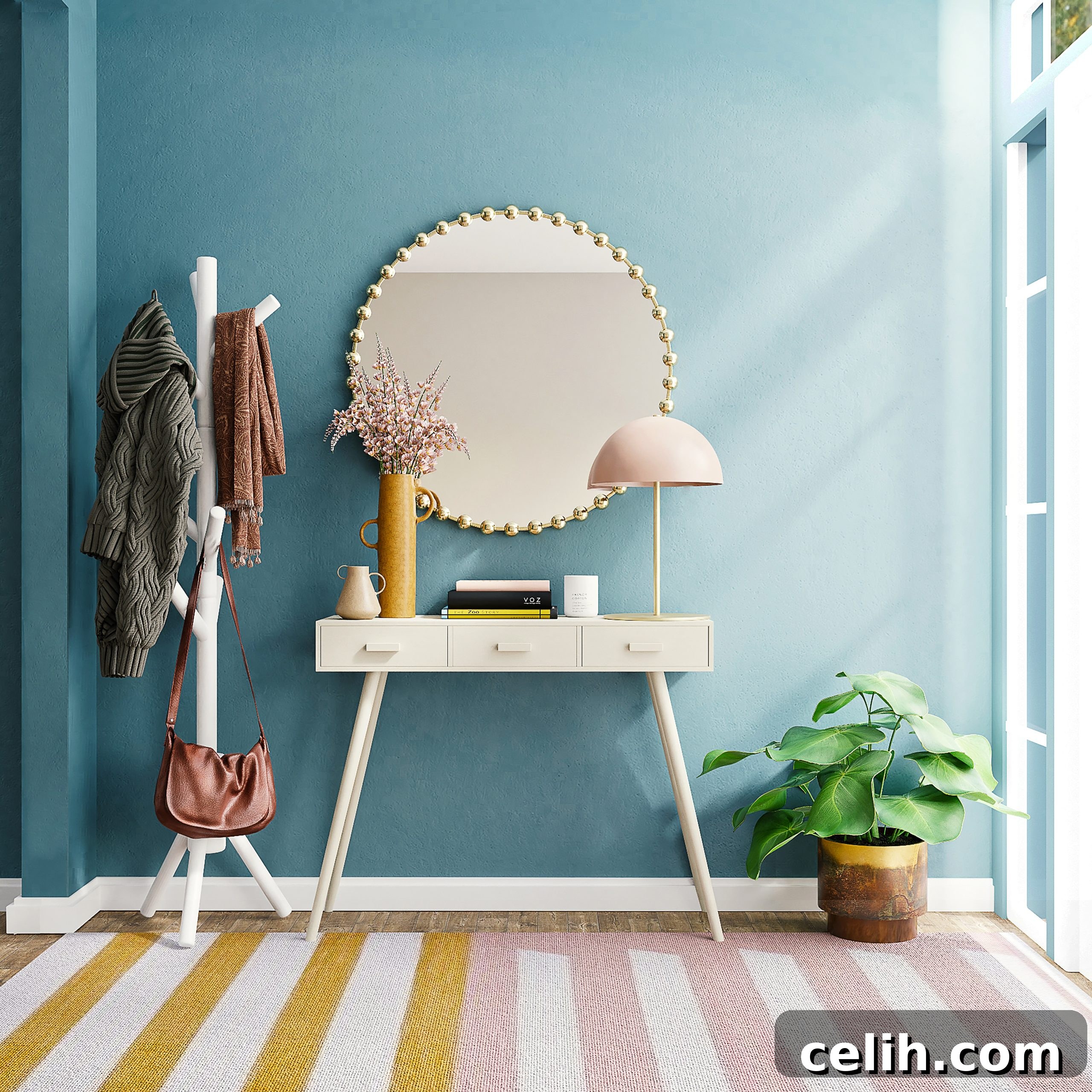
The entryway, often the first impression your home makes on guests and a daily transition point for residents, holds immense potential for design and functionality. Far from being just a passageway, this vital area can be transformed into a distinct and inviting space that sets the tone for your entire home. Whether it’s a grand foyer or a compact corridor, the entryway is a canvas waiting for your creative touch, capable of making a powerful statement about your style and hospitality.
Understanding the myriad possibilities to enhance your entryway is the first step towards realizing its full potential. Just like any other room in your home, thoughtful planning is essential, especially if you’re working with a specific budget or space constraints. By considering various design elements, from colors and lighting to furniture and decorative accents, you can craft an entryway that is not only beautiful but also highly functional, creating a seamless and welcoming transition into your living space.
Crafting a Welcoming Atmosphere: Interior Design Essentials for Your Entryway
At its heart, an entryway or hallway functions much like any other room in your home, meaning you can apply a wide range of interior design techniques to elevate its appearance and feel. Simple yet impactful changes can dramatically alter the ambiance of this crucial space. Consider a fresh coat of paint in a soothing hue or a vibrant wallpaper pattern to inject personality. Updating doorframes and skirting boards can also contribute to a polished and cohesive look. These fundamental adjustments lay the groundwork for a truly transformed entryway.
It’s crucial to remember that corridors and entryways serve as conduits for movement, guiding people from one area of your home to the next. This unique characteristic offers an exciting opportunity for creative expression. Unlike static living spaces, entryways allow for dynamic displays and intriguing stylistic choices that might feel overwhelming in a more permanent room. Think about creating a gallery wall that unfolds as one walks through, or selecting a bold color that makes a statement without dominating a seated area.
The entryway is an ideal space to experiment with interior design, allowing you to forge a unique style that captivates visitors from the moment they step inside. Don’t shy away from unconventional ideas or bold experiments. Whether it’s a unique flooring material, a striking accent wall, or an unexpected furniture piece, your creativity here can leave a lasting first impression, perfectly encapsulating the essence of your home’s character and your personal aesthetic.
When planning your entryway’s interior design, consider the overall flow and existing decor of your home. Should it seamlessly blend in, or stand out as a distinctive zone? Light colors, such as soft whites, creams, or pale grays, can make a small entryway feel more spacious and airy. For larger entryways, you might explore deeper tones or a sophisticated wallpaper with a subtle pattern to add depth and visual interest. Textural elements, from woven rugs to distressed wood accents, can also enrich the space, making it feel more inviting and layered. Remember, even small details like updated switch plates or elegant door handles can contribute significantly to the overall aesthetic, proving that thoughtful design extends to every corner of your home.
Illuminating Your Entryway: The Power of Strategic Lighting
Lighting is a fundamental element that can profoundly influence the mood and perception of any space, and the entryway is no exception. Whether your goal is to make the area feel more expansive, cozier, or simply more functional, both natural and artificial lighting play critical roles. Harnessing the benefits of each in a balanced way can transform a mundane entryway into a vibrant, welcoming zone.
A poorly lit hallway, especially during the darker hours, can feel unwelcoming, cramped, and even unsafe. Relying solely on natural light, which is often limited to specific windows and times of day, can leave your entryway feeling gloomy. Introducing effective artificial lighting instantly brightens the space, making it feel more appealing, easier to navigate, and generally more inviting. Consider layered lighting to achieve maximum impact: ambient lighting for overall illumination, task lighting for specific areas (like a console table), and accent lighting to highlight artwork or architectural features.
The choice of light temperature (warm vs. cool tones) also significantly impacts the atmosphere. Warmer tones, typically in the 2700K-3000K range, emit a soft, yellow glow that promotes comfort and coziness, ideal for creating a traditional or rustic feel. Conversely, cooler tones, often above 4000K, produce a crisp, blue-white light that can make a space feel modern, clean, and more expansive. Some homeowners opt for cool tones to give their entryway a sophisticated, gallery-like entrance into the rest of their home. Dimmable switches are a smart addition, allowing you to adjust the brightness and mood throughout the day or for different occasions.
Beyond ceiling fixtures, consider wall sconces to add both light and decorative flair without taking up floor space. Pendants or chandeliers can be striking focal points in taller entryways. For smaller spaces, flush-mount or semi-flush-mount fixtures offer ample light without visual clutter. If natural light is abundant, strategically placed mirrors can reflect and amplify it, making the entryway appear brighter and larger. Furthermore, consider smart lighting solutions that can be controlled via an app or voice command, allowing for effortless adjustment and even pre-set schedules to welcome you home.
Maximizing Space: The Art of Slim Furniture for Entryways
Many homeowners mistakenly believe that corridors and entryways must remain largely empty to facilitate movement. However, this overlooks the vast array of slim and space-efficient furniture designed specifically for narrower areas. Integrating the right pieces can significantly enhance a small entryway without obstructing flow, allowing you to maintain decorative appeal while adding practical value.
From elegant console tables to streamlined storage cupboards, these specialized furniture pieces can vastly improve the functionality and aesthetic of a corridor. A narrow console table can serve as a stylish surface for displaying decorative items, holding keys, or sorting mail, while a slim bench offers a convenient spot to sit down and put on or take off shoes. Consider benches with built-in storage to tuck away seasonal items or keep shoes out of sight. Wall-mounted shelving units are another excellent option, providing display or storage space without encroaching on the floor plan.
Beyond general furniture, there are numerous practical options that double as appealing decor. Stylish shoe racks can keep footwear organized and tidy, while an attractive coat rack or a series of decorative hooks can prevent clutter from accumulating. Choosing pieces with reflective surfaces or light colors can also contribute to making the space feel larger and brighter, enhancing the overall design effort. These elements not only serve a purpose but also contribute to the visual harmony of the entryway.
The key to successfully incorporating furniture into an entryway is thoughtful measurement and planning. You must ensure the space remains easily navigable and comfortable. Too much furniture, or pieces that are too deep, can quickly make the area feel cramped, hindering movement and undermining all your interior design efforts. Always measure the width of your entryway and select furniture that leaves ample room for passage. Consider multi-functional pieces that offer both storage and display capabilities, ensuring every item serves a purpose and contributes positively to the overall aesthetic and practicality of your welcoming space.
Personalizing Your Entryway: Artwork, Posters, and Decorative Accents
Since corridors and entryways must remain clear and easy to navigate, wall-mounted artwork is an exceptional way to infuse style and personality without sacrificing precious floor space. A thoughtfully curated collection of paintings, prints, or photographs can instantly make an entryway feel more inviting, cozier, and distinct, particularly beneficial in homes with limited square footage.
Many interior designers advocate for covering entryway walls with captivating art collages or large-format paintings. This approach creates an immersive visual experience, transforming an otherwise utilitarian space into a dynamic gallery. A wall filled with interesting designs and attractive art pieces can truly define the entire corridor, making a bold statement. This is an excellent option if you aim to inject significant style into an empty or underutilized space, drawing the eye and sparking conversation.
For those whose personal style leans away from traditional artwork, posters offer a fantastic alternative. Whether you choose framed band posters, captivating movie cover art prints, or travel-themed visuals, a well-arranged series of posters can be a brilliant way to showcase your interests and passions. This approach allows for a highly personalized and visually appealing representation of your favorite media, adding a unique character to your entryway that reflects who you are.
Beyond artwork, consider other decorative accents that can enhance your entryway’s appeal. A stylish mirror, perhaps with an ornate frame, not only serves as a last-minute check before leaving but also reflects light, making the space feel larger and brighter. Adding a vibrant area rug or a long runner can define the space, add warmth, protect your floors, and introduce pattern or color. Greenery, such as a tall potted plant in a corner or a small succulent arrangement on a console table, brings life and freshness. Finally, consider a decorative tray or bowl for keys and mail, and perhaps a subtle diffuser or scented candle to infuse a welcoming aroma, completing the sensory experience of your beautifully designed entryway.
Transformative Touch: General Home Improvement for Entryways
It’s easy to overlook the fact that an entryway is essentially another room in your home, and as such, it benefits from the same range of DIY home improvement options you might consider for a larger space. From a simple repaint to a complete flooring overhaul, these improvements can dramatically alter the look and feel of your entryway, transforming it into a true extension of your home’s style.
The critical consideration for entryway improvements is its typically smaller scale compared to other rooms. This necessitates careful planning to avoid overcrowding or overwhelming the space. While DIY projects can be exciting, it’s easy for enthusiasm to lead to overambitious plans. Approach changes slowly, meticulously planning each addition or alteration to ensure it enhances, rather than detracts from, the entryway’s functionality and aesthetic. For instance, instead of just painting, consider adding architectural interest with decorative molding or wainscoting. Swapping out standard doorknobs and hinges for more stylish options can also make a surprising difference.
Improving your entryway offers a rewarding opportunity to completely redefine the initial impression visitors form of your home. It elevates a space that, more often than not, remains entirely overlooked. Simple DIY tweaks, especially those that fundamentally change the visual and tactile experience of the entryway, can yield significant results. Imagine replacing worn-out flooring with durable, stylish tiles or a warm, inviting hardwood, or installing built-in shelving for a custom, streamlined look. These changes not only enhance aesthetics but can also add to your home’s overall value and appeal.
Don’t hesitate to seek inspiration online for DIY small entryway ideas. Platforms like Pinterest, Instagram, and design blogs are treasure troves of creative solutions. Gathering ideas from diverse sources can ignite your own creative thinking and provide a solid foundation for your project. However, remember that every home is unique. What works perfectly in one entryway might not suit yours. Take the time to assess your specific space, consider your lifestyle, and plan the best options tailored to your entryway’s dimensions, existing decor, and your personal taste.
Ultimately, there’s no single “perfect” way to overhaul an entryway. The journey involves thoughtful planning, creative execution, and a willingness to experiment. The most important outcome is that you are delighted with the final result, regardless of the effort invested. A well-designed entryway is not just a passage; it’s a statement, a welcome, and a reflection of the beautiful home that lies beyond.