
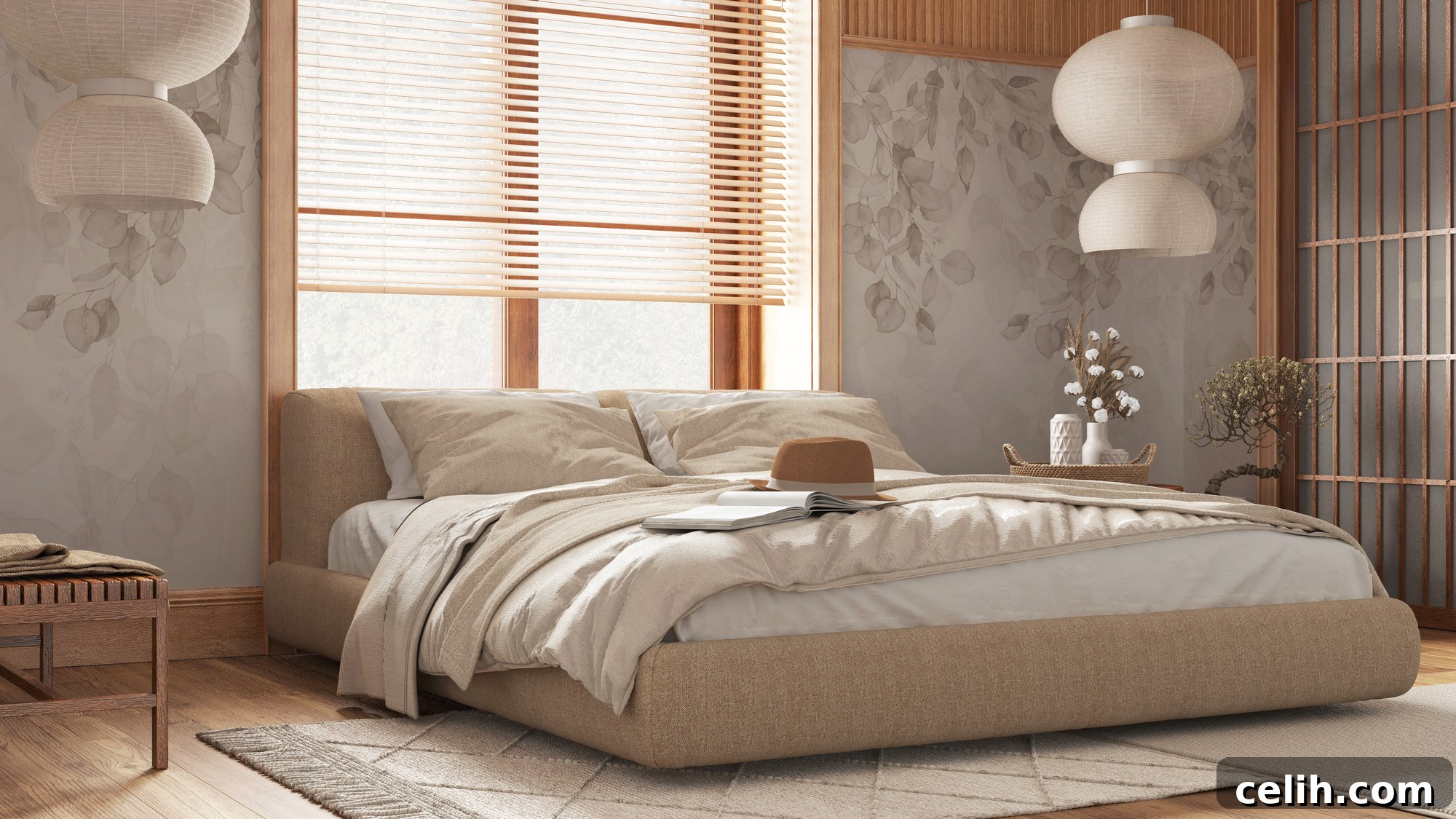
Imagine stepping into a bedroom that isn’t just a place to sleep, but a true personal sanctuary—a serene retreat thoughtfully designed to soothe your senses and calm your mind. Welcome to the world of Japandi, an elegant design philosophy that flawlessly marries the minimalist beauty of Japanese aesthetics with the cozy warmth and functionality of Scandinavian style. This unique blend has rapidly gained popularity as a leading interior style, offering more than just visual appeal; it promises a lifestyle of harmony, simplicity, and well-being.
The enduring appeal of Japandi in bedroom design stems from its remarkable ability to craft spaces that are both exquisitely beautiful and deeply comforting. This approach actively promotes rest and relaxation, qualities paramount for any bedroom environment. At its core, Japandi emphasizes functional simplicity and meticulously organized spaces, creating an atmosphere conducive to a stress-free sleeping experience. The careful selection of neutral colors and muted earthy tones ensures a warm, inviting ambiance without overwhelming the senses, fostering a peaceful backdrop for daily life.
Beyond its visual tranquility, Japandi style inherently champions sustainability and a profound connection with nature. It prominently features raw, natural materials, organic shapes, and diverse textures, all harmoniously combined to cultivate a pervasive sense of calm, balance, and holistic well-being. Unlike fleeting design trends that might feel dated within a few years, Japandi design is timeless. Its foundational principles ensure that your bedroom will maintain a contemporary, stylish, and welcoming look for decades to come, proving to be a truly sustainable investment in your home’s aesthetic and your personal comfort.
If you yearn for tranquility, harmony, and a profound sense of balance in your personal space—if you dream of a bedroom that offers a genuinely relaxing, cozy atmosphere perfect for unwinding and deep sleep—then continue reading. Discover the art of creating a Japandi design bedroom that you will not only love to relax in but will also serve as a constant source of peace and rejuvenation.
1. Understanding the Essence of Japandi Style
The name “Japandi” itself is a clever fusion, combining “Japanese” and “Scandinavian style.” This hybrid interior design style masterfully blends distinct elements from Japanese and Scandinavian philosophies, resulting in one of the most timeless and increasingly sought-after design trends of our era. Though relatively new as a named style, its principles resonate deeply, having gained immense popularity for its unique blend of simplicity, profound functionality, and an innate appreciation for natural aesthetics.
At its heart, Japandi aesthetics strive to strike a perfect harmonious balance between the Japanese “wabi-sabi” ideals and the Scandinavian “hygge” concepts. “Wabi-sabi” is a profound worldview that celebrates imperfection, transience, and the inherent beauty of natural processes and natural materials. It encourages finding beauty in the authentic, the worn, and the unique character that develops over time, rather than striving for flawless perfection. In contrast, “hygge” (pronounced ‘hoo-gah’) is a Danish and Norwegian concept embodying coziness, comfort, and convivial contentment, often associated with a feeling of warmth, well-being, and enjoying the simple pleasures of life.
In a Japandi style bedroom, these two seemingly distinct worlds coalesce seamlessly, creating an ambiance that exudes unparalleled serenity and elegant simplicity. From the Japanese perspective, we adopt the disciplined approach to minimalism, clean lines, and a deep respect for craftsmanship. From the Scandinavian side, we embrace comfort, warmth, and the creation of inviting, livable spaces. The result is a design that feels both grounded and light, sophisticated yet approachable, and ultimately, deeply calming for both the eye and the spirit. It’s about living thoughtfully, appreciating quality, and creating a personal oasis that nourishes the soul.
2. A Palette of Calmness: Choosing the Right Colours for Your Japandi Sanctuary
The thoughtful application of neutral colors plays a truly crucial role in defining the tranquil character of your Japandi style bedroom. The color scheme in Japandi interiors is typically muted, understated, and profoundly subdued, designed to evoke peace rather than excite. It primarily features a serene neutral palette, often anchored by warm whites, soft grays, and a rich array of earthy tones. Think natural beige, creamy off-whites, warm brown, and muted greens, such as sage or olive. These foundational hues create a calm and inviting backdrop, allowing the natural textures and forms within the room to take center stage.
To introduce subtle depth and visual interest without disrupting the calm, Japandi design often incorporates occasional accents in darker, grounding colors. Deep charcoal, sophisticated black, or a serene navy can be used sparingly for contrast, perhaps in a piece of minimalist furniture, a decorative vase, or subtle artwork. These darker tones provide an anchor, preventing the space from feeling washed out and adding a touch of modern elegance.
These muted shades are not just aesthetically pleasing; they evoke a profound sense of tranquility and serve as the perfect backdrop for the natural materials that are quintessential elements of this design style, such as various types of wood, bamboo, and natural stone. To truly embody the Japandi ethos, play with textural contrasts within your chosen neutral palette. Combine smooth, polished surfaces – like a sleek ceramic vase or a refined wooden bedside table – with rougher, more organic textures such as a woven jute rug, a linen throw, or a piece of handcrafted pottery. This interplay of textures adds tactile depth and visual interest, inviting closer inspection and enriching the sensory experience of your peaceful bedroom sanctuary.
3. The Zen of Minimalism: Thoughtful Furniture and Layout
Both Japanese and Scandinavian design philosophies deeply value minimalism, an approach that celebrates simplicity, essentialism, and functionality. Japandi interior spaces are distinctly characterized by their clean lines, uncluttered rooms, and an unwavering focus on practicality and purpose. In a Japandi bedroom, every single item is chosen with intention; it must serve a clear purpose and occupy a designated place, contributing to the overall sense of order and tranquility.
When making furniture choices for your bedroom, adopt the discerning eye of an interior designer. Seek out Japandi furniture pieces crafted from natural, high-quality materials, with a strong preference for authentic wooden furniture. The perfect blend for your Japandi bedroom involves items that showcase exceptional craftsmanship, boast clean, unadorned lines, and possess smooth, understated surfaces. A low-profile platform bed or a simple, elegant bed frame made from natural wood like oak, ash, or maple, is an iconic choice. This design choice is not only reminiscent of traditional Japanese style, promoting a grounded, serene sleeping experience, but also contributes to an open, airy feel in the room.
The cardinal rule is to keep the room meticulously clutter-free. This creates an easy flow of movement and fosters a profound sense of openness and spaciousness. This principle is particularly vital if you have a small bedroom, as small spaces can often feel stifling if overloaded. By embracing a “less is more” approach when arranging furniture, you ensure that each piece not only serves a functional purpose but also harmoniously contributes to the overall aesthetic and natural look of the space, enhancing its calm and expansive feel.
For larger rooms, consider innovative ways to define zones without building permanent walls. Room dividers, such as traditional Japanese shoji screens, can be an excellent choice. They offer a delicate way to delineate functional areas, perhaps separating a sleeping zone from a small reading nook or a meditation space, while still allowing light to filter through and maintaining a sense of openness and fluidity. This thoughtful division enhances both the functionality and the peaceful aesthetic of your Japandi sanctuary.
4. Natural Elements: Incorporating Solid Wood, Stone, and Organic Textures
A truly authentic Japandi style bedroom must make extensive and deliberate use of natural materials, as they are absolutely central to both Japanese and Scandinavian interior design philosophies. The goal is to artfully incorporate materials such as various types of wood, bamboo, rattan, linen, wool, and stone to infuse the space with inherent warmth, rich texture, and a profound connection to the natural world.
For instance, robust wooden bedroom furniture and Japandi bedside tables are ideal choices. Opt for pieces with a light or natural finish to maintain the airy and expansive ambiance that defines this style. When selecting furniture, prioritize timeless designs that will not quickly date. Investing in handmade pieces of minimalist furniture, crafted with precision and durability, ensures longevity and adds an irreplaceable sense of authenticity and character to your space. These pieces are not merely functional; they are statements of appreciation for natural beauty and skilled craftsmanship.
Beyond wood, integrate stone elements to add a grounding and tactile dimension. This could be as subtle as a collection of smooth, zen-like pebbles arranged on a minimalist shelf, a polished stone coaster, or more prominent features like a small stone sculpture or a natural stone tabletop. Other organic materials like woven seagrass or jute baskets, ceramic pottery with an earthy glaze, and even subtly textured concrete elements can further enrich the material palette. These diverse materials not only evoke a strong connection to nature and a sense of raw authenticity but also lend a rich tactile dimension to the space, inviting touch, contemplation, and a deeper appreciation for the beauty of the natural world.
5. Textiles and Soft Furnishings: A Harmonious Touch of Hygge
To exquisitely balance the disciplined minimalism inherent in Japanese design with the cozy, inviting distinct styles of Scandinavian interior design, it’s essential to introduce softness and warmth through meticulously selected textiles and soft furnishings. While aesthetics are undeniably important, the concept of comfort – a cornerstone of Scandinavian “hygge” – is paramount in a Japandi bedroom. These tactile elements are crucial for creating that sought-after sense of warmth and sanctuary.
Layer your bed with luxurious, plush bed linen made from natural fibers like organic cotton, linen, or hemp. These materials offer exceptional breathability and a beautiful, relaxed drape. Complement this with an abundance of comfortable pillows and cozy throws, perhaps in textured wool or a soft, chunky knit. Add accent cushions in natural fabrics like linen or subtle cotton, all within your chosen neutral and earthy color palette. The layering of these textiles adds depth, visual interest, and an undeniable invitation to sink in and relax.
Underfoot, introduce a touch of much-needed coziness with a soft, textured rug. Options made from natural fibers such as wool, jute, or sisal are perfect for grounding the space and adding a warm, organic element. Consider a flat-weave rug for a clean, minimalist feel, or a subtly textured pile rug for extra comfort. Traditional tatami mats can also be incorporated for an authentic Japanese touch, particularly if you desire a truly low-profile sleeping area. If space allows and aligns with your comfort preferences, floor cushions can further enhance the relaxed, informal atmosphere, inviting moments of calm reflection.
For window treatments, if desired, opt for curtains that are light and sheer. Materials like linen or a fine cotton blend allow ample natural light to filter through, accentuating the simple design, airy feel, and overall serenity of the room. The goal is to maintain privacy without sacrificing the precious natural light that brightens and invigorates the space, ensuring your Japandi bedroom remains a haven of tranquil illumination.
6. Thoughtful Accessories: The Art of Curation and Meaning
In a Japandi style bedroom, the adage “less is indeed more” takes on profound significance, especially when it comes to decor and bedroom accessories. The art lies not in accumulation, but in intentional curation, favoring items that celebrate exquisite craftsmanship, inherent beauty, and cultural significance. The philosophy here is squarely focused on quality over quantity, ensuring that every piece contributes meaningfully to the room’s overarching aesthetic and tranquil atmosphere.
When selecting accessories, consider items that resonate with both Japanese and Scandinavian sensibilities. Minimalistic artwork is key – look for pieces that feature clean lines, abstract forms, subtle nature-inspired motifs, or elegant ink wash designs. These types of art evoke a powerful feeling of tranquility and sophistication without overwhelming the visual field. Positioned strategically on a wall or a shelf, such pieces become focal points that stimulate calm reflection rather than distraction.
Embrace the beauty of nature through simple yet powerful elements. A small, carefully cultivated bonsai plant can add an exquisite touch of living art, embodying patience and natural balance. A simple, elegant vase holding a single branch or a few dried reeds can introduce organic texture and form. Handcrafted pottery, particularly pieces with slight imperfections or a rustic finish, beautifully aligns with the wabi-sabi principle, adding character and warmth. Bamboo accessories, such as a delicate tray or a minimalist storage box, integrate seamlessly with the natural material palette.
Remember, every single piece you introduce should be meaningful and contribute directly to the sense of balance, calm, and tranquility you aim to achieve. Before adding an item, ask yourself if it genuinely enhances the space or if it merely fills a void. If an accessory is not deemed an essential element, if it doesn’t spark joy, or if it doesn’t serve a clear purpose, then it’s best to omit it. This disciplined approach ensures that your Japandi bedroom remains a sanctuary of peace, where every object holds a purpose and tells a story.
7. Lighting: Balancing Ambiance, Functionality, and Natural Glow
Lighting is an absolutely crucial element in setting the desired mood and defining the character of your Japandi style bedroom. Ideally, the lighting scheme should offer a warm, soft, and diffused glow that promotes relaxation and intimacy. A fundamental aspect of Japandi lighting is the strategic maximization of natural light from large windows during the day. Allowing ample daylight to flood the space creates an inherently bright, airy, and invigorating atmosphere, fostering a direct connection to the outdoors.
For artificial lighting, the approach is multi-layered, incorporating both ambient light fixtures and specific task lighting to create a multifaceted and adaptable atmosphere. Ambient lighting provides the overall illumination for the room, creating a foundational glow. Traditional Japanese paper lanterns, with their soft, diffused light, are iconic choices that immediately evoke a sense of calm and cultural authenticity. Alternatively, simple, elegant pendant lights or sleek wall sconces, perhaps crafted from natural materials like wood or frosted glass, can serve as understated statement pieces, contributing to the room’s aesthetic while providing gentle illumination.
Task lighting is essential for specific activities such as reading or working. Adjustable reading lamps by the bedside, with minimalist designs and warm-toned bulbs, offer focused functionality without compromising the room’s tranquil style. These can be floor lamps, table lamps, or even wall-mounted fixtures that pivot, directing light precisely where needed. To further enhance the coziness factor and provide ultimate control over the mood, incorporate dimmer switches for all artificial lights. Soft, warm-toned light bulbs (typically 2700K to 3000K) should be used throughout, as their gentle glow contributes significantly to the peaceful and inviting ambiance characteristic of a Japandi bedroom. The aim is to create a lighting scheme that is both functional and deeply atmospheric, adaptable for any time of day or mood.
8. Declutter and Simplify: The Art of Seamless Storage
Maintaining the serene and uncluttered ambiance of a Japandi style bedroom is absolutely paramount, and this requires intelligent, effective storage solutions. A clean, visually calm, and clutter-free space is not merely aesthetically pleasing; it is fundamental to fostering mental peace and promoting relaxation. Investing in minimalist and smart storage solutions is key, ensuring that these elements seamlessly integrate with the room’s design rather than standing out as intrusive additions.
Consider the installation of built-in closets or custom cabinetry that blends flawlessly with the walls, offering generous storage space without consuming precious floor area or disrupting the clean lines of the room. Under-bed storage solutions, such as drawers or lift-up platforms, are also excellent for discreetly stowing away linens, seasonal clothing, or other personal belongings, keeping them out of sight and maintaining the room’s open feel. Additionally, selecting furniture pieces that offer hidden storage, like an ottoman with a removable lid or a coffee table with internal compartments, can further contribute to a tidy environment without adding visual weight.
The core principle is that every item should have a designated place, and nothing should be left exposed that isn’t intentionally part of the decor. Utilize woven baskets made from natural fibers like rattan or seagrass for organizing smaller items on open shelves or tucked away in corners. Closed shelving units or elegant minimalist dressers are preferable to open shelving, as they help to conceal potential clutter. Remember, clutter disrupts the visual harmony and the sense of calm that is central to the Japandi aesthetic, creating mental noise. By thoughtfully incorporating smart storage, you ensure your bedroom remains a pristine, tranquil haven where everything has its place and peace of mind can truly flourish.
9. Remembering Wabi-Sabi: Embracing the Beauty of Imperfection
When you are thoughtfully conceptualizing and bringing your Japandi bedroom ideas to life, it is absolutely crucial not to overlook the profound and guiding concept of Wabi-Sabi. This Japanese aesthetic principle, which celebrates imperfection, transience, and the inherent beauty of natural processes, is a cornerstone of the Japandi style. Japandi decor thrives on the recognition and appreciation of the beauty found in the imperfect, the impermanent, and the incomplete. Therefore, release the pressure to orchestrate every design element to flawless perfection; instead, embrace authenticity and character.
Wabi-Sabi encourages you to appreciate the unique qualities of handcrafted items, acknowledging that slight irregularities, uneven textures, or natural wear and tear are not flaws but rather marks of individuality and authenticity. Think of a ceramic vase with an imperfect glaze, a piece of reclaimed wood furniture with its natural grain and knots prominently displayed, or a linen throw that has softened and slightly creased over time. These elements tell a story and add a soulful depth that sterile perfection cannot achieve. It’s about finding charm in the humble and valuing the passage of time as it leaves its subtle imprint on objects.
A key manifestation of Wabi-Sabi in design is the embrace of asymmetry in your layout and decor. Unlike rigidly symmetrical arrangements which can feel static and formal, asymmetrical compositions feel more natural, organic, and less contrived. This is a fundamental principle in traditional Japanese interiors, reflecting the natural world where perfect symmetry is rare. For instance, instead of two identical bedside lamps, consider a single, striking floor lamp on one side and a smaller, distinct table lamp or a carefully curated plant on the other. Arrange decorative objects in odd numbers or in groupings that are visually balanced but not mirrored. This approach creates a dynamic yet harmonious flow, inviting the eye to move thoughtfully through the space and fostering a sense of natural ease and balance rather than rigid order.
10. Relax and Unwind: Your Personal Japandi Retreat
Finally, once your vision for a Japandi bedroom is beautifully complete, the most important step is to truly immerse yourself in and enjoy the serene space you have meticulously created. After the careful selection of colors, furniture, textures, and lighting, it’s time to fully embrace the calming atmosphere and the profound sense of peace that your new bedroom offers. Step into your personal sanctuary at the end of a long day, leave the stresses of the outside world behind, and allow yourself to relax and unwind in this meticulously crafted haven. This great space is designed not just for sleep, but for mindful living, offering a constant invitation to slow down, reflect, and rejuvenate your mind, body, and soul.
Final Thoughts: Cultivating a Timeless Sanctuary
Designing the perfect Japandi style bedroom is an inspiring journey centered on finding a delicate yet powerful balance – between the stark simplicity of Japanese aesthetics and the inherent warmth of Scandinavian comfort, between modern lines and rustic textures, and between elegant sophistication and inviting coziness. It’s a style that transcends mere visual appeal; it fundamentally fosters a deep sense of tranquility, peace, and holistic well-being within your most personal space.
In creating a Japandi style bedroom, you embark on a design journey that passionately celebrates the beauty of simplicity, authenticity, and impeccable balance. By embracing the core principles of both Japanese minimalism and Scandinavian “hygge” – from mindful material selection to thoughtful arrangement – you craft a space that is not only visually stunning but also a profound sanctuary of serenity and tranquility. As you curate each element with meticulous care and deep thoughtfulness, your Japandi style bedroom becomes an eloquent reflection of your appreciation for the art of harmonious living. By following our comprehensive guidance, you can transform your bedroom into a minimalist haven that consistently soothes the soul, clears the mind, and offers a timeless retreat from the demands of the modern world.
For more in our Japandi decor series, check out:
How to Create a Japandi Home Office Decor Style
Best Japandi Wallpaper Ideas For Calming Home Decor