
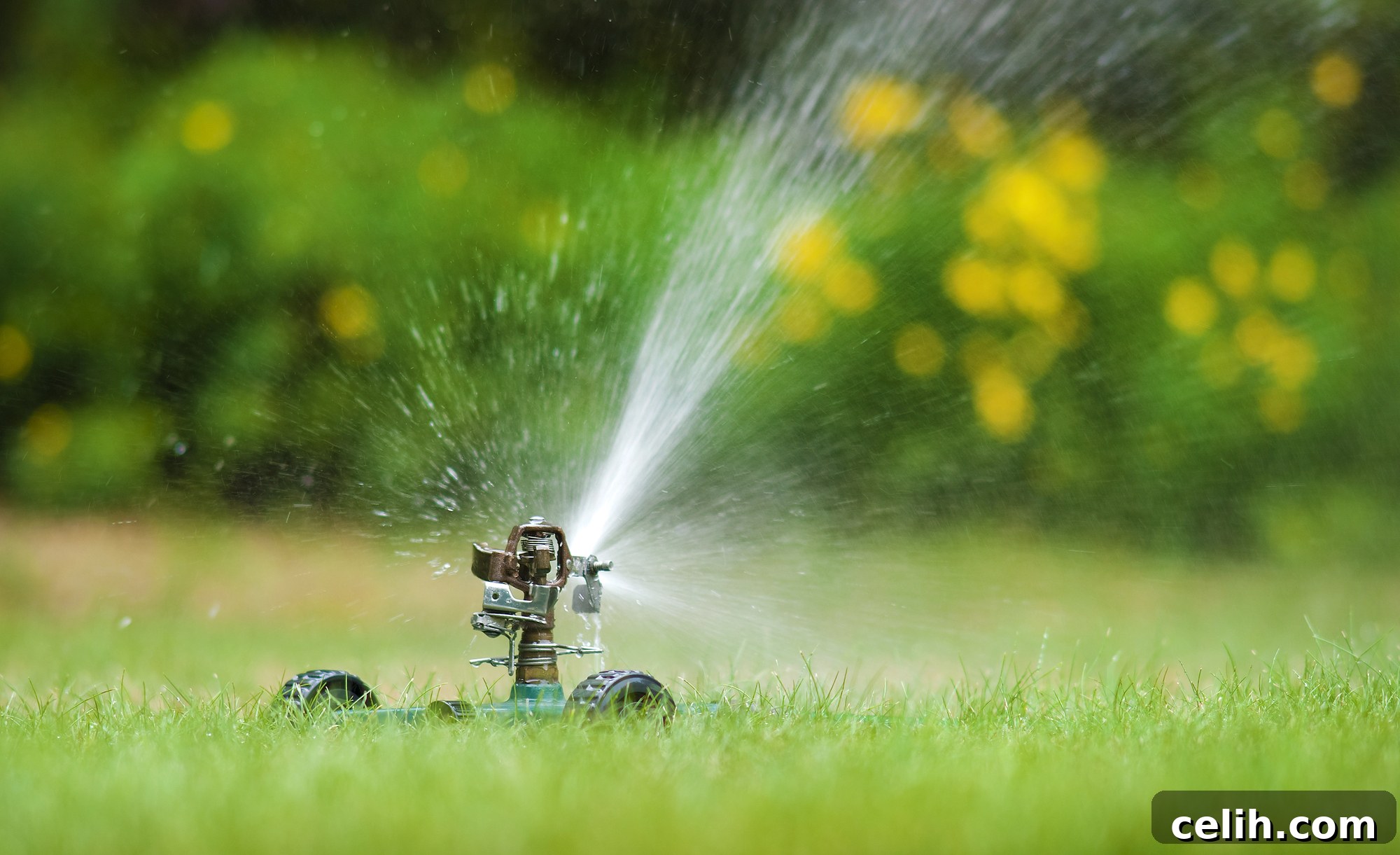
When it comes to nurturing a thriving outdoor space, the temptation to simplify irrigation often leads to a common misconception: if water is visibly spraying, the job is done. Many homeowners rely on a basic setup – a few sprinkler heads, a simple timer, and a weekly schedule – believing it to be a perfectly adequate solution. For those with perfectly flat, uncomplicated lawns and minimal planting, this straightforward approach might indeed suffice, providing just enough coverage to keep things green.
However, the reality of most properties is far from straightforward. Modern landscapes frequently feature a tapestry of diverse elements: undulating or sloping terrain, secluded shaded nooks, thirsty garden beds, newly planted trees requiring specific care, or a blend of traditional turf and intricate decorative plantings. Each of these elements places unique and often conflicting demands on a watering system. What might be acceptable for a simple rectangular lawn quickly falls short when your outdoor environment boasts varying levels, complex contours, and a rich diversity of plant life. In such cases, relying on a basic, indiscriminate watering system doesn’t just underperform; it actively creates problems, leading to unsightly dry patches, excessive water waste, stressed and unhealthy plants, and persistent frustration for the homeowner.
Is Your Current Irrigation System Failing to Keep Up? Here’s How to Tell.
The first and most obvious indicator that your irrigation system is inadequate is the appearance of ‘dead spots’ or inconsistent growth. These are the persistent brown, parched areas that remain stubbornly dry and lifeless, regardless of how frequently your sprinklers operate. They often appear at the edges of garden beds where spray coverage is insufficient, or in awkward corners and narrow strips that the system simply cannot reach effectively. Conversely, you might notice areas that are perpetually waterlogged, turning into muddy swamps even days or weeks after the last rainfall. These oversaturated zones drown plants, promoting root rot and creating breeding grounds for pests, starkly highlighting uneven water distribution.
Sloping terrain presents significant challenges for conventional irrigation. Water naturally follows gravity, flowing rapidly downhill rather than uniformly seeping into the soil. This often results in the top of a slope remaining desiccated and dry, while the bottom becomes a boggy, oversaturated mess. A flat yard with good drainage might tolerate basic sprinkler coverage, but once elevation changes are introduced, standard spray heads are simply incapable of delivering water efficiently or evenly, leading to wasted resources and unhealthy landscapes.
Plant diversity further complicates watering requirements. If your entire yard consists solely of turfgrass, then a relatively uniform watering pattern might suffice. However, most modern landscapes incorporate a rich mix of vegetable gardens, vibrant flower beds, drought-tolerant bushes, and towering trees. Each of these plant types has distinct water needs – some require more frequent, shallow watering, while others thrive with less frequent, deeper irrigation. A basic system, designed for uniformity, struggles to accommodate these varied requirements, leading to either underwatered sensitive plants or overwatered robust ones. This necessitates the creation of distinct irrigation zones, a capability beyond simple systems, to ensure every plant receives its ideal hydration.
Natural terrain and established features also exacerbate the need for more sophisticated irrigation solutions. Majestic, mature trees, for example, introduce multiple challenges. Their expansive root systems aggressively compete for moisture, often drawing water away from nearby grass and smaller plantings. Furthermore, their dense canopies can effectively block rainfall and overhead sprinkler coverage, creating ‘rain shadows’ that leave the ground beneath parched. Similarly, naturally shaded areas, which require significantly less water due to reduced evaporation, are often treated identically to sun-drenched zones by basic systems, leading to unnecessary overwatering and potential plant stress in cooler spots.
The presence of hardscaping elements like patios, walkways, and driveways further complicates effective irrigation design. These impermeable surfaces obstruct the natural path of water, causing it to run off into areas that don’t need it, or preventing it from reaching the intended landscape areas just beyond. Traditional sprinkler systems, often designed for expansive, open lawns, struggle to adapt to these barriers, resulting in wasted water, missed spots, and inefficient coverage.
Even the shape of your property can be a determinant. Narrow side yards, curved pathways, and oddly shaped planting sections pose significant obstacles for standard rotary sprinkler heads. These heads are designed to throw water in wide arcs, ideal for large, open rectangular areas. However, when applied to irregular or confined spaces, they waste vast amounts of water by spraying onto hard surfaces, over-watering unintended areas, or simply failing to reach specific corners and strips that desperately need specialized, precise coverage that basic systems are unable to provide.
What Advanced Irrigation Systems Offer for Optimal Landscape Health and Efficiency
Advanced irrigation systems introduce technologies and design principles that fundamentally transform how landscapes are watered, moving beyond rudimentary saturation to precise, efficient delivery. One of the most impactful solutions is drip irrigation. Far superior for specific planting areas than traditional spray heads, drip lines run directly to the base of individual plants, trees, or bushes. Water is slowly and precisely emitted, directly feeding the root zone. This method dramatically reduces water loss from runoff and evaporation, ensuring critical roots receive consistent moisture. Garden beds, shrub borders, and tree perimeters thrive with this targeted approach, especially when they are nestled between lawn areas that require different watering strategies. Drip systems are cornerstones of water conservation and plant health in diverse landscapes.
The integration of smart irrigation controls represents another leap forward in efficiency and convenience. These intelligent controllers go beyond simple timers, dynamically adjusting watering patterns based on real-time weather conditions, historical climate data, precise soil moisture levels, and the specific time of year. This eliminates the need for constant manual adjustments and guesswork by the homeowner. Properties with complex landscaping or persistent problematic areas benefit immensely from automatic adjustments, preventing both drought stress and costly overwatering damage. While basic systems continue their rigid schedules regardless of external factors, smart systems ensure your landscape receives exactly what it needs, precisely when it needs it, maximizing plant health and minimizing waste.
Effective zone modification is absolutely imperative when different areas of a property have distinct hydration requirements. Professional irrigation companies excel at designing and implementing these custom zones. They differentiate watering schemes based on factors such as sun exposure (or lack thereof), soil type, drainage capabilities, and the specific needs of various plant species. This tailored approach goes far beyond what basic systems, often constrained by existing plumbing or ease of installation, can offer. Proper zoning ensures that thirsty plants get ample water, while drought-tolerant species are not overwatered, creating a balanced and healthy ecosystem across the entire property.
While the initial cost of basic irrigation systems may appear lower, a closer look at long-term expenses reveals a different story. Standard systems often incur significant hidden costs over time. Each season, homeowners might find themselves replacing dead or struggling plants that should have thrived. Soggy sections can become persistent breeding grounds for mosquitoes and other pests, requiring further intervention. To compensate for poor coverage, basic systems are often run for longer durations or more frequently, leading to substantially higher water bills. These ongoing expenses, coupled with the frustration of managing an underperforming system, quickly erode any initial savings, making the upfront investment in a superior system a more financially sound decision in the long run.
Beyond the financial burden, water waste becomes a significant monthly bill issue with inefficient irrigation. Systems that cannot adequately deliver water where it’s needed are often operated for much longer periods in a futile attempt to compensate for their shortcomings. This excessive run-time, unfortunately, only leads to more runoff and evaporation, failing to solve the problem while escalating water consumption. Studies indicate that at least 30-40% of properties with slopes, unique planting schemes, or irregular layouts waste a considerable amount of water, both physically and monetarily, because their distribution relies too heavily on inefficient methods and suffers from excessive runoff. This not only impacts your wallet but also has a measurable environmental cost.
Furthermore, attempting to upgrade a basic system later down the line often proves more costly and disruptive than installing a proper, advanced system from the outset. Adding new zones, integrating drip lines, or incorporating smart controls into an already established, rudimentary system typically requires extensive trenching through existing landscaping, installing additional piping, and retrofitting components. This process is generally more complex, labor-intensive, and expensive than incorporating these features during the initial installation or before significant problems emerge. The wisdom of “doing it right the first time” truly applies to modern irrigation design.
When is It Time to Make the Decision to Upgrade Your Irrigation?
Recognizing the need for a more advanced irrigation system often comes down to observing consistent and widespread signs of distress across your landscape. It’s rarely just one isolated brown spot or a single corner that’s slightly damp. If you notice several recurring issues – such as persistently dry patches, perpetually soggy areas, stressed plants, or uneven growth – even after attempting various adjustments to run times and schedules, it’s a strong indication that your current system genuinely cannot meet the unique demands of your property. While some simpler landscapes might manage with basic setups, yours likely requires a more tailored approach.
Moreover, the size and complexity of your property are key determinants. If your outdoor space is larger and more intricate than average – for instance, extending beyond a quarter-acre to two acres or more, featuring extensive gardens, significant slopes, mature trees, and diverse planting schemes – it is far more likely to struggle without the precision and specialized improvements that only advanced irrigation systems can provide. These sophisticated systems are designed to maintain optimal conditions across varied landscapes, preventing the constant cycle of troubleshooting and problem-solving that often plagues homeowners with inadequate setups season after season.
Most homeowners will inherently recognize when their basic irrigation setup is no longer sufficient. This realization often dawns after countless hours spent tinkering with timers, constantly adjusting schedules for a specific plant requiring more sun, only to find another plant nearby suffering from overwatering, or making time adjustments for one section only to see another consistently failing. If you find yourself repeatedly replacing plants that are expected to thrive, while others with optimized systems simply coast along without corrections, chances are you need advanced coverage options. These systems are specifically designed to proactively solve complex watering problems rather than merely managing their symptoms, offering true peace of mind and promoting a flourishing landscape.
Final Thoughts on Optimizing Your Landscape Irrigation
Ultimately, a well-designed sprinkler system should enhance your life, not add another chore to your already busy schedule. If you frequently find yourself battling dry, parched patches in one area and perpetually soggy, problematic spots in another, or if you are constantly adjusting timers and schedules, these are clear indicators that your current system is simply not suited to the unique layout and diverse needs of your property. Landscapes are dynamic and evolve over time; what might have sufficed for a simple, flat lawn often proves entirely inadequate once slopes, mature trees, intricate borders, and varied mixed plantings come into play, each demanding a specific and precise approach to hydration.
Upgrading to a more tailored and intelligent irrigation setup – whether through the implementation of additional, specialized zones, the efficiency of drip irrigation, or the automation offered by smart controls – is not merely a luxury; it is a vital investment in long-term efficiency, water conservation, and the enduring health of your landscape. Such an upgrade protects your valuable plants from both drought and overwatering, significantly reduces costly water waste, and brings a harmonious balance back to your entire outdoor space. When your irrigation system is meticulously designed around the specific contours and botanical needs of your landscape, rather than forcing the landscape to adapt to a rigid, generic system, everything simply functions better, creating a vibrant, sustainable, and effortlessly beautiful environment.