
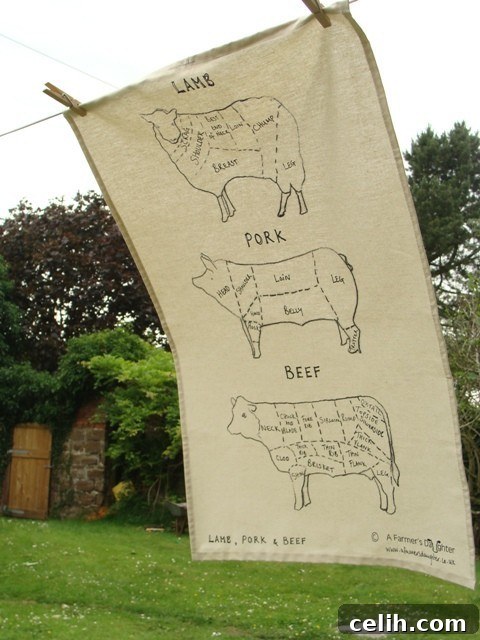
Understanding the various cuts of meat can often feel like deciphering a secret code. For many home cooks, selecting the right cut for a specific dish, or even knowing what to ask for at the butcher’s counter, remains a mystery. However, unlocking this knowledge is far simpler than you might imagine, and the rewards – from perfectly cooked meals to smart savings – are immense. Imagine having a handy visual guide to demystify the art of butchery, turning every meal into a culinary success. Something as simple as an educational tea towel can serve as a surprisingly effective starting point, transforming your kitchen into a learning hub.
Why Mastering Meat Cuts Matters for Every Home Cook
Delving into the world of meat cuts isn’t just for professional chefs; it’s an essential skill for anyone who enjoys cooking and eating well. Knowing your cuts allows you to make informed decisions that impact flavour, texture, cooking time, and even your grocery budget. When you understand where a piece of meat comes from on the animal, you gain insight into its tenderness, fat content, and ideal cooking methods. This knowledge empowers you to choose the perfect cut for a slow-cooked stew, a quick weeknight stir-fry, or an impressive holiday roast, ensuring delicious results every time.
Beyond the Basics: Enhancing Your Culinary Skills
The journey of learning about meat cuts extends beyond merely identifying them. It’s about appreciating the unique characteristics of each piece. For example, a cut rich in collagen, like a beef chuck, will transform into a succulent, fall-apart tender dish when slow-braised, whereas a lean, tender cut like a pork tenderloin is best suited for quick searing or roasting to prevent it from drying out. This deeper understanding prevents common cooking pitfalls and opens up a world of culinary possibilities, allowing you to experiment with confidence and achieve consistent perfection in your dishes.
A Comprehensive Guide to Popular Meat Cuts
Let’s explore some of the most common and versatile meat cuts from lamb, pork, and beef, providing you with the essential knowledge to navigate your next visit to the butcher or grocery store. Understanding these fundamental distinctions will not only improve your cooking but also your appreciation for the art of butchery.
Beef Cuts: From Robust Roasts to Tender Steaks
Beef offers an incredible array of cuts, each with its own distinct flavour profile and best use. Knowing the difference between a tough but flavourful cut and a tender, quick-cooking one is key to culinary success.
- Chuck: Originating from the shoulder and neck, chuck cuts are known for their rich flavour and high collagen content. Ideal for slow cooking methods like stewing, braising, or pot roasts, these cuts break down beautifully over time, yielding incredibly tender results. Ground chuck is also a popular choice for burgers due to its good fat-to-lean ratio.
- Brisket: Taken from the breast area, brisket is a tough cut with a distinctive layer of fat. It’s a staple for barbecue, corned beef, and pastrami. Long, slow cooking methods, often involving smoking or braising, are essential to tenderize brisket and unlock its deep, savoury flavour.
- Rib: This section is home to some of the most prized cuts, including ribeye steaks and prime rib roasts. Known for their tenderness, marbling, and intense beefy flavour, rib cuts are excellent for grilling, pan-searing, and roasting. The marbling contributes to their juiciness and rich taste.
- Loin (Short Loin & Sirloin): The loin area yields many popular steaks. The short loin gives us T-bone and Porterhouse steaks (which include both tenderloin and strip steak), while the sirloin offers cuts like top sirloin and bottom sirloin. These cuts are generally tender and versatile, perfect for grilling, pan-frying, or broiling.
- Tenderloin (Fillet): As its name suggests, the tenderloin is the most tender cut of beef, located along the animal’s spine. It’s very lean and has a buttery texture, making it ideal for quick cooking methods like grilling or pan-searing, often prepared as filet mignon. Due to its tenderness, it’s also one of the most expensive cuts.
- Round: Sourced from the hind leg, round cuts (like top round, bottom round, and eye of round) are lean and less tender. They are best suited for roasting, stewing, or thinly slicing for deli meats. Marinating or slow cooking can help tenderize these cuts and bring out their flavour.
- Flank & Skirt: These flat, fibrous cuts come from the abdominal area. While naturally tough, they are incredibly flavourful. Flank and skirt steaks benefit greatly from marinating and quick grilling or broiling. They are best served thinly sliced against the grain to maximize tenderness and are popular choices for fajitas and stir-fries.
Pork Cuts: Versatility for Every Palate
Pork is celebrated for its versatility, offering cuts that range from lean and delicate to rich and succulent. Understanding these variations will help you create a wide range of delicious dishes.
- Shoulder (Boston Butt & Picnic Shoulder): The pork shoulder is a workhorse cut, rich in connective tissue and fat, making it incredibly flavourful. The Boston Butt (often mislabeled as from the rear, but actually the upper part of the front shoulder) is perfect for pulled pork, roasts, and stews. The Picnic Shoulder, located lower on the front leg, is also good for slow cooking and often used for ground pork or sausages.
- Loin: The pork loin is a very lean and tender cut, frequently sold as a boneless roast, bone-in chops, or tenderloin. Pork loin roasts are great for oven roasting, while chops are ideal for grilling, pan-frying, or broiling. It’s important not to overcook loin cuts to maintain their moisture and tenderness.
- Belly: This is a highly prized cut, famed for its rich fat content and incredible flavour. Pork belly is the source of bacon when cured and smoked, but it can also be slow-roasted, braised, or grilled to create crispy, melt-in-your-mouth dishes. Its fattiness provides immense flavour and tenderness.
- Ribs (Spare Ribs & Baby Back Ribs): Pork ribs are a barbecue favourite. Spare ribs, from the belly section, are larger and meatier, while baby back ribs, from the loin section, are smaller and leaner. Both are fantastic when slow-cooked, smoked, or grilled, often basted with savoury sauces until tender and fall-off-the-bone delicious.
- Ham (Leg): The pork leg is typically used to produce cured and smoked hams, a holiday staple. Fresh ham, however, can also be roasted. It’s a lean to moderately fatty cut that offers a substantial meal, and different preparations can yield vastly different flavour experiences.
- Tenderloin: Similar to beef tenderloin, pork tenderloin is the leanest and most tender cut of pork. Its delicate flavour and quick cooking time make it ideal for fast preparations like searing, stir-frying, or roasting whole. It pairs well with a variety of marinades and sauces.
Lamb Cuts: Aromatic and Distinctive Flavours
Lamb offers a distinctive, often aromatic flavour that stands out among other meats. Understanding its cuts helps you appreciate its unique characteristics and prepare it to perfection.
- Shoulder: Lamb shoulder is a versatile cut, rich in flavour and connective tissue. It’s excellent for slow roasting, stewing, or dicing for curries, as the slow cooking breaks down the fibres, resulting in tender, succulent meat. It can also be deboned and stuffed for a more elaborate roast.
- Rack (Rib): A lamb rack is often considered one of the most elegant cuts, typically served as a ‘rack of lamb’ or individual ‘lamb chops.’ These cuts are incredibly tender and flavourful, perfect for roasting whole or grilling/pan-frying individual chops. They cook relatively quickly and are ideal for special occasions.
- Loin: Lamb loin offers very tender and lean meat, often prepared as loin chops or a boneless loin roast. Loin chops are quick to cook on the grill or in a pan, while a loin roast provides a beautiful, centrepiece meal. Like other tender cuts, it benefits from quick cooking to prevent dryness.
- Leg: The leg of lamb is a large, lean cut, often roasted whole for holiday gatherings. It can be sold bone-in or boneless, and its mild flavour makes it incredibly versatile, pairing well with a range of herbs and spices. It’s also suitable for slicing into steaks for grilling or pan-frying.
- Shank: Lamb shanks, from the lower part of the leg, are highly prized for their deep flavour and high collagen content. They require long, slow, moist cooking methods like braising, which transforms the tough connective tissue into gelatin, yielding incredibly tender, fall-off-the-bone meat and a rich sauce.
Your Culinary Compass: Tools for Learning Meat Cuts
While hands-on experience and conversations with your butcher are invaluable, visual aids can significantly accelerate your learning process. This is where educational tools truly shine, providing a constant reference right in your kitchen.
For instance, an effective tool for learning about meat cuts, covering lamb, pork, and beef, would feature clear, illustrative diagrams of which meat cuts come from where. Such a visual guide helps demystify the animal anatomy and directly connects the cut to its origin, aiding recall and practical application. Imagine a practical and aesthetically pleasing item that is always within reach.
A beautifully designed tool, such as this meat cuts tea towel, can serve as a constant, subtle reminder and reference point in your kitchen. Designed by a British designer and made from natural, unbleached cotton, it’s not just an informative guide but also a stylish and practical addition to your home. Such an item, combining education with everyday utility, costs £8.50 and can be purchased directly from Lily and Lime, making the journey to meat-cut mastery both enjoyable and accessible.
Conclusion: Embrace the Journey of Meat Mastery
Embarking on the journey to understand meat cuts is a rewarding endeavour that will profoundly enhance your cooking. From choosing the perfect cut for a specific recipe to maximizing flavour and minimizing waste, this knowledge empowers you in the kitchen. No longer will you feel overwhelmed at the butcher’s counter or confused by recipe instructions. Instead, you’ll approach meat preparation with confidence, creativity, and a deeper appreciation for the culinary art. So, take the first step, whether it’s by exploring new cuts, asking questions, or simply keeping a handy reference nearby. Your taste buds, and your guests, will thank you.