
Every home tells a story, and the best ones are those that authentically reflect the personalities and lifestyles of their inhabitants. Yet, many homeowners find themselves facing common design dilemmas: how to infuse their living spaces with vibrant color without overwhelming them, and equally, how to make every square foot count for optimal functionality. Whether you’re embarking on a complete home revamp or simply seeking to add thoughtful finishing touches, understanding how to strategically introduce color and clever space-saving techniques is paramount.
This comprehensive guide delves into actionable strategies that will help you solve both these challenges, transforming your home into a spacious, colorful, and utterly inviting sanctuary. We’ll explore practical, budget-friendly ideas that promise to elevate your home’s aesthetic and practical appeal, ensuring it works perfectly for everyone residing within its walls.
Unleashing Creativity: The Art of Adding Color to Your Home
Adding color to your home doesn’t require a massive overhaul or a significant investment. Forget expensive furniture purchases or extensive demolition; sometimes, the most impactful changes come from the simplest adjustments. Color is a powerful tool in interior design, capable of influencing mood, perceived space, and overall atmosphere. Here are several effective ways to infuse your home with personality and vibrancy.
1. Embrace the Power of Paint: Beyond the Feature Wall
A fresh coat of paint is arguably the most transformative and cost-effective way to introduce color. While a bold feature wall is a classic choice for creating a striking focal point, its potential extends far beyond. Imagine a serene mint green wall brightening your kitchen, or a deep, comforting purple adding warmth to your living room – these immediate visual impacts dramatically alter the feel of a space.
But why stop there? Think creatively about where paint can make a subtle yet significant difference. Consider painting interior door frames in an unexpected hue to frame your rooms beautifully, or give the inside of bookshelves and cupboards a pop of color that reveals itself in intriguing flashes. Even mundane elements like skirting boards or window sills can be transformed with a splash of appealing color, adding custom detail and character that elevates the entire room’s design. This approach allows for experimentation with color psychology, using cool tones like blues and greens for calming effects, or warm tones like reds and oranges for energizing spaces.
2. Focus on Finishing Touches and Textiles
The magic often lies in the details. Finishing touches offer an incredibly versatile and low-commitment avenue for introducing color. Swapping out plain door handles for brightly colored ones, or replacing standard kitchen accessories with bolder, more expressive shades, instantly infuses personality without permanent alteration. These small changes accumulate to create a cohesive and deliberate design statement.
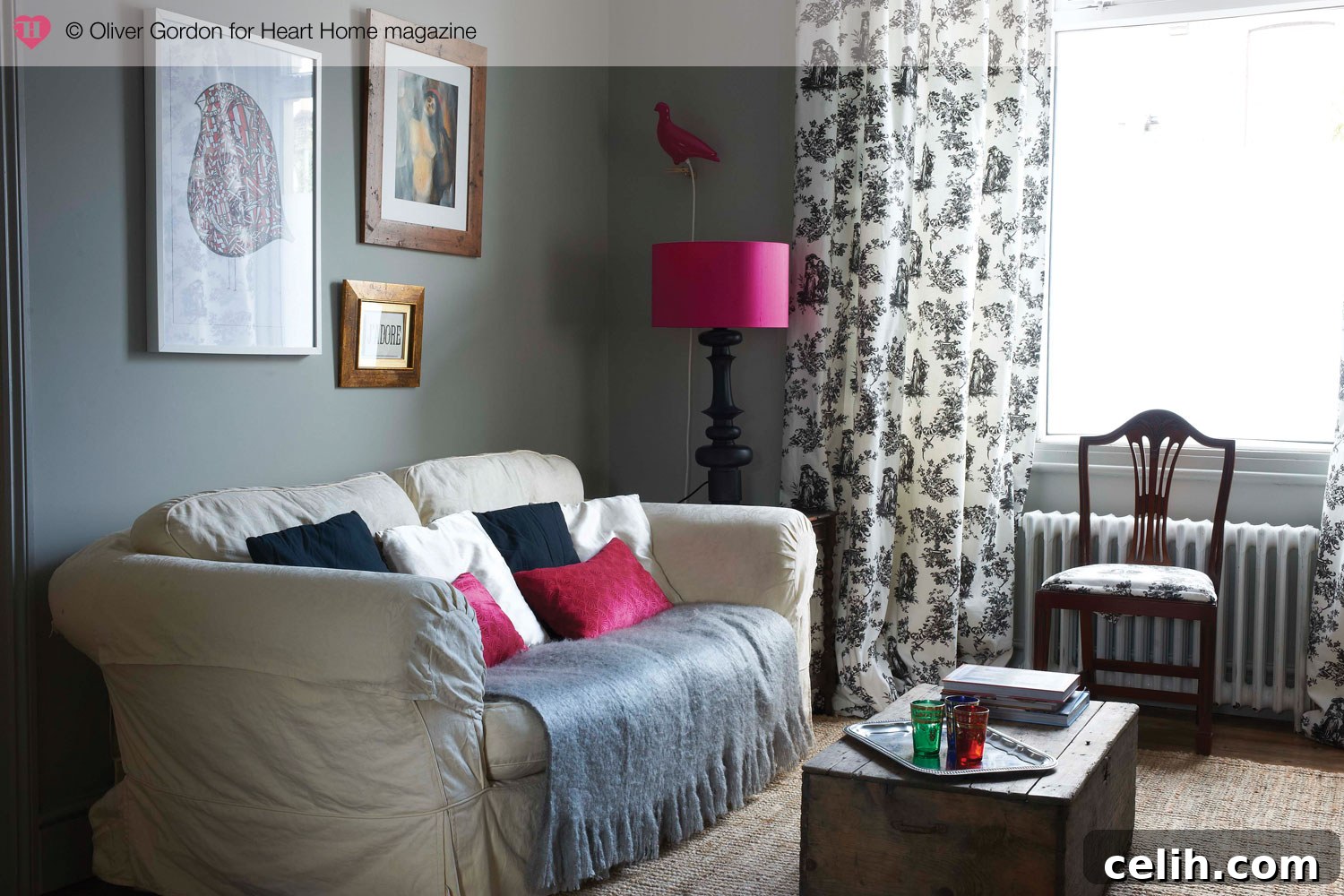
Textiles are another fantastic medium for color expression. Think about the strategic placement of cushion covers, throws, and rugs. A collection of brightly colored cushions on a neutral sofa can instantly energize a living room, while a vibrant throw draped over an armchair adds texture and warmth. Rugs, in particular, serve as anchors for a room, allowing you to introduce patterns and colors that tie the entire space together. Don’t overlook curtains and drapes either; they offer a large canvas for color and can significantly impact the natural light and mood of a room. Layering different textures and patterns through these soft furnishings creates depth and visual interest, making your home feel more inviting and thoughtfully designed. Even in bathrooms, colorful towels, shower curtains, and unique soap dispensers can make a significant difference, turning purely functional spaces into vibrant extensions of your personal style.
3. Incorporate Art and Natural Elements
Beyond paint and textiles, art and nature offer organic ways to introduce color. Artwork, whether a large statement piece or a curated gallery wall, provides an instant focal point and injects specific color palettes into a room. Similarly, fresh flowers or indoor plants not only add natural greens and vibrant floral hues but also bring life and freshness into your home, improving air quality and boosting mood. Consider colorful vases, decorative bowls, or unique lamps with colored bases to scatter pops of color throughout a space, creating visual pathways that guide the eye and add an element of playful charm.
Optimizing Your Environment: Smart Strategies for Maximizing Space
While color adds aesthetic appeal, maximizing functional space ensures your home remains practical and comfortable. Creating more room in a home often requires careful consideration and a strategic approach, particularly in today’s increasingly compact living environments. Effective storage is crucial, but it’s about more than just buying boxes; it’s about smart utilization and thoughtful decluttering. Here are savvy ways to unlock your home’s full spatial potential.
4. The Foundational Step: Ruthless Decluttering
Before any furniture rearrangement or storage solution implementation, the single most impactful step is to declutter. This isn’t just about tidying; it’s about intentionally going through each room, assessing every item, and discerning what truly serves a purpose or brings joy, and what can be let go. Adopt a systematic approach: create categories for “Keep,” “Donate,” “Sell,” and “Dispose.”
Items in good condition can find new life at a local charity shop, or fetch a little extra cash on online marketplaces like eBay, providing a practical incentive for clearing out. For sentimental items, seasonal decorations, or things you anticipate needing in the future but not on a daily basis, consider a temporary or long-term storage unit. These flexible solutions are incredibly useful and accessible, with facilities located conveniently in many areas, from bustling cities to quieter towns. Utilizing storage units, even temporarily, can be a game-changer for regaining control over your living space and reducing visual clutter, allowing you to breathe easier and enjoy a more organized home environment.
5. Ingenious Ways to Utilize Every Inch of Space
Once decluttering is complete, it’s time to rethink how you use your existing space. Every nook and cranny holds potential. That forgotten alcove under the stairs, for instance, could be transformed into a charming and highly functional mini-office with a compact desk and chair, a cozy reading nook, or even clever built-in shelving. Similarly, investing in under-the-bed storage boxes or drawers instantly creates valuable hidden space for seasonal bedding, extra linens, or out-of-season clothing, freeing up precious cupboard and wardrobe space.
Think vertically. Wall-mounted shelves, floating ledges, and floor-to-ceiling bookcases draw the eye upwards, making rooms feel larger while providing ample storage. Utilize corners with corner shelves or bespoke cabinetry. Even within existing cupboards, simply rearranging items and introducing organizational tools like storage baskets, drawer dividers, or tiered organizers can drastically improve efficiency and create more usable room. Consider multi-functional furniture like ottomans with hidden storage, sofa beds for guest rooms, or nesting tables that can be expanded or tucked away as needed. Mirrors strategically placed can also visually expand a room by reflecting light and creating an illusion of greater depth, especially when placed opposite windows.
6. Strategic Furniture Arrangement and Lighting
The way furniture is arranged significantly impacts how spacious a room feels. Ensure clear pathways and avoid pushing all furniture against the walls, which can sometimes make a room feel smaller and less inviting. Instead, pull pieces slightly away from the walls or group them to create distinct zones within larger open-plan areas. Using rugs to define these zones can provide structure without physical barriers.
Lighting also plays a crucial role in expanding space. Maximize natural light by keeping windows unobstructed and using light-colored, sheer curtains. Supplement with a thoughtful lighting plan, incorporating ambient, task, and accent lighting. Well-placed lamps can brighten dark corners, making a room feel more open and welcoming. Lighter paint colors on walls and ceilings can also contribute to a sense of airiness and spaciousness, as they reflect light more effectively.
Your Home, Your Canvas: Bringing it All Together
The journey to a more colorful and spacious home is an incredibly rewarding one. Adding vibrant hues is often a simple task, requiring minimal stress and expense, though some DIY skills might come in handy for painting projects. The key is to choose colors that genuinely reflect your personality and complement the specific function and mood of each room. Don’t be afraid to experiment with bold shades or subtle accents; your home is your canvas.
Similarly, creating more space doesn’t necessitate moving to a larger property. By intelligently decluttering, embracing multi-functional items, and thinking creatively about how you utilize every available inch, you can unlock hidden potential within your existing footprint. Always consider how you can use what you already possess in new and more effective ways before buying new solutions. The transformation of your home, guided by strategic color choices and clever space optimization, promises not just a prettier place, but a more functional, harmonious, and truly personalized living experience.
(Image courtesy of Heart Home magazine)