
The Ultimate Guide to Designing an Inspiring & Safe Children’s Playroom
A children’s playroom is far more than just a room; it’s a vibrant sanctuary where imagination takes flight, creativity blossoms, and countless cherished memories are made. This dedicated space provides kids with the freedom to explore, learn, and grow, offering a backdrop for everything from boisterous play and artistic endeavors to quiet reading and peaceful napping. However, designing such a dynamic environment requires meticulous planning and thoughtful consideration. The goal is to create a functional, engaging, and above all, safe space that not only captivates your children today but also seamlessly adapts and evolves with them through different stages of their development, ensuring enduring enjoyment for years to come. With the right approach, you can craft a playroom that fosters independence, sparks curiosity, and minimizes the need for constant supervision.
In this comprehensive guide, we’ll delve into essential tips and creative strategies for designing a children’s playroom that is both practical and magical. We’ll explore crucial safety measures, innovative layout ideas, smart material choices, and imaginative decorating techniques, providing you with everything you need to build the perfect haven for your little ones.
Prioritizing Child Safety: The Foundation of Playroom Design
When envisioning a children’s playroom, safety must always be the paramount concern. This space should be a secure haven where kids can play freely without unnecessary risks. Implementing robust safety measures from the outset ensures peace of mind for parents and a secure environment for children to thrive. Every aspect, from the structural elements to the furniture and decor, needs to be evaluated through a child-safety lens.
Securing the Space: Doors, Windows, and Entryways
The playroom should ideally be a fully enclosed area, allowing for controlled access and supervision. Install a child-proof door lock that prevents curious little hands from opening it without adult assistance. If your playroom is located in an attic, basement, or any area near stairs, installing a sturdy safety gate is non-negotiable, especially for babies and toddlers. These gates act as a vital barrier, preventing unsupervised access to dangerous staircases.
Windows also require careful attention. Ensure they are fitted with strong screens to prevent any attempts at sneaking out or accidental falls. Consider window locks or safety restrictors that limit how wide a window can open. It’s crucial to avoid installing horizontal window grills, as these can inadvertently create a ladder effect, tempting children to climb. Always opt for vertical bars or secure mesh screens if additional window protection is deemed necessary.
Anchoring Furniture and Safeguarding Electrical Outlets
Any freestanding furniture within the playroom, particularly tall or heavy items like bookshelves, storage units, and dressers, poses a significant tip-over risk. It is imperative to anchor these pieces securely to the wall using anti-tip kits. This simple yet critical step can prevent severe injuries. Similarly, if you plan to introduce a television, computer monitor, or other electronic devices, ensure they are stable and also anchored or wall-mounted where possible.
Electrical safety is another key consideration. All unused electrical outlets must be covered with child-proof caps or sliding outlet covers to prevent curious fingers from touching live sockets. Conceal any loose electrical cords or wires, as they can be both a tripping hazard and a strangulation risk. Consider placing furniture in a way that blocks access to outlets or using cord management systems to keep wires tidy and out of reach.
Material Choices and Hazard Prevention
The materials chosen for the playroom should also prioritize safety. Opt for non-toxic, low-VOC (Volatile Organic Compound) paints and finishes to ensure healthy indoor air quality. When selecting furniture, look for pieces with rounded edges and corners to minimize the risk of bumps and bruises. Regularly inspect toys and play equipment for small parts that could pose a choking hazard for younger children, especially if children of different ages will be sharing the space.
Adequate Lighting and Ventilation
Proper lighting is essential for both safety and creating an inviting atmosphere. Ensure there’s a good mix of natural light and child-safe artificial lighting that brightens the entire room without glare. Avoid floor lamps with easily accessible bulbs or unstable bases. Ventilation is also crucial for maintaining a healthy environment, especially during active play. Ensure the room has good airflow to prevent stuffiness and circulate fresh air, possibly through opening windows or a quiet air purifier.
Strategic Playroom Layout: Creating Dedicated Zones for Fun and Learning
Once the foundational safety aspects are in place, the next exciting step is to plan the layout of your children’s playroom. A well-designed playroom often benefits from being divided into various sections or zones, each dedicated to different types of activities. This strategy helps to organize the space, reduces clutter, and encourages diverse forms of play and learning. By thoughtfully designating areas, you can create an environment that supports everything from quiet concentration to energetic movement, adapting to your children’s varying moods and interests.
The Creative Corner: Desk and Art Area
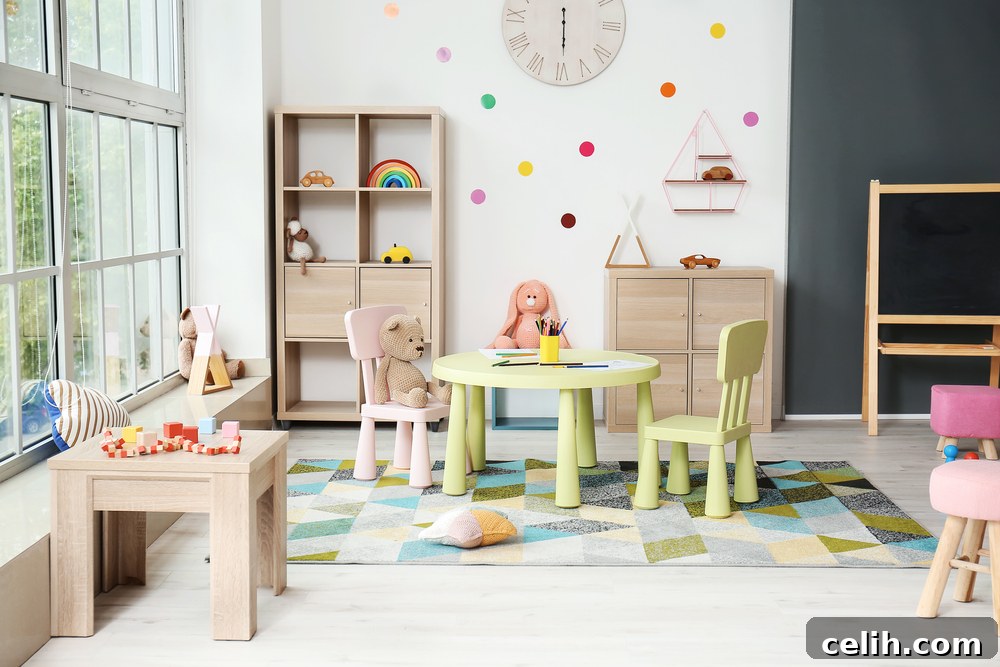
A dedicated desk or art area is essential for fostering creativity, promoting fine motor skills, and encouraging academic habits. Equip this zone with a child-sized table and chairs, ensuring they are comfortable and ergonomically appropriate for your child’s age. Look for tables and chairs with adjustable heights, allowing them to grow with your children and serve them well into their school years. This area can be used for homework, drawing, painting, puzzles, or craft projects. Incorporate accessible storage for art supplies, such as caddies for crayons, markers, and paint, and shelves for paper and craft kits. A small whiteboard or a section of chalkboard paint on a wall can also be a fantastic addition for practicing letters, numbers, or simply doodling.
The Cozy Retreat: Nap and Reading Nook
Even in the midst of play, children often need a quiet space to unwind, read, or simply relax. A nap or reading area provides this much-needed sanctuary. If your children have a separate bedroom for sleeping, this nook can be purely for relaxation. Options include a plush bean bag, a comfortable day bed, soft floor cushions, or even a whimsical teepee. A teepee, as shown in the image, can do wonders for a child’s imagination, creating a secret hideaway for storytelling and imaginative play. Ensure this area is stocked with a selection of age-appropriate books, fostering a love for reading from an early age. Soft lighting and comfortable textiles can enhance the tranquility of this zone.
Dynamic Play Zone: Active Exploration Area
Children need space to move, jump, and expend energy. The open play area should be designed to accommodate active and imaginative play. This zone is best covered with soft, spill-proof, and easy-to-clean mats or rugs to cushion falls and protect flooring. If space and budget allow, consider adding kid-friendly furniture like a small indoor slide, a mini climbing wall, or even a ball pit for endless hours of fun. For younger children, soft blocks and push-along toys are ideal. For older kids, this area can become a stage for dramatic play, building forts, or engaging in imaginative games. The key is to keep this area relatively open and flexible, allowing children to redefine it based on their play scenarios.
Smart Storage Solutions: Keeping Clutter at Bay
An effective storage area is crucial for maintaining an organized and inviting playroom. Without ample storage, toys and supplies can quickly overwhelm the space, leading to clutter and stress. Incorporate a variety of storage solutions such as built-in cabinets, cubbies, open shelving, and toy bins. Choose white or neutral-colored cabinets and storage units; these timeless pieces can easily transition with your children as they grow into teenagers, adapting to different decor styles. Labeling bins and shelves with pictures or words can help younger children learn to organize their toys independently. Consider a toy rotation system, where only a selection of toys is available at one time, keeping the play experience fresh and reducing overwhelming clutter.
Setting the Stage: Walls and Floors for Enduring Design
With the playroom zones thoughtfully mapped out, the next step involves transforming the physical space through strategic choices in wall treatments and flooring. These elements are not just about aesthetics; they play a significant role in the room’s functionality, durability, and overall ambiance. Selecting the right materials can make the playroom easier to maintain, safer for play, and visually stimulating, contributing to a harmonious environment that encourages exploration and creativity.
Painting with Purpose: Walls That Inspire and Endure
The walls of a children’s playroom are more than just structural elements; they are a canvas for imagination. When selecting paint, prioritize high-quality, scrubbable paint that allows for easy cleaning of inevitable smudges, marks, and accidental crayon masterpieces. Low-VOC or zero-VOC paints are recommended to ensure a healthy indoor environment, free from harmful fumes. Consider using a neutral color as a base for the majority of the room. This provides a calming backdrop that won’t overwhelm the space and allows for greater flexibility in changing themes and decorations over time. Then, introduce a vibrant feature wall using your child’s favorite color or a playful pattern. This approach allows you to update the room’s feel simply by repainting one wall, saving time and effort if your child’s tastes evolve.
Alternatively, if you opt for wallpaper, choose peel-and-stick or easily replaceable options. The market offers a vast array of imaginative designs, from whimsical patterns to educational murals. These temporary wallpapers are fantastic for adding personality without a long-term commitment, making updates simple as children grow. You might also consider dedicating a section of a wall for chalkboard paint or magnetic paint, transforming it into an interactive surface for drawing, displaying artwork, or learning.
Foundation of Fun: Durable and Safe Flooring
The flooring in a children’s playroom needs to withstand heavy foot traffic, spills, and endless play sessions, all while being comfortable and safe. Low-maintenance vinyl or rubber tiles are excellent choices. They are exceptionally durable, easy to clean, and resistant to moisture, making them ideal for areas prone to spills and messes. Cork flooring is another eco-friendly option that offers natural cushioning, warmth, and sound absorption. If you prefer carpets, consider carpet tiles, which are easy to replace individually if a section gets stained or damaged. These options are also softer underfoot than hardwood or ceramic tiles, reducing the impact of falls.
Regardless of the primary flooring choice, it is essential to layer the area with soft, non-slip rugs or interlocking foam mats, especially in the active play zone. These additions provide crucial cushioning for play, add warmth, and introduce texture and color to the room. Ensure all rugs have non-slip backings to prevent accidents.
The Often-Overlooked Ceiling: A Canvas Above
Don’t forget the ceiling – it’s an often-overlooked but impactful canvas for creativity! Simple additions like glow-in-the-dark stickers, such as stars or planets, can transform bedtime into a magical experience. For a more artistic touch, consider commissioning an artist to paint a whimsical mural, depicting clouds, a night sky, or a playful scene that complements the room’s theme. Creative light fixtures, like cloud-shaped lamps or a projector that casts images, can also add a unique and enchanting element to the playroom’s overhead design, making the entire space feel more immersive and inspiring.
Personalizing the Playroom: Decor That Grows With Your Child
Now comes the most exciting and personal part of designing your children’s playroom: decorating! This is where you infuse the space with personality, warmth, and elements that truly resonate with your children’s unique interests and passions. The key is to strike a balance between creating a fun, themed environment and ensuring that the decor is adaptable enough to evolve as your children grow and their tastes change. Thoughtful decoration can transform a functional space into an inspiring haven that reflects their individuality.
Discovering a Theme: Sparking Imagination
Starting with a theme can provide a wonderful direction for your decorating efforts. Popular choices include nautical adventures, outer space exploration, enchanted forests, superhero lairs, or whimsical circuses. However, the best themes are those that genuinely align with your child’s current interests. Involve them in the decision-making process; this not only makes the playroom feel truly theirs but also fosters a sense of ownership and excitement. A well-chosen theme can transport children to another world, sparking imaginative play and enriching their creative experiences. Remember, the theme can be subtle, incorporated through colors and accents, or more overt with specific decor elements.
Engaging Wall Decor: More Than Just Pictures
Fill the walls with posters, colorful art prints, and captivating imagery that stimulates curiosity and learning. Beyond purely decorative pieces, consider incorporating educational posters, such as world maps, diagrams of the animal kingdom, or the solar system. These can turn everyday decor into passive learning tools. Displaying your children’s own artwork is also a fantastic way to personalize the space and celebrate their creativity. Use clipboards, string lines with clothespins, or simple frames that make it easy to swap out masterpieces regularly. A growth chart on a wall is a practical and sentimental addition, allowing you to track your child’s progress over the years.
Adaptable Furniture and Accessories: Investment in the Future
While themes and specific interests may change, certain foundational elements can transcend age. When investing in furniture, focus on quality, durable items that your kids can continue to use as they grow up. This includes sturdy computer desks that can double as craft tables, versatile bookshelves that accommodate both picture books and chapter books, and adaptable storage solutions. A large chalkboard, like the one pictured, or a whiteboard, can serve as a creative outlet for years, from early scribbles to homework problem-solving. Choose soft furnishings like curtains, cushions, and throws in colors and patterns that complement the theme but can also be easily updated or replaced without overhauling the entire room.
Consider multi-functional furniture, such as ottomans with storage or benches that provide both seating and hidden compartments. Good lighting, beyond just ceiling fixtures, can also serve as decorative accents. Add a whimsical lamp or string lights to create a cozy atmosphere. The goal is to select pieces that offer longevity and versatility, ensuring that your initial investment continues to provide value and joy as your child develops from a toddler into a teenager.
Crafting a Playroom for Lasting Memories
Designing an exceptional children’s playroom is a rewarding endeavor that goes beyond mere aesthetics. It’s about creating a dynamic, nurturing environment that actively supports your child’s growth, safety, and boundless imagination. By prioritizing safety measures, strategically dividing the space into functional zones, selecting durable and inspiring finishes for walls and floors, and personalizing the decor with thoughtful, adaptable elements, you can craft a space that is both practical and profoundly enchanting. A well-designed playroom isn’t just a place for temporary amusement; it’s a dedicated haven that fosters independence, ignites creativity, and becomes a cherished backdrop for countless joyful moments and lifelong memories. Embrace the journey of creation, involve your children in the process, and watch as their playroom evolves into a truly magical space where they can learn, play, and dream to their hearts’ content.